Starting solids can change a baby's poo almost overnight. It may become darker, smellier, thicker and less frequent. Most changes are part of the gut learning to handle a new diet — but a hard, painful poo is different from an ordinary weaning poo.
The short answer: constipation is more about consistency and difficulty than the number of days between poos. Look for dry, hard, lumpy or pellet-like poo, pain or difficulty passing it, and a firmer tummy. Keep normal milk feeds going, offer sips of water with meals once your baby is eating solids, include fibre-rich foods and ask your health visitor or GP for help if it does not improve.
What counts as constipation in a weaning baby?
A baby does not have to poo every day. Patterns vary with age, breast or formula feeding, and the foods they eat. Some babies can go longer between soft, comfortable poos without being constipated.
NHS signs of constipation include:
- dry, hard, lumpy or pellet-like poo
- difficulty, straining or pain when pooing
- poo that is larger than usual
- fewer than three poos in a week
- a firmer tummy
- reduced appetite, low energy or unusual grumpiness
Straining alone can be misleading, especially in younger babies who are still learning to coordinate their muscles. The most useful question is: when the poo arrives, is it soft and comfortable or hard and painful?
Why can starting solids change poo?
Milk-only poo and weaning poo can look very different. New starches, proteins and fibres create a thicker stool, while a baby's digestive system is adapting to unfamiliar foods. Appetite and fluid intake may also shift.
Constipation can be more likely when:
- a baby's diet changes quickly
- they are not getting enough fluid
- their new food pattern contains little fruit, vegetables or cereal
- illness or teething makes drinking uncomfortable
- formula is mixed with more powder than the packet instructs
A normal colour or texture change is not automatically constipation. “Paste-like” or formed poo can be ordinary once solids increase. Hard pellets, a dry cracked appearance, pain or repeated difficulty deserve more attention.
Five gentle steps to try
1. Keep milk feeds in the day
Breast milk or first infant formula remains important throughout the first year. Do not cut milk to make space for more fibre, and do not add cereal or other food to a bottle.
If you use formula, make it exactly as the packet directs. Extra powder can contribute to constipation and dehydration. Never dilute formula beyond the instructions either; that can be dangerous.
2. Offer water with meals
Once your baby has started solids at around six months, the NHS recommends offering sips of water from an open cup or free-flow cup with meals. Keep breast or formula feeds as usual.
Water is the simple choice. Babies under 12 months do not need fruit juice or smoothies, and sugary drinks can harm teeth and reduce appetite for nutritious food.
3. Include fibre-rich foods your baby can manage
Offer a varied diet with fruit, vegetables and cereals in an age-appropriate texture. The NHS specifically suggests apples, pears and prunes for constipation. Depending on your baby's stage, these might be softly cooked, mashed, puréed or served as safe finger food.
Think balance across the day rather than a giant “constipation meal”. Suddenly adding a large amount of one food is unnecessary, and food changes should not replace professional advice when a baby is in pain or symptoms persist.
4. Try gentle movement
When your baby is awake and comfortable, lie them safely on their back and gently move their legs as though they are riding a bicycle. If they are happy lying down, a gentle tummy massage may also help.
Stop if your baby dislikes it. These are comfort measures, not a test and not a guaranteed treatment.
5. Give it a little time — but not endless time
The NHS notes that it may take a few days to get moving again. If constipation is not improving, contact your health visitor or GP. Treatment depends on age; a GP may recommend or prescribe a laxative after assessing your child.
Do not give a baby an adult laxative, suppository, herbal remedy or other constipation medicine unless a qualified professional has advised it for that baby.
What is worth tracking for three days?
You do not need a detailed bowel spreadsheet. A short, factual record can help you spot whether things are softening and explain the situation clearly if you ask for advice.
Record:
- Poo time and texture: soft, paste-like, formed, pellet-like, watery, mucousy or bloody/streaked.
- What passing it looked like: comfortable, difficult, painful, or accompanied by crying.
- Colour: especially a genuinely pale or red stool, or black/tarry poo outside the newborn meconium stage.
- Milk and water context: usual breast or bottle feeds and whether water was offered with meals.
- Recent solids: the foods offered, without trying to blame one food from one event.
- Wet nappies and wellbeing: whether wet nappies, alertness and appetite seem usual for your baby.
A photograph may sometimes help a professional understand an unusual stool, but store and share it privately. A written description is often enough for routine pattern tracking.
Could constipation disturb sleep?
A baby who is uncomfortable may settle differently or wake more often. But a broken night is not proof of constipation, and a day without a poo does not explain every wake.
Keep the sleep response simple: check comfort, hunger, temperature and illness, then settle your baby in their usual safe sleep space. Do not change the whole nap schedule or use extra solids as a sleep treatment.
If hard or painful poos and unsettled nights repeatedly occur together, the timeline is useful context to share. It still cannot prove cause and effect.
When should you ask for help?
Contact your health visitor or GP if you think your baby is constipated, particularly when it is painful, keeps returning or does not improve after a few days. Get advice sooner if your baby is feeding poorly, seems unusually unwell or you are worried about their growth.
The NHS specifically advises speaking to a midwife, health visitor or GP if a baby under eight weeks has not done a poo for two or three days.
Seek prompt medical advice for:
- blood in or after a poo
- persistent pain or a firm, swollen tummy
- vomiting alongside constipation
- poor appetite, low energy or a baby who is not themselves
- fewer wet nappies than usual or other signs of dehydration
- very pale or red poo, or black/tarry poo outside the newborn meconium stage
Call 999 in the UK for emergency symptoms such as difficulty breathing, blue or grey skin, unusual floppiness, or a baby who is difficult to wake. Trust your instinct and use NHS 111 when you need urgent advice but it is not a 999 emergency.
How OBubba keeps weaning, nappies and sleep in one useful timeline
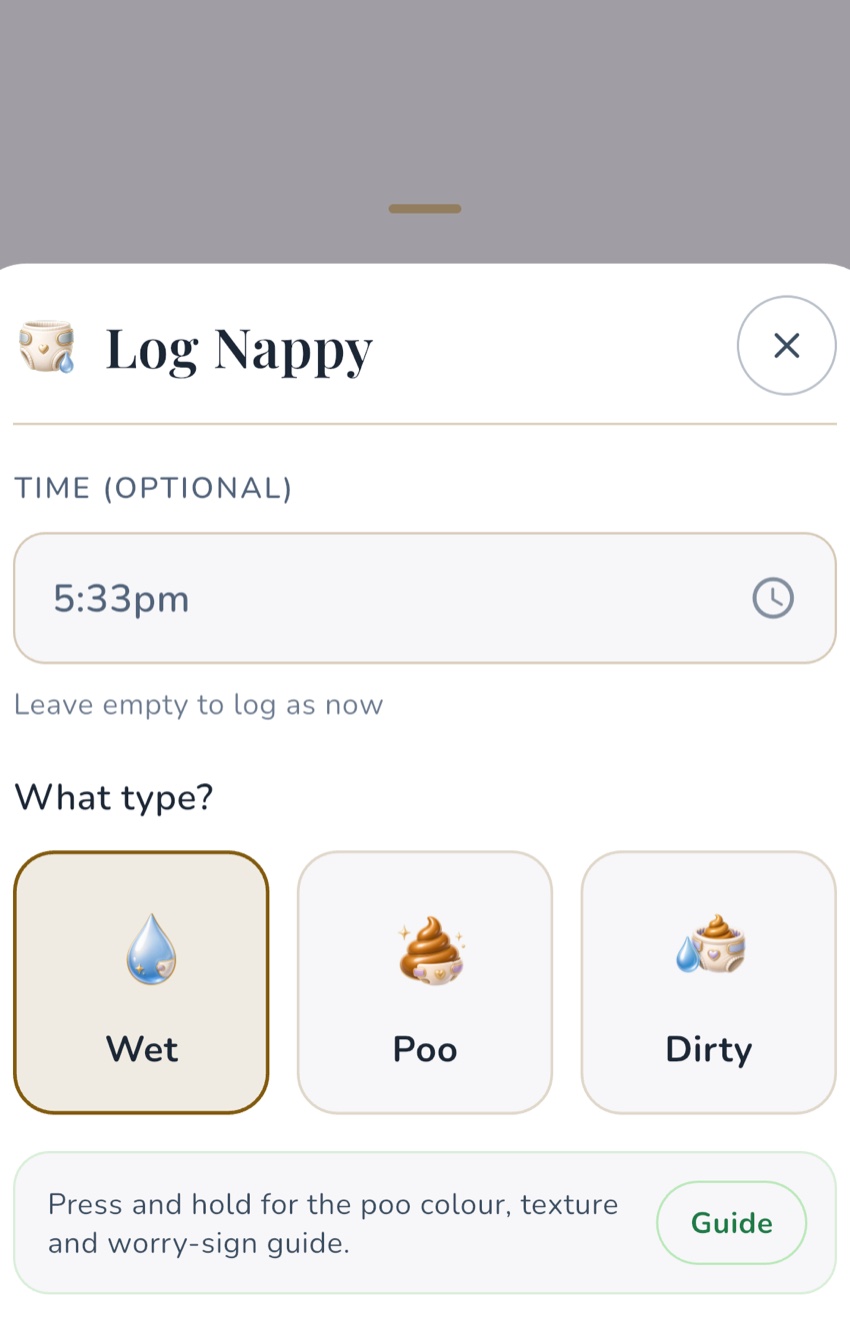
In the current app, Track → Nappy starts with three quick choices: Wet, Poo and Dirty. When detail matters, you can add texture — including paste-like, formed/solid or pellet-like — and colour, plus a note in your own words. Recognised worry signs can surface a prompt to seek appropriate help; the app does not diagnose the cause.
Solids live in the same day. Under Track → Feed → Solids, you record the food and whether your baby loved it, seemed unsure or had a reaction. The Weaning area turns those entries into a food journal and shows food variety and texture progress. Milk feeds, wet nappies, sleep and relevant health notes stay alongside them rather than being split across several apps.
That joined-up record helps with a practical question: did the poo become hard after the diet changed, while milk and wet nappies stayed usual — or is the whole baby pattern changing? It gives you better facts for a health conversation without pretending to provide a diagnosis.
You can also voice-log an ordinary change when your hands are full, then add detail later if needed. The goal is a useful pattern, not perfect data or a photograph of every nappy.
Try OBubba free → — first foods, milk, nappies, sleep and growth in one mum-built app.
Sources and further reading
- NHS Best Start in Life: Constipation and bottle feeding
- NHS: Constipation in children
- NHS: Drinks and cups for babies and young children
- NHS Best Start in Life: How to start weaning your baby
- NHS: How to change your baby's nappy
OBubba is a tracking and education tool, not medical advice. If you are worried about your baby's poo, feeding, hydration, growth or general health, contact your health visitor, GP, NHS 111 or emergency services as appropriate.
Ready to try OBubba?
Use OBubba to track feeds, sleep, naps, nappies, growth, milestones and family handovers in one calm baby tracker app.