Last week your baby ate fork-mashed potato, soft pasta and little pieces of family dinner. This week every lump is pushed out, the spoon is refused and the only food welcomed is smooth yoghurt or purée.
It can feel as though weaning has gone backwards. Usually, it is more useful to think of it as a temporary change in what feels manageable. Sore gums, a blocked nose, tiredness, an over-large texture jump or a few uncomfortable meals can all make softer food easier for a while.
Do not force the old texture to prove the skill is still there. Offer a comfortable texture, keep one tiny low-pressure opportunity to practise and check for pain, illness or swallowing warning signs. A short step sideways does not erase what your baby has learnt, but a sudden or persistent loss of feeding skill deserves professional advice.
What a real texture step-back looks like
A texture step-back is a pattern, not one rejected spoonful.
You might notice that your baby:
- previously managed mashed, lumpy, minced or chopped food
- now accepts mostly smooth or very soft foods
- spits out lumps that were manageable a week ago
- reaches for yoghurt or purée but turns away from the family meal
- becomes upset sooner with chewing or mouth work
- eats less solid food while continuing to take milk
One difficult meal after a late nap is not regression. Nor is choosing porridge at breakfast after eating pasta yesterday. Babies do not have to climb a texture ladder in a perfectly straight line, and a mixed week can be entirely normal.
Look for a repeated shift across several meals and record the actual preparation. “Chicken dinner” does not tell you whether it was blended, finely minced or offered as soft pieces.
Why babies sometimes return to softer food
1. Teething has made the mouth sore
The NHS lists a sore, red gum as a common teething sign. A baby may want to chew, yet find a particular spoon texture uncomfortable on the tender area.
Look for local signs such as red gums, extra dribbling, chewing and mild fretfulness. Teething symptoms are generally mild. Do not automatically blame a high temperature, diarrhoea, marked sleepiness or a baby who seems genuinely unwell on teeth.
Softer does not have to mean nutritionally empty. Try soft scrambled egg, thick porridge, mashed lentils, flaked fish mixed into potato, yoghurt or fork-mashed beans in forms already known to be safe for your baby. Keep their usual breast milk or first infant formula responsive.
2. A cold has made eating harder work
A blocked nose, sore throat, ear discomfort or general tiredness can reduce appetite. Chewing and coordinating a mouthful may simply feel like too much effort.
Prioritise fluids and milk, follow illness advice and let solids become easier for a few days. Do not use food intake as a test of whether a baby is “really ill”. If breathing, alertness, feeding or wet nappies concern you, seek medical advice.
3. The texture jump was larger than it looked
Moving from completely smooth food to distinct firm lumps is a big sensory and oral-motor change. The problem may not be “lumps” as a category; it may be the size, firmness, dryness or mixed consistency of that particular meal.
For example, a uniformly fork-mashed dish is different from thin soup containing slippery chunks. A soft ripe pear is different from raw apple. White bread can form a sticky dough-like ball if it is not prepared and chewed safely.
Go back only one manageable step, not all the way to the beginning.
4. Timing or pressure has changed the meal
A very hungry baby may become frustrated before they can explore. A tired baby may lack patience for a difficult texture. Repeated coaxing, scraping the spoon on the lip or continuing after clear refusal can make the whole chair-and-bib sequence feel uncomfortable.
Try the meal when your baby is alert, not frantic for milk and not approaching a nap. Sit together, put a very small amount down and let the meal end when they consistently turn away, close their mouth or become distressed.
5. Pain or swallowing difficulty needs attention
Reflux, oral pain, infection, allergy, constipation and swallowing difficulties can all affect eating. A parent cannot diagnose the cause from texture alone.
A baby who suddenly loses a skill and also coughs, chokes, develops wet or noisy breathing during meals, seems in pain or struggles with liquids or smooth food needs assessment rather than a home texture challenge.
What to offer at the next meal
Use a comfortable food plus a practice food.
- Choose one familiar, nutritionally useful food in the texture your baby currently manages.
- Put a teaspoon-sized amount of the next texture beside it or on a separate preloaded spoon.
- Let your baby touch, smell, lick or ignore the practice food.
- Do not mix an unwanted lump secretly through every mouthful.
- End calmly after repeated refusal cues.
The practice amount is not a portion target. It keeps the experience available without making the whole meal depend on success.
If a familiar allergen was previously tolerated, keep following the family's established allergen plan where practical. If the baby reacted, seems unwell or the texture change began with a possible reaction, stop the suspected food and get appropriate advice rather than using it as practice.
A gentler texture bridge
The NHS advises moving from puréed or blended food to mashed, lumpy and finger foods as soon as a baby can manage them, because varied textures help babies learn to chew, move food around the mouth and swallow. It also recognises that babies take different amounts of time.
That means progress matters, but “progress” can be a very small change.
| If this is comfortable | Make the next step this small | Avoid jumping straight to | |---|---|---| | Completely smooth vegetable purée | Blend for slightly less time so it is thicker and not perfectly uniform | Thin purée with separate firm chunks | | Thick smooth porridge | Add a little finely mashed soft fruit | Large raw fruit pieces | | Fine fork-mash | Leave a few very soft, squashable grains or tiny lumps | Dry, firm or rubbery pieces | | Mashed potato or lentils | Add finely minced, moist family food | Tough cubes of meat | | Soft minced pasta sauce | Use slightly less finely chopped soft pasta | A large slippery bowlful | | Preloaded spoon | Place one safely prepared soft piece alongside for self-feeding | Repeatedly placing food into a closed mouth |
Test food softness before serving. Sit your baby fully upright in a stable highchair with the harness secured, and remain within arm's reach.
For a baby born prematurely or a child with an existing feeding, developmental or medical plan, use individual guidance rather than an age chart.
A three-day texture reset
Day 1: remove the test
Serve one familiar meal in a comfortable texture. Let your baby set the pace. Note whether there are sore gums, congestion, unusual tiredness, pain, coughing, vomiting or a change in milk feeds.
The goal is a calm, observable meal, not a certain number of spoonfuls.
Day 2: change one physical property
Use the same familiar flavour but alter only one feature:
- blend for less time
- make the mash slightly thicker
- add a tiny amount of fine soft texture
- offer a second preloaded spoon
Do not add a new flavour, new allergen, new chair and new texture together. One variable makes the baby's response easier to understand.
Day 3: offer two safe routes
Provide the manageable spoon texture and one appropriate self-feeding option or slightly more textured spoonful. Your baby may choose either, touch both or eat neither.
If they manage the practice texture calmly, repeat that same step before making it harder. If they become distressed, step back again and consider whether pain, illness or fatigue is still present.
Three days are for gathering information, not a deadline to “fix” eating.
Gagging, choking and swallowing concerns are different
Gagging can be noisy. A baby may retch, push the tongue forward, water at the eyes or bring food back to the front of the mouth. It is a protective response while learning, but repeated distress still deserves attention.
Choking may be quiet because the airway is blocked. A baby may be unable to breathe, cry or cough effectively. Learn infant first aid before an emergency and call 999 if a baby is choking and the blockage does not clear with the appropriate first-aid response.
Do not put fingers blindly into the mouth, as this can push food farther back. Read the full gagging versus choking guide.
Contact your health visitor or GP if you notice:
- repeated coughing or choking with food or drink
- a wet, gurgly voice, cry or breathing sound after swallowing
- a sudden deterioration in eating or drinking skill
- persistent difficulty moving food around the mouth
- repeated chest infections or a prolonged wet cough
- gagging on smooth purée as well as lumps
- meals that are consistently painful or highly distressing
- vomiting, poor growth, fewer wet nappies or reduced alertness
- restriction that is persisting rather than easing after the baby is well
NHS feeding-difficulty pathways treat a sudden skill change with swallowing-safety concerns differently from ordinary weaning hesitation. You do not need to decide which professional is required; start with your health visitor or GP.
How the real OBubba app detects a step back
OBubba's current engine contains a dedicated weaningStepBack insight. It is separate from the app's “ready to move past purées” nudge and separate from its detector for three recently refused meals.
The step-back detector reads texture clues from the parent's food description:
- smooth: purée, smooth, blended or blitzed
- mashed/finger: mashed, lumpy, finger food, soldiers, sticks or soft pieces
- chopped: chopped, minced, diced or small pieces
- family: family meal, same as us or same as everyone
It compares two precise windows relative to the newest logged meal: days 0 to 6 and days 7 to 13. Each window needs enough texture-labelled meals to calculate a dominant stage, effectively at least three in each, and the current stage must be lower than the previous stage. Ties favour the more advanced stage, so equal evidence does not manufacture a regression.
The insight stays silent when texture holds or advances. It also suppresses the present-tense card when the newest solids record is stale, rather than telling a parent that something happened “this week” after logging paused.
When the evidence qualifies, OBubba can show “Back to softer foods this week”, report the number of meals it used and suggest checking teething, a cold or another temporary disruption while keeping food pressure-free. Those suggestions are possible explanations to consider, not causes the app has proved.
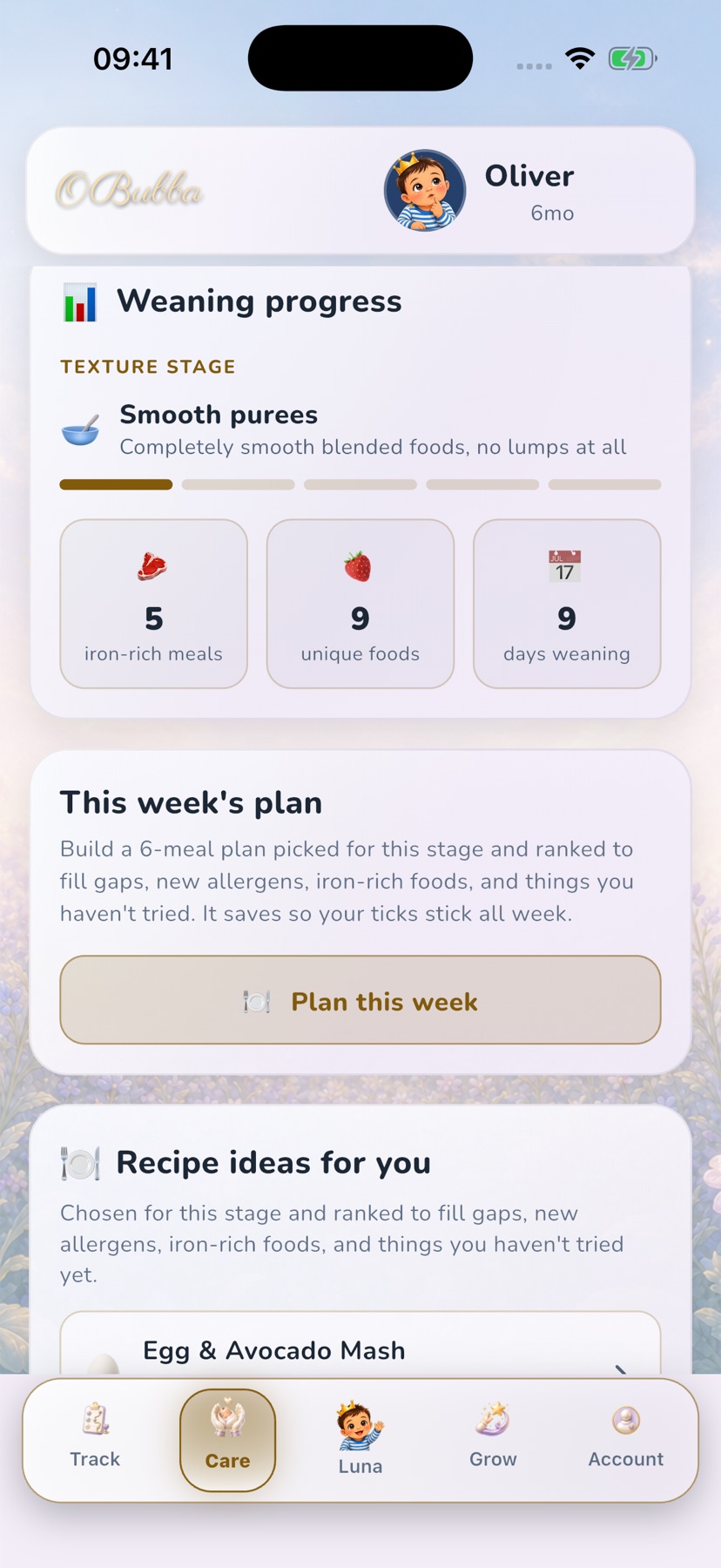
This is useful pattern recognition, not a swallowing assessment. The app does not watch your baby eat or feel the food. “Pasta” contains no texture clue, so it is ignored by this detector; “soft chopped pasta” can be classified. A vague or inaccurate description produces weak evidence. The app also cannot confirm that teething caused the change or guarantee it will pass within a particular number of days.
That honesty is the point: OBubba can notice a change worth looking at without declaring that a baby has lost a skill or telling a parent to push through it.
Keep textures and responses together →
Record what the food actually looked like, how your baby responded and what else was happening, then use the pattern to choose one calm next step.
Keep milk, nutrition and safety in view
Breast milk or first infant formula remains the main drink throughout the first year. Do not withhold milk to make a baby hungry enough to accept lumps.
During a soft-food spell, keep offering varied, nutrient-dense choices your baby can manage, including iron-rich foods. A few days of easier texture does not require replacing meals with sweet pouches. If using a pouch, the NHS advises squeezing it onto a spoon rather than letting a baby suck directly from the spout.
Always:
- sit the baby upright with good head control
- secure the highchair harness
- stay within arm's reach
- remove bones, stones, hard pips and tough skins as appropriate
- avoid whole nuts and other hard foods
- quarter small round foods such as grapes and cherry tomatoes lengthways
- prepare the texture for the baby's current skill, not only their age
If feeding feels unsafe, stop and ask for help. Practice is never more important than breathing and swallowing safely.
Frequently asked questions
Is it bad to give purées again after finger foods?
No. A smooth or mashed meal can be useful during teething, illness or an overtired day. Keep varied, age-appropriate texture opportunities in the week once your baby is comfortable, rather than treating purée as failure or making it the only available texture indefinitely.
Will going back to smooth food undo chewing skills?
A brief easier spell does not erase a learnt skill. Continue low-pressure exposure when your baby is well. Seek advice if the skill loss is sudden, persists or comes with coughing, choking, wet breathing, pain or difficulty with smooth food or liquids.
What texture should I restart with?
Start one small step below the texture currently causing distress. If distinct lumps are difficult, try a uniform fine fork-mash rather than a completely thin blend. If spoon texture is the problem but self-feeding is comfortable, offer a safely prepared soft option alongside.
Can teething make a baby refuse lumps?
Sore gums can make some mouthfuls uncomfortable and appetite may dip. Look for mild local teething signs. Fever of 38°C or higher, diarrhoea or a baby who seems unwell should not simply be labelled teething.
How long should I wait before asking for help?
Do not wait when swallowing seems unsafe, the change is sudden and marked, hydration or growth concerns you, or your baby is unwell. For an otherwise well baby with ordinary texture hesitation, try a calm smaller step and speak to your health visitor if progress remains stuck or meals become distressing.
Can OBubba diagnose texture regression?
No. It can compare texture words across sufficiently logged meals and surface a change. It cannot observe chewing, diagnose pain, assess aspiration or replace a feeding evaluation.
Reliable UK sources
- NHS: Your baby's first solid foods
- NHS Best Start in Life: Feeding from around 6 months
- NHS: Help your baby enjoy new foods
- NHS: Baby teething symptoms
- GOV.UK: SACN report on feeding in the first year
- Hertfordshire Community NHS Trust: Feeding-difficulty referral guidance
This article provides general information for UK families. It is not a feeding or swallowing assessment, and OBubba is not a medical device. Follow your baby's own healthcare plan and seek professional advice whenever eating or drinking seems unsafe or your instincts tell you something is wrong.
Ready to try OBubba?
Use OBubba to track feeds, sleep, naps, nappies, growth, milestones and family handovers in one calm baby tracker app.