The yoghurt aisle looks simple until you are choosing for a baby. Full-fat or low-fat? Greek-style or ordinary? Fruit flavour or plain? If cow's milk should not be a drink before one, why is yoghurt allowed? And does the first spoon count as introducing the milk allergen?
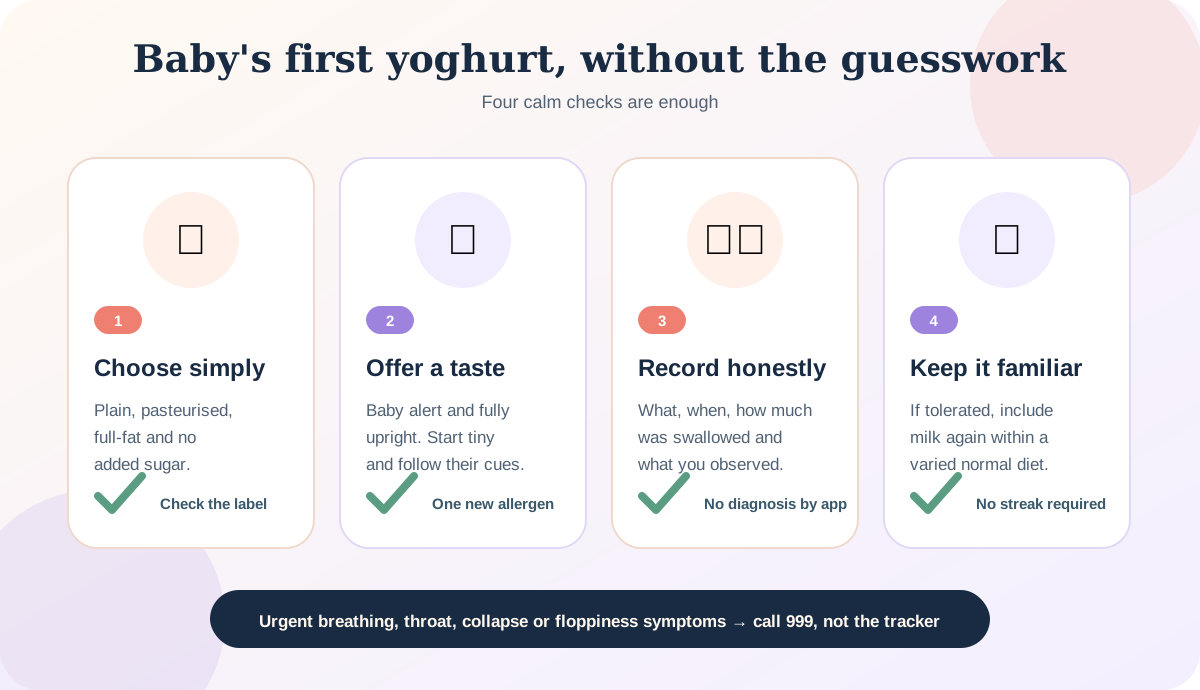
Most babies who are ready for solid foods can have plain, pasteurised, full-fat yoghurt from around six months. Choose one with no added sugar, offer a small amount while your baby is alert and sitting safely upright, and treat cow's milk as a new allergen if it has not been introduced before.
Yoghurt is food, not a replacement for breast milk or first infant formula. Cow's milk can be used in food from around six months, but it should not become a baby's main drink until 12 months.
The shopping answer in 20 seconds
Look for:
- plain rather than flavoured
- full-fat rather than low-fat or fat-free
- pasteurised milk
- no added sugar
- a short ingredient list you can understand
Leave products marketed as desserts, mousses or sweetened pouches on the shelf for this first taste. “Baby” on the label is not required. Ordinary plain full-fat yoghurt is suitable when the ingredients and storage instructions are appropriate.
Why yoghurt is allowed before cow's milk as a drink
The rule is about the role cow's milk plays in the diet—not a magical change to milk on the first birthday.
Before 12 months, breast milk or first infant formula should remain the main milk drink because it provides the nutritional balance a baby needs. The NHS says cow's milk can be used in cooking or mixed with food from around six months, and that full-fat dairy foods such as plain yoghurt can be offered from around six months.
A spoon of yoghurt is one complementary food within a varied diet. A bottle or cup of cow's milk used to replace the baby's usual milk is different.
| From around 6 months | Wait until 12 months | |---|---| | plain full-fat yoghurt as food | cow's milk as the main drink | | pasteurised cheese in suitable amounts and forms | replacing breast milk or first infant formula with ordinary milk | | cow's milk mixed into porridge, mash or cooking | relying on yoghurt to make up for several dropped milk feeds |
Continue normal responsive breastfeeds or first infant formula feeds while solids gradually grow. Do not deliberately cut milk so that a baby arrives at the highchair hungrier.
Which yoghurt is best for a 6-month-old?
Choose full-fat
Babies and young children need energy and fat as part of a varied diet. Full-fat plain yoghurt also tends to have a less complicated ingredient list than heavily marketed reduced-fat alternatives. “High protein” is not a target a baby needs you to optimise, and low-fat yoghurt is not automatically the healthier choice for this age.
Greek yoghurt, Greek-style yoghurt and natural yoghurt can all work. The useful checks are plain, full-fat, pasteurised and unsweetened—not the marketing name on the front.
Choose plain and unsweetened
Flavoured yoghurts can contain added sugar even when fruit appears prominently on the packet. Babies do not need sugar added to food. Check the ingredients rather than relying on colours, cartoon fruit or claims such as “source of calcium”.
Milk contains naturally occurring lactose, so the nutrition panel will normally show some sugar even in plain yoghurt. That is different from sugar, syrup, fruit concentrate or another sweetener added as an ingredient.
If you want to change the flavour after plain yoghurt is familiar, stir in a food your baby already knows, such as mashed pear or banana. Keep the first milk-allergen introduction simple enough that you can identify what was offered.
Choose pasteurised
Avoid yoghurt made from unpasteurised milk because young children are more vulnerable to food poisoning. Most supermarket yoghurt in the UK is pasteurised, but check the label—especially for farm-shop, artisan or imported products.
Keep yoghurt chilled, use a clean spoon and follow the use-by date and storage instructions. Put a little into a separate bowl rather than feeding from the main pot and returning a used spoon to it.
How to offer the first spoon safely
Start only when your baby shows all three readiness signs: they can stay sitting with a steady head, coordinate looking/reaching/grasping, and swallow food rather than automatically pushing it back out. For most babies, these signs come together at around six months.
Then:
- Choose a day when your baby is well and you can observe them.
- Sit them fully upright in a stable highchair with the harness fastened.
- Put a small amount of plain yoghurt in a separate bowl.
- Offer a tiny taste on a soft spoon, or load the spoon and let your baby bring it towards their mouth.
- Pause. Let your baby decide whether to continue.
- Stop when they turn away, close their mouth or lose interest.
Cold yoghurt straight from the fridge is fine if your baby likes it. The texture is already smooth; it does not need thinning. Never put yoghurt into a bottle or feeder, and never leave a baby alone with food.
There is no universal spoonful that proves tolerance. “Licked it”, “swallowed a small amount” and “ate several spoonfuls” are different observations. Record what actually happened rather than awarding a pass.
Yoghurt is a milk-allergen introduction
Yoghurt contains cow's-milk protein, so it belongs in the milk-allergen history even though it is not a drink. NHS guidance advises introducing foods that can trigger allergy from around six months, one at a time and in small amounts so that a reaction can be identified.
For a first home introduction:
- use a single new allergen rather than combining yoghurt with egg, peanut and wheat for the first time
- offer it earlier in the day when practical
- keep the rest of the meal familiar
- note the product, time, amount actually swallowed and any symptoms
- do not introduce it when your baby is acutely unwell
Talk to your GP or health visitor before introduction if your baby has a diagnosed food allergy, eczema or another reason you have been given an individual plan. If your baby has known cow's-milk allergy, do not test yoghurt at home unless the allergy team has specifically told you to follow a supervised plan or milk ladder.
Lactose intolerance and cow's-milk allergy are not the same. Lactose intolerance involves difficulty digesting milk sugar; cow's-milk allergy is an immune reaction to milk protein. A baby with suspected symptoms needs an appropriate assessment rather than a parent choosing a lactose-free yoghurt and assuming the problem is solved.
What reactions should I watch for?
Allergic reactions can include:
- a raised, itchy rash or hives
- swelling of the lips, face or around the eyes
- vomiting
- coughing, wheezing or noisy breathing
- a swollen tongue or throat
- sudden floppiness, unusual drowsiness, paleness or collapse
Stop the food and seek medical advice if you suspect a reaction. Call 999 immediately for breathing difficulty, swelling of the tongue or throat, collapse, marked floppiness or another sign of a severe allergic reaction. If an adrenaline auto-injector has been prescribed, follow the emergency plan and use it as instructed.
Some cow's-milk allergy symptoms can be delayed. Repeated vomiting, diarrhoea or constipation, blood or mucus in stools, worsening eczema, feeding distress or poor growth deserve clinical review, particularly when there is a repeated relationship with milk. These symptoms have many possible causes; a food log can support the conversation but cannot diagnose the cause.
A little redness exactly where an acidic food touched the skin can sometimes be irritation rather than allergy. Yoghurt is not particularly acidic, but any uncertain rash should be described plainly: where it appeared, how soon, whether it spread and what else happened. Do not use an app label to decide that breathing or circulation symptoms are mild.
If yoghurt is tolerated, offer it again
One symptom-free taste is useful history, not a guarantee against every future reaction. Once milk is introduced and tolerated, keep it in the baby's usual varied diet in forms they can safely manage. The NHS advises continuing to offer tolerated allergenic foods as part of the normal diet.
That might mean yoghurt with porridge, yoghurt beside soft fruit, or yoghurt as a dip with an appropriate family meal. It does not need to appear every day, become a streak or replace variety.
Avoid turning yoghurt into the only accepted food. If every unfamiliar taste is mixed into a large amount of sweet fruit yoghurt, your baby has less opportunity to meet the original flavours and textures. Use it as one useful food, not camouflage for the whole menu.
How OBubba makes this easier to remember
The current OBubba app includes Full-fat yoghurt in Care → Weaning → First Foods. The catalogue marks it from six months, groups it with dairy and eggs, labels dairy as the allergen and suggests serving it plain, unsweetened and full-fat by spoon or stirred through fruit purée.
Its note makes the easy-to-confuse distinction explicit: dairy is a common allergen; cow's milk as a main drink waits until 12 months, while milk in food can be offered from around six months.
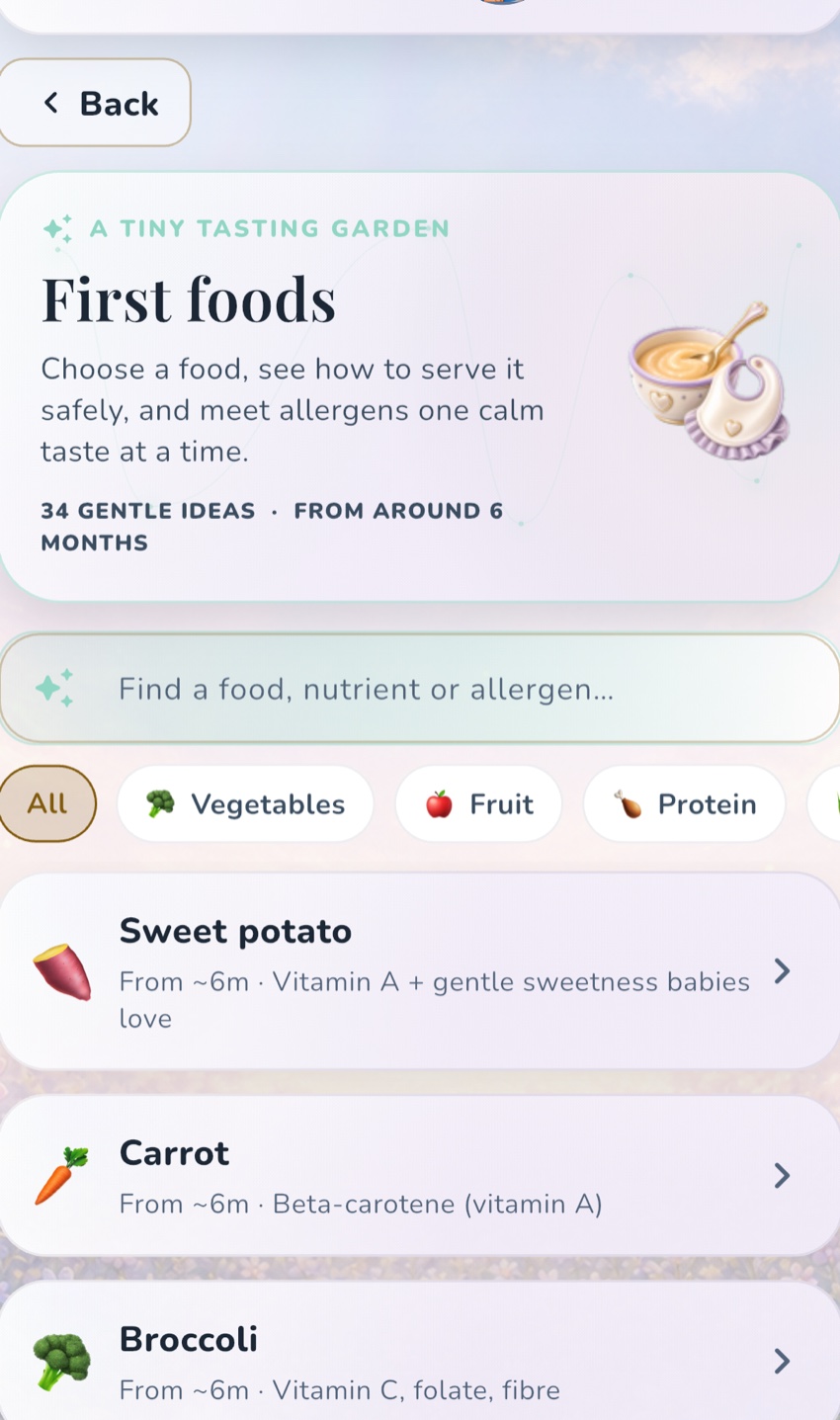
When the meal happens, log a recognisable name such as plain full-fat yoghurt rather than “snack”. OBubba's allergen matching can recognise yoghurt as dairy, and the parent can record a simple outcome such as loved, unsure or reaction. That history feeds the app's lifetime ever tried and ever reacted summaries so an older introduction does not disappear when it leaves the recent timeline.
The useful boundaries are just as important:
- OBubba cannot see how much was swallowed
- automatic ingredient matching can be wrong or incomplete
- “no reaction” is not an allergy test
- the app cannot judge whether a rash, vomit or breathing change is allergic
- it cannot approve a home milk challenge for a baby with known or suspected allergy
Check the detected allergen and correct the entry if necessary. During an urgent reaction, care comes before logging.
Try OBubba's weaning tracker free → — keep first foods, milk allergens, reactions, textures and the next meal idea in one calm family record.
A good first-yoghurt log
Keep it short and factual:
> 9:10am — Plain pasteurised full-fat yoghurt. First dairy food. Clearly swallowed about half a teaspoon, then turned away. No immediate symptoms observed.
If something unusual happens, add what you saw and when:
> 9:18am — Two raised patches beside the mouth; baby otherwise alert and breathing normally. Stopped yoghurt and called for advice.
Do not write “milk allergy” unless a clinician has diagnosed it. Concrete observations are more useful at an appointment than certainty the record cannot support.
Frequently asked questions
Can a 6-month-old have Greek yoghurt?
Yes, if the baby is ready for solids and the yoghurt is plain, pasteurised, full-fat and has no added sugar. Greek-style thickness can sit well on a preloaded spoon. Follow your baby's cues rather than aiming for a portion.
Can babies have flavoured yoghurt?
Plain yoghurt is the better everyday starting choice because many flavoured products contain added sugar. Once milk is tolerated, you can stir in a familiar mashed fruit for flavour while keeping control of the ingredients.
Can babies have dairy-free yoghurt?
A dairy-free product does not introduce cow's-milk protein. Products vary widely in energy, protein, calcium, iodine, added sugar and fortification. If dairy is excluded because of suspected or diagnosed allergy, ask a health visitor, GP or paediatric dietitian which alternative fits the baby's overall diet. Do not use rice drinks as a milk replacement for children under five.
Does yoghurt replace a milk feed?
Not at the beginning. Breast milk or first infant formula remains the main milk drink throughout the first year. Offer yoghurt as food alongside the gradual introduction of solids.
How much yoghurt should I give first?
Begin with a tiny taste and let your baby lead. There is no NHS target portion that every six-month-old must finish. A small swallowed amount is an introduction; appetite and confidence grow at different speeds.
My baby made a face. Do they dislike yoghurt?
Not necessarily. A cold, tangy taste is new. Funny faces, touching, smearing and stopping after one taste can all be normal exploration. Offer it again without pressure if there was no reaction.
Reliable UK sources
- NHS: Your baby's first solid foods
- NHS: Food allergies in babies and young children
- NHS: Drinks and cups for babies and young children
- NHS: Help your baby enjoy new foods
This article gives general information for UK families. It is not an allergy, feeding or growth assessment, and OBubba is not a medical device. Follow advice from your baby's own healthcare team.
Ready to try OBubba?
Use OBubba to track feeds, sleep, naps, nappies, growth, milestones and family handovers in one calm baby tracker app.