The bottle is tiny. The advice can feel surprisingly complicated: vitamin D alone or a multivitamin? One drop or a whole dropper? What if your baby has breast milk and formula? And does starting solids change anything?
Here is the short UK answer:
- Breastfed or combination-fed babies under 1: give a daily supplement containing 8.5–10 micrograms (µg) of vitamin D from birth, even if the breastfeeding parent takes vitamin D.
- Formula-fed babies under 1: if baby has 500ml or more of infant formula a day, they usually do not need an additional vitamin supplement because formula is fortified. If they have less than 500ml, NHS guidance recommends a daily vitamin D supplement.
- Children aged 1–4: give 10µg of vitamin D every day. NHS guidance also recommends vitamins A and C from 6 months to 5 years, with the infant-formula exception while a baby is drinking 500ml or more a day.
Use the instructions on the exact product you buy. Drop concentrations vary, so “one drop” from one bottle is not automatically the same dose as “one drop” from another.
> Milk type and daily formula volume answer the first question. The product label answers how much liquid to give.
The vitamin D decision table
| Your baby | Current UK guidance | |---|---| | Exclusively breastfed, birth to 1 year | 8.5–10µg vitamin D daily from birth | | Breast milk plus any formula, birth to 1 year | 8.5–10µg vitamin D daily from birth | | Formula-fed and drinking under 500ml formula a day | Daily vitamin D supplement | | Formula-fed and drinking 500ml or more formula a day | No extra vitamin supplement is normally needed; formula is fortified | | Age 1–4 years | 10µg vitamin D daily throughout the year |
The 500ml figure is a daily total, not the size of one bottle. If intake moves above and below it while feeds are changing, ask your health visitor or pharmacist what is simplest for your baby rather than trying to calculate a perfect answer after every feed.
Why breastfed babies need their own drops
Breast milk remains an excellent food for babies, but it does not reliably provide enough vitamin D. That is why the NHS recommendation applies to babies who receive any breast milk, whether exclusively or alongside formula.
The breastfeeding parent's supplement does not replace the baby's own drops. Taking the recommended vitamin D yourself matters for your health, but NHS advice still says a breastfed baby needs their own daily 8.5–10µg supplement from birth.
This is not a judgement on breastfeeding or a sign that milk is “not enough.” It is a small, routine supplement designed to support normal bone and muscle development.
What if my baby is combination fed?
Combination feeding is the point at which many parents get stuck. It is tempting to subtract the vitamin D in each formula bottle from a target and invent a new dose. That is not the NHS instruction.
If your baby is under 1 and receives breast milk, the guidance is to give 8.5–10µg vitamin D daily. If you are transitioning fully to formula and baby consistently reaches 500ml or more a day, check with your health visitor or pharmacist about when to stop the extra drops.
Formula volumes naturally wobble with illness, growth, solids and appetite. A weekly pattern is more useful context than panicking over one unusually small bottle day.
Does starting solids replace vitamin drops?
No. Eggs, oily fish and some fortified foods can contain vitamin D, but it is difficult to get enough from food alone. Sunshine is also not a reliable substitute for the recommended supplement, and a baby's skin should still be protected from burning.
From around 6 months, NHS guidance recommends daily vitamins A, C and D until age 5. Babies having 500ml or more infant formula a day should not be given an additional vitamin supplement because formula already contains these vitamins.
That means the supplement question can change during weaning:
- Notice whether breast milk is still part of feeding.
- Look at the baby's usual total formula intake across 24 hours.
- Check whether the chosen product contains vitamin D alone or vitamins A, C and D.
- Follow the product's age range and dose exactly.
Milk remains the main drink throughout the first year. Do not cut milk to make room for supplements or solids.
How to choose and give vitamin drops safely
The pharmacy shelf may contain single-vitamin drops, multivitamin drops and products for different ages. The most useful front-of-box promise is not “premium” or “natural”; it is a clear age range and the right amount of vitamin D in the stated daily dose.
Before the first dose:
- check the product is suitable for your baby's age
- find the vitamin D amount in micrograms, not just the number of drops
- read whether the dose uses a drop, pipette, syringe or spoon
- check whether another supplement, such as cod liver oil, also contains vitamins A or D
- ask a pharmacist if the label or ingredients are unclear
The NHS warns that too much of some vitamins can be harmful. Keep to the label dose and do not give two vitamin supplements at the same time unless a clinician has specifically told you to. Store the bottle securely away from children.
Give the product exactly as its leaflet directs. Different liquids have different concentrations and devices. If a clinician has prescribed vitamin D to treat a deficiency, follow that prescription rather than the routine prevention doses in this article.
What if I forget a dose?
One forgotten day is not a parenting emergency. Check the leaflet for your product and return to the usual routine. Do not automatically double the next dose; concentrations differ, and the instructions for missed doses may differ too.
A low-friction habit is more dependable than guilt:
- keep the bottle in one secure place near an existing daytime routine
- choose a cue you usually do once a day, such as the first morning feed
- let a partner know whether today's dose has been given
- replace the bottle before it runs out, not on the last drop
If you think more than the recommended amount was given, contact a pharmacist, GP or NHS 111 for advice and have the bottle or packaging to hand.
Ask for individual advice when the usual rule may not fit
Speak to your neonatal team, health visitor, pharmacist or GP if your baby:
- was born prematurely or has a neonatal supplement plan
- uses a specialist formula or prescribed feed
- has a condition affecting absorption, liver, kidneys or bones
- is taking prescribed medicines
- has been diagnosed with vitamin D deficiency
- is moving between breast milk and formula and the 500ml threshold is unclear
Premature babies may be prescribed a particular multivitamin product and dose. Do not layer an off-the-shelf vitamin D product on top without checking.
Can I get free Healthy Start vitamin drops?
If you are eligible for Healthy Start, you can get vitamin drops suitable from birth to 4 years. The drops contain vitamins A, C and D. Your health visitor can help with eligibility and where to collect them, or you can check the Healthy Start vitamins page.
If you do not qualify, baby vitamin drops are available from pharmacies and supermarkets. A pharmacist can help compare the daily vitamin D amount and age suitability without steering you towards a needlessly complicated routine.
How the real OBubba app handles vitamin D
OBubba's current native app uses feeding context and baby's chronological age to surface a low-pressure vitamin D nudge during the first year. The reminder appears when a breastfeed or combination feed has been logged in the previous seven days, rather than assuming every family feeds in the same way.
Its wording reflects the UK distinction: breastfed babies need daily vitamin D, while babies taking 500ml or more fortified formula generally do not need extra. The same answer also appears inside the newborn Grow → Is this normal? guide alongside practical reassurance about feeding, poo, skin, breathing and other common early questions.
The reminder does not add up formula volume or decide that a baby has crossed the 500ml threshold. It cannot tell which drops you use or whether today's dose has been given. Those decisions still come from the product label and, when feeding is changing or your baby has a specialist plan, a pharmacist, health visitor or clinical team.
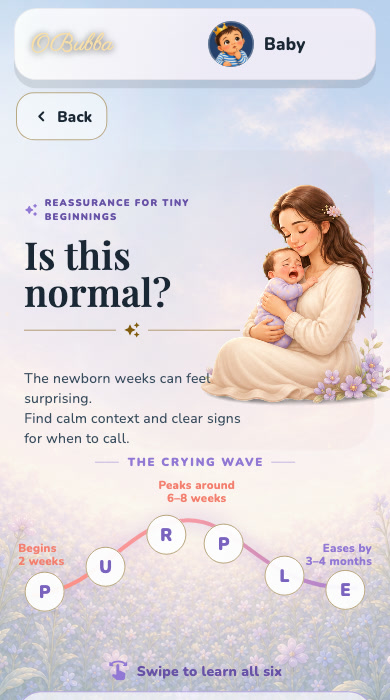
The app deliberately does not treat a routine vitamin entry like a restricted medicine dose or use it as a signal that baby is ill. That separation matters: a supplement reminder should not distort sleep, feed or disruption insights.
What OBubba does not do
OBubba does not choose a brand, prescribe a dose, diagnose a deficiency or know the concentration in the bottle in your hand. The current contextual reminder also ends after 52 weeks, so it does not replace the continuing NHS recommendation for daily vitamin D through early childhood.
Use OBubba as the gentle prompt and context layer; use the product label, pharmacist and your baby's clinical team for the exact supplement decision.
Try OBubba free →. Keep feeds, sleep, nappies, development, weaning and the small pieces of guidance that are easy to forget on a tired day in one calm place.
The screenshot-friendly answer
If you want one short note to share with a partner:
> Any breast milk under age 1: 8.5–10µg vitamin D daily from birth. > Formula only: extra drops are not normally needed at 500ml or more formula per day. > Age 1–4: 10µg vitamin D daily. > Check the exact product label; do not combine supplements.
Frequently asked questions
Does my baby need vitamin D if I take it while breastfeeding?
Yes. NHS guidance says a breastfed or partially breastfed baby needs their own daily 8.5–10µg vitamin D supplement from birth, whether or not the breastfeeding parent takes vitamin D.
Does my formula-fed baby need vitamin D drops?
Not normally if they drink 500ml or more infant formula a day, because formula is fortified. If they drink less than 500ml a day, NHS guidance recommends a vitamin D supplement.
Is 400 IU the same as 10 micrograms?
For vitamin D, 400 international units (IU) equals 10µg. Still follow the dose instructions supplied with your product; the number of drops needed to provide that amount varies.
Should I give vitamin D alone or vitamins A, C and D?
Under 6 months, breastfed babies specifically need vitamin D. From 6 months to 5 years, NHS guidance recommends vitamins A, C and D, except while a baby is having 500ml or more fortified infant formula a day. A pharmacist or health visitor can help choose an age-appropriate product.
Can I put the drops in a full bottle?
Follow the product leaflet. Putting a dose into a large bottle can make it impossible to know how much was taken if baby does not finish. Ask a pharmacist about the best way to give your particular drops.
Do babies need vitamin D in summer?
Yes. The NHS recommendation for babies and children in these groups is daily supplementation throughout the year; do not use extra sun exposure as a substitute.
Sources and support
- NHS: Vitamins for babies
- NHS: Vitamins for children
- NHS: Your baby's first solid foods
- NHS: Breastfeeding vitamins
- Healthy Start: Getting vitamins
This UK-oriented article provides general information, not medical advice. Follow the label on your baby's exact supplement and any neonatal or clinical plan. Ask a pharmacist, health visitor or GP when unsure; contact NHS 111 if you think too much was given, and call 999 in an emergency.
Ready to try OBubba?
Use OBubba to track feeds, sleep, naps, nappies, growth, milestones and family handovers in one calm baby tracker app.