One day your baby clears the bowl. The next, they lick a spoon, drop the broccoli and decide the highchair is over. It is easy to look at what is left on the tray and wonder: is my baby actually eating enough?
The short answer: when a baby first starts solids at around six months, the size of the portion is a poor measure of progress. The NHS says how much they eat matters less at the beginning than learning about food; breast milk or first infant formula still provides most of their energy and nutrients. Over the following months, meals gradually become more substantial and varied.
Instead of judging one bowl, look at the whole picture: milk feeds, wet nappies and general wellbeing, hunger and fullness cues, variety and texture, and the longer-term growth pattern recorded with your health visitor.
What does “enough” mean at each stage?
There is no single portion that every baby of the same age should finish. Appetite changes with growth, tiredness, illness, teething and how much milk a baby has taken. The direction of travel matters more than matching another baby's plate.
Around six months: first tastes and new skills
At the start, the NHS suggests offering small amounts — a few soft pieces or teaspoons — before the usual milk feed. Your baby does not need three meals immediately. They are learning to sit at the table, reach, grasp, move food around their mouth and swallow.
Milk remains central. Breast milk or first infant formula should continue as your baby's main drink throughout the first year. A day of tasting, squashing and dropping food is not a failed day.
From seven to nine months: gradually building meals
From about seven months, babies gradually move towards three meals alongside their usual milk feeds. The NHS gives around four milk feeds a day as one example and around 600ml daily as a guide for formula-fed babies — not a target to force onto every baby.
Increase the amount and variety your baby is offered at their pace. Include iron-containing foods such as beans, lentils, eggs, meat, fish, fortified cereal and dark green vegetables, prepared safely for their age.
From 10 to 12 months: a wider family rhythm
By about 10 months, the NHS describes three meals alongside usual milk feeds. Breastfed babies adjust their intake; as a guide, formula-fed babies may drink around 400ml a day. By now, babies are usually exploring a wider range of tastes, textures and finger foods.
These stages are a guide, not a scoreboard. If your baby was born prematurely, or you have been given an individual feeding plan, follow your health visitor, GP, paediatrician or dietitian.
Six clues that are more useful than an empty bowl
No single sign proves that intake is sufficient. Together, these observations give a more useful picture and help you explain a concern clearly to a professional.
1. Milk feeds are still part of the day
Early solids complement milk; they do not abruptly replace it. Keep offering breast milk or first infant formula responsively and follow any feeding advice specific to your baby. Do not deliberately cut milk to make a baby eat more solids, and do not add cereal or food to a bottle.
2. Wet nappies and general alertness look usual for your baby
Nappies cannot tell you how many calories a baby ate. They can, however, add useful hydration and wellbeing context. Fewer wet nappies than usual, few or no tears, a dry mouth, a sunken soft spot, drowsiness or unusual irritability can be signs of dehydration. Seek urgent advice from NHS 111 or your local service if you are concerned; call 999 for emergency symptoms such as difficulty breathing or being hard to wake.
3. Your baby is allowed to lead the stopping point
Turning away, closing the mouth, pushing food away or losing interest can mean “enough for now”. Wait for your baby to open their mouth before offering a spoon and never force them to eat. Some days they will eat more; other days very little.
Responsive feeding is not passive. The adult decides what suitable food to offer, when and where; the baby communicates whether and how much to eat.
4. Foods and textures are expanding over time
Progress can look like touching a new food, managing a lumpier texture, accepting a previously refused flavour or learning to self-feed — not just eating more teaspoons. Repeated, pressure-free offers count. The NHS notes that a baby may need 10 tries or more to get used to a food or texture.
As meals grow, aim for variety across fruit and vegetables, starchy foods, protein foods and full-fat pasteurised dairy where suitable. Include iron-rich foods regularly.
5. Growth is viewed as a pattern, not a daily score
Steady weight gain is one sign of health and feeding, but one measurement cannot answer whether today's lunch was enough. Measurements are most useful when taken accurately and plotted over time in your baby's personal child health record — the red book.
The NHS advises weighing no more than once every two months from six to 12 months unless you have been asked to do it more often or there is a concern. Frequent home weighing can turn normal variation into anxiety. A baby need not follow a centile line exactly; crossing two centile lines is less common and is something to discuss with a health visitor.
6. Comfort and health are considered
Pain, constipation, reflux symptoms, mouth soreness, illness, tiredness or feeding-skill difficulties can affect eating. Speak to your health visitor or GP if your baby repeatedly struggles to eat, coughs or chokes with food, seems distressed at meals, has persistent vomiting or diarrhoea, is losing weight, or you are worried about growth.
What not to use as a sufficiency test
Try not to let these become verdicts on your baby:
- a clean bowl or a fixed number of spoonfuls
- another baby's meal photo or appetite
- one unusually hungry or uninterested day
- a longer or more broken night
- a single home weight
- how much food ended up on the floor
Starting solids does not make a baby more likely to sleep through the night. If sleep and appetite change together, record both, but do not assume one caused the other.
A simple three-day log when you are unsure
You do not need to weigh every pea. For three ordinary days, capture only the details that show context:
- Milk: breast or bottle feed times, plus duration or amount if that is already useful to you.
- Solids: what you offered and your baby's response — for example, loved it, unsure or a specific reaction.
- Nappies: wet and dirty nappy times, without trying to convert them into food intake.
- One context note: illness, teething, unusual tiredness, constipation or a disrupted routine.
If you ask for help, this short record can support the conversation. It does not diagnose a feeding problem and should not delay seeking advice when your baby seems unwell.
Keep food reactions separate from ordinary appetite changes
A food refusal is not the same as an allergic reaction. NHS guidance says allergic reactions often happen within minutes, although some symptoms can take longer. Possible signs include swollen lips or face, wheezing or coughing, an itchy rash, vomiting, tummy pain, diarrhoea or worsening eczema.
Introduce foods that can trigger allergy one at a time and in small, age-appropriate amounts so a reaction is easier to spot. If your baby has a diagnosed food allergy or eczema, or a family history of allergy, eczema, asthma or hay fever, speak to your GP or health visitor first.
Breathing problems or swelling of the throat or tongue can signal anaphylaxis. This is a medical emergency: call 999 in the UK. Do not re-offer a food after a suspected reaction until you have medical advice.
How OBubba turns scattered clues into one calm picture
OBubba's design reflects the reality that “enough” is not one number. In Track → Feed → Solids, you record the food in your own words and choose Loved it, Unsure or Reaction. The app can recognise allergens in the food name and show relevant food-safety prompts. It intentionally does not ask you to count grams or spoonfuls.
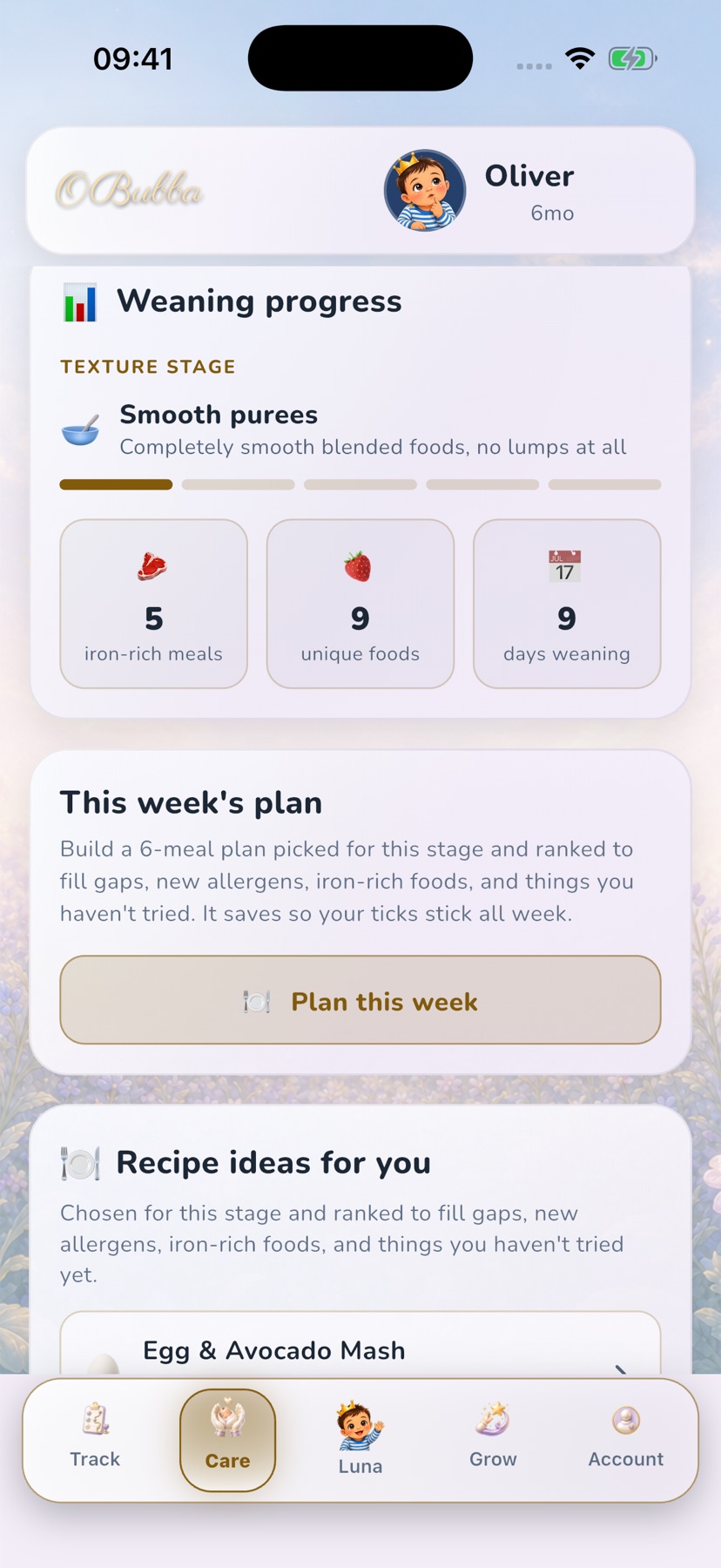
The same timeline can hold breast and bottle feeds, wet and dirty nappies, sleep and notes. In the Weaning area, logged solids become a food journal and contribute to your baby's allergen journey, texture progress, unique foods and iron-rich meal count. Meal ideas favour variety and can avoid foods marked with a reaction.
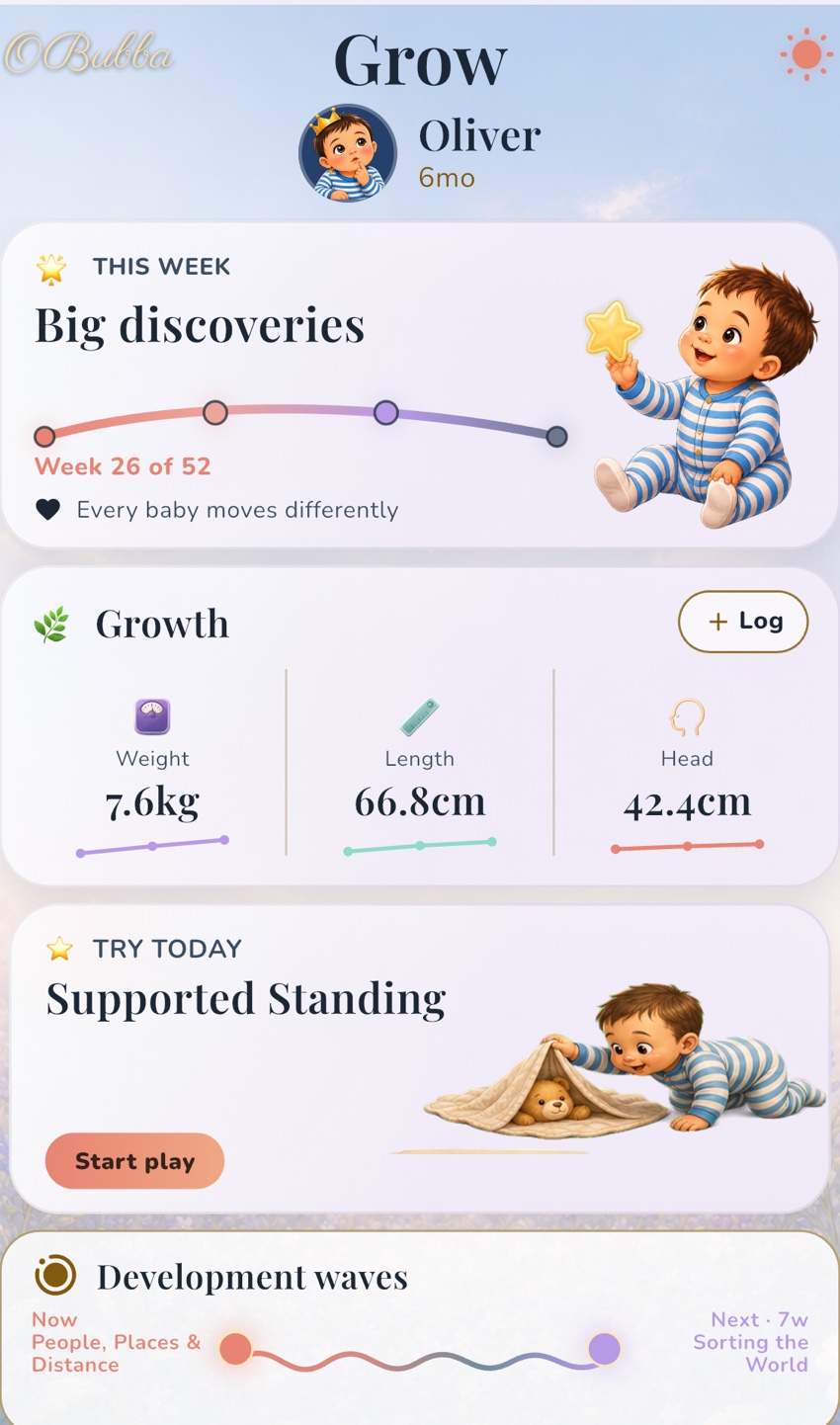
In Grow, you can record weight, length and head circumference and view measurements on local WHO curves from birth to 24 months. This is a parent-held view, not a clinical interpretation. It does not decide whether a centile change is healthy, replace the red book or tell you whether your baby is eating enough.
Used together, the features help you remember what happened and notice a pattern worth discussing. The decision about a baby's nutrition or growth belongs with a qualified health professional who can assess the whole child.
Try OBubba free → — feeds, first foods, allergens, nappies, sleep and growth in one mum-built app.
Sources and further reading
- NHS: Your baby's first solid foods
- NHS: Your baby's weight and height
- NHS: Food allergies in babies and young children
- NHS: Dehydration
OBubba is a tracking and education tool, not medical advice. If you are worried about your baby's feeding, hydration, growth or health, contact your health visitor, GP, NHS 111 or emergency services as appropriate.
Ready to try OBubba?
Use OBubba to track feeds, sleep, naps, nappies, growth, milestones and family handovers in one calm baby tracker app.