After birth, almost every question seems to begin with the baby. When did they feed? How long did they sleep? How many wet nappies?
Your body is recovering too. It deserves more than an exhausted guess that everything is “probably normal”.
The short answer: postpartum recovery is not a straight six-week countdown. Bleeding, cramping, wound or tear healing, breast changes, bowel discomfort, pelvic-floor symptoms and deep tiredness can overlap. Many changes gradually ease, but some symptoms need help the same day and a smaller group need emergency care now.
OBubba’s real app reflects that distinction. Parent Room → Recovery & healing creates a private, week-aware guide from three details. It does not diagnose, score your physical symptoms or replace postnatal care.

What postpartum recovery can look like by week
There is no single “normal” timeline. Birth type, complications, feeding, sleep opportunity, pain, support and health before pregnancy all matter. Use this as orientation, not a deadline.
Week 1: bleeding, cramping and basic comfort
Postnatal bleeding is called lochia. It is usually heaviest during the first few days and can look red or dark. Period-like cramps can happen as the womb contracts, and they may feel stronger while breastfeeding.
Stitches, swelling, piles, trouble finding a comfortable toilet position and the first bowel movement can occupy far more attention than anyone warned you about. After a C-section, wound care and moving gently are central parts of recovery.
The NHS advises urgent emergency action for postnatal bleeding that becomes sudden and very heavy, particularly with faintness, dizziness or a pounding heart. A high temperature, unusual smell, worsening tummy or perineal pain, heavier bleeding or clots need professional advice.
Week 2: look for a direction, not perfection
Recovery should not have to look tidy. A useful question is whether symptoms are generally moving in a safer direction.
- Is bleeding easing rather than suddenly increasing?
- Is pain becoming more manageable rather than more severe?
- Does a wound or tear look and feel as though it is healing rather than becoming redder, hotter, more swollen or leaky?
- Can you drink, eat, wee, poo and move with gradually less difficulty?
If the answer is “no”, contact your midwife, GP or maternity service. You do not need to wait for a scheduled check.
Weeks 3–4: less visible does not mean finished
Bleeding often becomes lighter and changes colour before stopping. The NHS says it commonly settles within 6 to 8 weeks, although it may last longer.
Pelvic heaviness, leaking urine, bowel-control changes, pain and fatigue still deserve attention even when the outside world assumes you are “back to normal”. Gentle pelvic-floor exercises can be appropriate when they feel comfortable, but symptoms that bother you can be raised with a GP or health visitor at any time.
If you are breastfeeding, mastitis can begin quickly. The NHS describes a swollen, hot and painful area, sometimes with a wedge-shaped lump and flu-like symptoms. Continue feeding responsively if you can, avoid firm breast pressure, and seek GP advice if symptoms are not improving after 12–24 hours of home care.
Weeks 5–8: your postnatal check belongs to you
The NHS says you should be offered a maternal postnatal check 6 to 8 weeks after birth. It may sit beside the baby’s appointment, but it is a separate check for your recovery.
Depending on your circumstances, the conversation may include:
- mental health and general wellbeing
- bleeding or discharge
- blood pressure after pregnancy-related problems
- C-section, episiotomy or tear healing
- pelvic-floor, bladder or bowel symptoms
- painful sex
- contraception and future pregnancy planning
- any medical condition that began or changed during pregnancy
Write questions down before the appointment. Sleep deprivation is a poor filing system, and “it feels awkward” is not a reason to leave a symptom unmentioned.
Weeks 9–12 and beyond: recovery still counts
A six-week check is not a finish line. Persistent pain, leaking, pelvic pressure, a vaginal bulge, bowel-control changes, scar concerns, overwhelming tiredness, feeding pain or mental-health symptoms can all justify another conversation.
CDC’s Hear Her campaign also warns that serious pregnancy-related complications can appear during the year after pregnancy. When asking for urgent care, say clearly that you gave birth within the last year.
A calm safety map
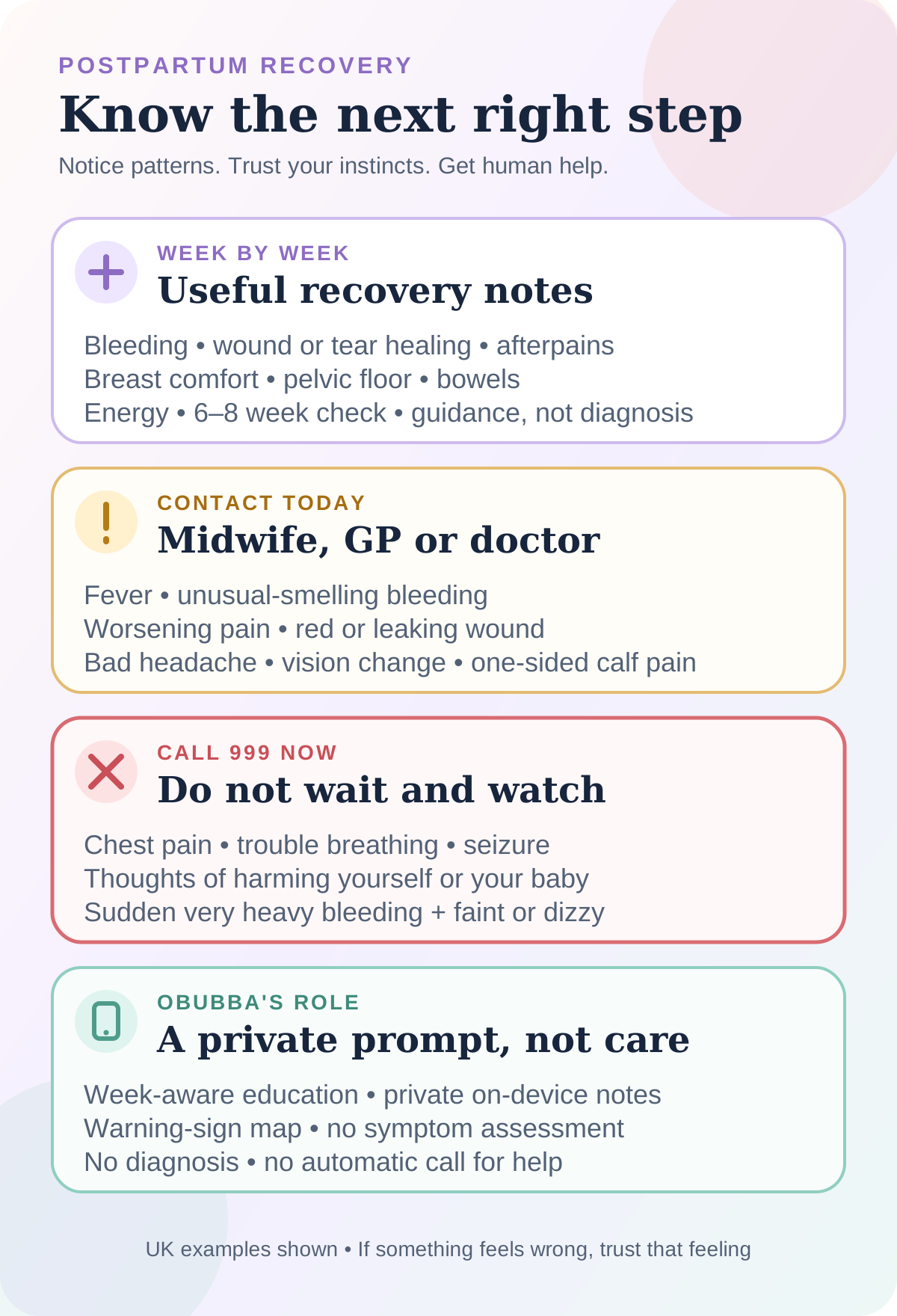
Call 999 now
The OBubba warning-sign screen puts four signs in its emergency group:
- pain or pressure in the chest
- trouble breathing or shortness of breath
- seizures
- thoughts of harming yourself or your baby
Current NHS guidance also says to call 999 for sudden, very heavy postnatal bleeding, especially with faintness, dizziness or a pounding heart. Follow the emergency guidance where you live; do not use an app screen to decide whether to wait.
Contact your midwife, GP or doctor straight away
The app’s urgent group includes heavy bleeding, a wound that is not healing, one-sided leg redness or swelling, a temperature of 38°C or higher, a severe or persistent headache, vision changes, upper-right abdominal pain, sudden face or hand swelling, faintness and overwhelming tiredness.
Those signs can have different causes. The point is not to name one at home; it is to reach somebody who can assess you.
This list is not exhaustive. New confusion, hallucinations or dramatic changes in behaviour after birth can also require urgent mental-health assessment. If anybody is in immediate danger, call 999.
How OBubba’s real Recovery & healing flow works
Open Care, enter the Parent Room, then tap Recovery & healing.
The first screen asks for three gentle details:
- When recovery began — your baby’s birth date sets the week shown.
- Your birth story — vaginal birth, assisted birth, C-section or VBAC, plus whether you had stitches or a tear.
- Feeding right now — whether you are breastfeeding or expressing, so breast-comfort notes can be relevant.
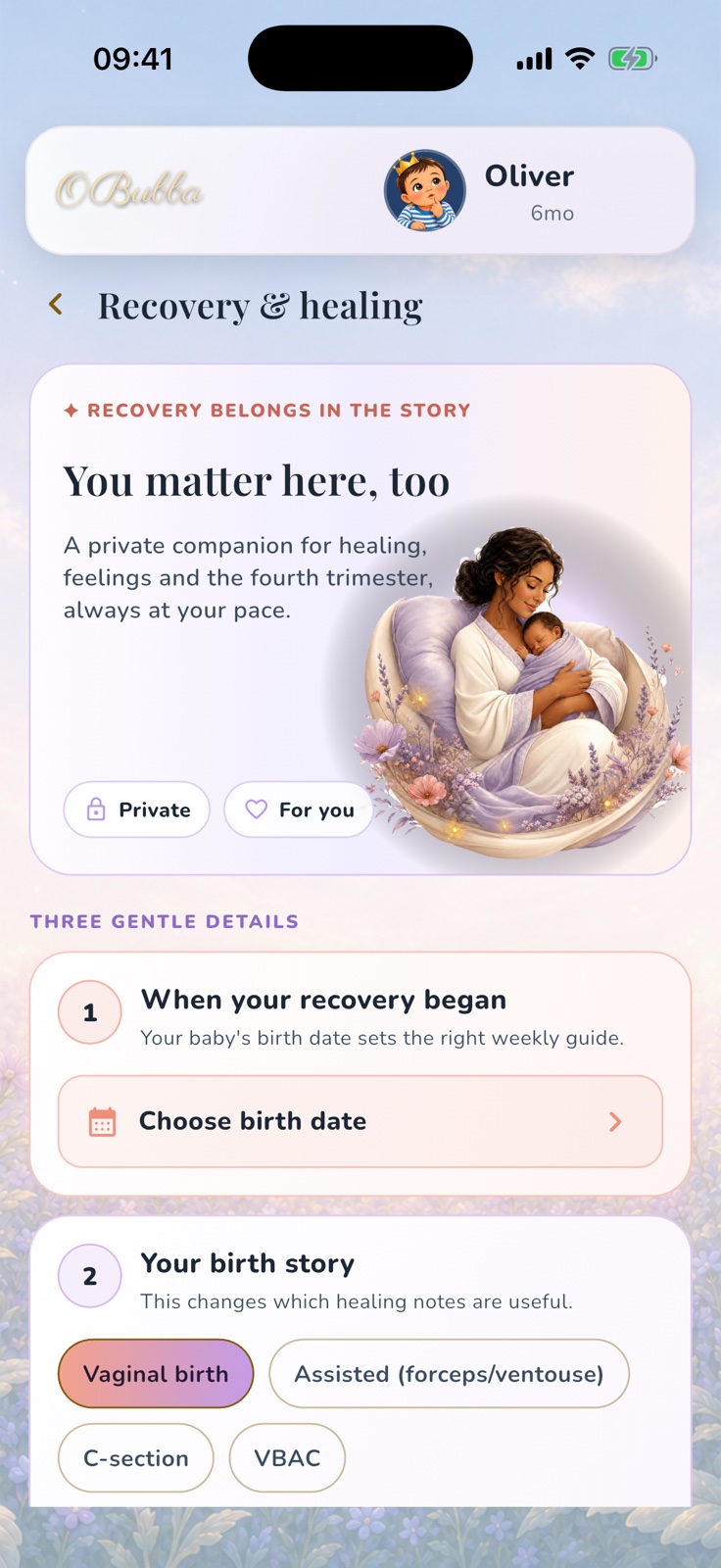
After setup, the current screen shows:
- a daily emotional-wellbeing check-in
- a simple mood trend once at least two check-ins exist
- expandable recovery cards for the current week
- a persistent Post-birth warning signs route
- a reminder that the content is guidance, not diagnosis
The weekly cards can cover bleeding, C-section or tear healing, afterpains, breast comfort, pelvic floor, bowels, energy and the 6–8 week check. The mix changes with week and setup details. For example, the engine adds C-section healing notes after a C-section and only includes breast-comfort guidance when breastfeeding or expressing is selected.
What the app does not ask
This boundary matters.
The current production screen does not make you complete a physical symptom checklist. It does not ask you to grade bleeding, enter a temperature, upload a wound photo or calculate the chance of a complication. It does not silently decide that a symptom is safe.
Instead, it provides week-relevant education and a warning-sign map that stays available to open. That is a better role for a parenting app than pretending a few taps can perform a clinical assessment.
The wellbeing check-in is separate. It asks about mood, anxiety, rest, support and bonding. A self-harm signal opens the support route, but the app cannot call emergency services, contact your midwife or tell whether somebody is safe.
What stays private on the phone
The repository keeps the Recovery & healing profile and daily maternal wellbeing entries in a separate local store on the device. They are deliberately kept out of the shared child-sync record used by partners and carers.
That means a partner viewing the baby’s shared timeline should not receive the parent’s recovery notes through that route. The current UI says: “Your recovery notes stay private on this phone.”
On-device does not mean the app is a medical record or a backup service. If you want a clinician to know something, tell them directly. Do not assume deleting the app, changing phones or restoring a device will preserve a health history.
Why this belongs beside sleep tracking
Baby sleep and parent recovery are connected, but they are not interchangeable.
A baby tracker can show when sleep happened. It cannot prove that the recovering parent had a genuine opportunity to rest, that pain allowed sleep, or that severe fatigue is “just newborn life”. The app should never use broken nights to explain away dizziness, breathlessness, a racing heart, fever or overwhelming exhaustion.
The useful pattern is simpler:
- let the baby timeline hold feeds, nappies, naps and wakes
- let the private parent space hold the parent’s own check-ins
- use sleep data to organise support, not to dismiss symptoms
- ask another adult to take a shift when possible
- contact a healthcare professional when tiredness feels extreme, sudden or physically wrong
This is one reason OBubba places Recovery & healing in the Parent Room rather than hiding it inside the baby’s sleep report. The parent is not another baby metric.
A two-minute recovery check-in for today
You do not need an app to do this.
Ask yourself:
- What is changing? Name one symptom that is improving, unchanged or worsening.
- What is getting harder? Pain, bleeding, breathing, headache, vision, a wound, one leg, feeding, toileting, mood or basic functioning.
- What do I need today? Food, water, medicine already advised for you, a shower, ten quiet minutes, somebody else holding the baby, or medical advice.
- Who will know? Tell one person the unedited version, not only “I’m fine”.
- Is this urgent? If you have an emergency warning sign, call now. If something feels wrong but does not match a neat list, contact your midwife, GP, NHS 111 or maternity service.
Recovery support should reduce remembering, not give you another streak to maintain.
Frequently asked questions
Is bleeding normal after birth?
Bleeding for several weeks is common and usually becomes lighter. The NHS says it often stops within 6–8 weeks. Contact a GP, midwife or health visitor if it smells unusual, gets heavier, does not reduce, includes clots or comes with a temperature or worsening pain. Call 999 for sudden, very heavy bleeding, especially with faintness, dizziness or a pounding heart.
Does recovery differ after a C-section?
Yes. A C-section is major surgery as well as a birth. Worsening redness, swelling, pain or discharge from the wound can indicate infection and needs assessment. Leg pain or swelling, chest pain and breathing difficulty also need urgent action.
What if my tear or stitches still hurt?
Some soreness is expected early on, but worsening pain, an unpleasant smell, pus, spreading redness, the wound opening or new bladder or bowel-control problems deserve professional review. Ask before the 6–8 week check if you are worried.
Is leaking urine just part of having a baby?
It is common, but you do not have to accept it indefinitely. Pelvic-floor exercises may help, and the postnatal check is a good time to discuss leaking, heaviness, pressure or a vaginal bulge. You can ask for help sooner.
Is Recovery & healing premium-only?
No premium gate appears on the current Parent Room card, setup flow, weekly guide or warning-sign screen.
Does OBubba diagnose postpartum haemorrhage, mastitis, infection or pre-eclampsia?
No. It provides education and signposting. It cannot examine you, take observations, interpret a wound or replace a healthcare professional.
Does OBubba share my recovery notes with my partner?
The current store keeps the maternal profile and wellbeing check-ins out of the shared child-sync data used by partners and carers. They remain local to that device through this feature.
Explore OBubba’s Parent Room → — a private place for recovery guidance, wellbeing check-ins and warning signs beside sleep, feeding and weaning tools for the baby.
Reliable sources
- NHS: Early days after birth and postnatal bleeding
- NHS: Your body after the birth
- NHS: Your 6-week postnatal check
- NHS England: What good 6–8 week maternal postnatal care looks like
- NHS: Mastitis
- CDC Hear Her: Support for pregnant and postpartum women
Product verification
- Current surfaces reviewed: `parent_room_screen.dart`, `mum_screen.dart`, `postpartum_recovery.dart`, `maternal_store.dart`, `maternal_warning_signs.dart` and `warning_signs_screen.dart`.
- 25 focused tests passed on 11 May 2027, covering weekly recovery tailoring, emergency-sign rendering, heavy bleeding, mastitis, vision changes, C-section guidance and compact-iPhone Parent Room readability.
- The in-app image above was captured from the repository’s debug-only visual harness on an iPhone simulator with fictional profile data. No production family data was used.
This article provides general information, not medical advice or a diagnosis. If you have chest pain, trouble breathing, a seizure, thoughts of harming yourself or your baby, or sudden very heavy bleeding with faintness or dizziness, call 999 now. For other concerns, contact your midwife, GP, NHS 111 or maternity service. Follow the emergency advice for your location.
Ready to try OBubba?
Use OBubba to track feeds, sleep, naps, nappies, growth, milestones and family handovers in one calm baby tracker app.