Your baby has started waking more. They are watching every bite you take. Someone says, “Maybe solids will fill them up and help them sleep through.” It sounds logical — but it is not a reason to begin weaning early.
The short answer: starting solid food does not make a baby more likely to sleep through the night. NHS guidance recommends beginning at around six months, when the three readiness signs appear together. At first, solids are about learning tastes, textures and eating skills; breast milk or first infant formula still provides most of your baby's energy and nutrients.
Why does the “solids equal better sleep” idea feel so convincing?
Weaning and changing sleep often arrive in the same broad season of babyhood. Around six months, babies are developing quickly, feeding patterns can shift and some begin sleeping for longer stretches — while many others continue to wake. When two changes happen together, it is easy to assume one caused the other.
Hunger can wake a baby, but a night wake is not proof that they are ready for solids. Chewing fists, wanting extra milk and waking more than usual are all behaviours the NHS says can be mistaken for readiness signs.
If your baby is waking, respond to the need in front of you. Offer milk according to their cues and the feeding advice you have been given. Then look at the whole pattern — feeds, naps, comfort, illness, development and bedtime — rather than using solids as a sleep treatment.
When is a baby ready to start solid food?
The NHS describes three signs that should appear together from around six months:
- They can stay sitting and hold their head steady.
- They can coordinate their eyes, hands and mouth to look at food, pick it up and bring it to their mouth.
- They can swallow food rather than automatically pushing it back out with their tongue.
Watching you eat is lovely curiosity, but it is not one of the three signs. Neither is a disrupted night.
If your baby was born prematurely, ask your health visitor or GP when to start. Their individual development and corrected age may need to be considered.
What changes during the first weeks of weaning?
Usually, less than parents expect. Your baby is practising a new skill, not immediately replacing milk feeds with full meals.
At the beginning:
- a few spoonfuls or soft pieces can be enough
- how much they eat matters less than exploring tastes and textures
- breast milk or first infant formula remains the main source of energy and nutrients
- milk remains the main drink throughout the first year
- babies do not need three meals a day as soon as they start
- appetite can vary from one day to the next
There is no need to rush portions or persuade your baby to finish. Responsive feeding means offering, watching their cues and stopping when they close their mouth, turn away or show they have had enough.
Could starting solids temporarily affect sleep?
It can change the rhythm of the day without guaranteeing a longer night. A later meal may nudge the timing of a milk feed. A new experience may be exciting. Teething or a developmental change may be happening at the same time.
That does not mean every wake after a new food is a “reaction”, and it does not mean the food caused a sleep regression. Look for a repeated pattern and for direct symptoms rather than drawing a conclusion from one unsettled night.
If you are introducing a food that can trigger an allergy, follow official guidance: offer it in a very small amount, one at a time, so a reaction is easier to spot. If your baby has diagnosed food allergy or eczema, or there is a family history of allergy, eczema, asthma or hay fever, speak to your GP or health visitor before you begin.
A safe, low-pressure way to begin
Choose a calm moment
Pick a time when your baby is alert, you are not rushing and you can stay with them. Do not wait until they are extremely hungry or tired. Current NHS Best Start in Life guidance suggests offering the solid-food opportunity first and milk afterwards because a baby's stomach fills quickly, while continuing breast milk or first infant formula responsively throughout the first year.
Sit them upright and supervise every bite
Use a safely fitted highchair with your baby sitting upright. Stay with them throughout the meal. Gagging can be noisy and is a normal protective reflex while babies learn; choking can be quiet and is an emergency. Learning baby first aid before weaning can help you feel more prepared.
Think about size, shape and texture
The NHS advises avoiding hard and round shapes. Cook firm fruit and vegetables until soft and cut graspable food into narrow batons. Quarter small round foods such as grapes and cherry tomatoes. Do not give whole nuts or popcorn to children under five, and do not offer a spoonful of nut butter by itself.
Introduce allergenic foods one at a time
Foods including egg, peanut, cows' milk in food, gluten, fish, soya and sesame can be introduced from around six months in age-appropriate forms. Start with a very small amount. Once a food is introduced and tolerated, NHS guidance recommends keeping it in your baby's usual varied diet.
Keep milk central
Solids complement milk; they do not suddenly replace it. Do not add cereal, baby rice or other food to a bottle. NHS guidance says babies do not need baby rice to move to solids or to sleep better, and bottles should contain only breast milk or infant formula unless a qualified health professional has told you otherwise.
What is useful to track — and what is not?
A weaning log should reduce mental load, not turn every mouthful into a medical investigation.
Useful details include:
- the food and how it was prepared
- whether it was a known allergen
- the first date offered and whether it was tolerated
- a clear symptom and when it appeared
- favourites, refused textures and foods to offer again
You do not need to measure every gram or blame a food for every difficult nap. If sleep changes, keep the food note beside the ordinary sleep and feed timeline. Several days of context are more useful than one dramatic-looking coincidence.
What does an allergic reaction look like?
NHS guidance says reactions often happen within minutes, though some can take longer. Possible symptoms include swollen lips or face, wheezing or coughing, an itchy rash, vomiting, tummy pain, diarrhoea or worsening eczema.
Breathing problems, a swollen throat or tongue, unusual floppiness or unresponsiveness can signal a severe reaction. Treat severe symptoms as a medical emergency and call 999 in the UK. Do not re-offer a food your baby has reacted to until you have received medical advice.
How OBubba connects weaning, milk and sleep without making promises
OBubba keeps first foods, milk feeds, solids and sleep connected around the same baby. Its Before first tastes guide walks through the three readiness signs, milk balance, gagging versus choking and foods to avoid. When you begin, you can log a food under Track → Feed → Solids and see it appear in the Food journal.
The Allergen journey follows the 14 major allergen groups. OBubba can spot recognised allergens in foods you log, lets you mark foods your baby tried before you started tracking and keeps a reaction visible instead of suggesting that allergen again. The First Foods guide adds age-appropriate serving ideas and food-safety prompts; a weekly meal plan can then turn suitable recipe ideas into a reusable shopping list.
OBubba also places the weaning record beside milk and sleep patterns. Its weaning view can show whether logged night wakes are broadly up, down or steady since solids began — useful context, not proof that a food caused the change.
The aim is not to claim that broccoli fixed bedtime or that one yoghurt caused a wake. It is to remember what was offered, introduce foods at a calm pace, notice genuine repeated patterns and keep milk, sleep and weaning from living in three separate apps.
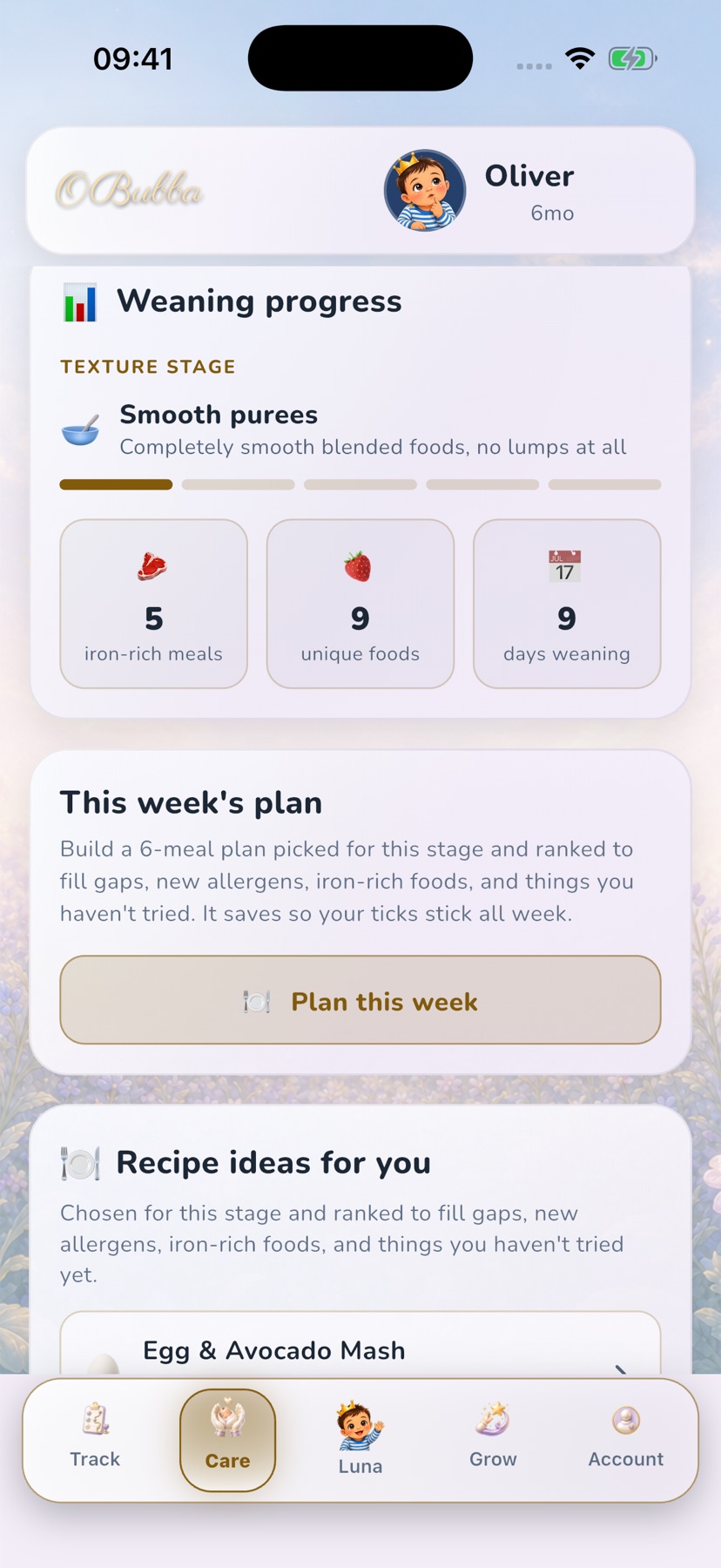
Try OBubba free → — sleep, feeds, first foods, allergens and the whole baby day in one mum-built app.
Sources and further reading
- NHS: Your baby's first solid foods
- NHS Best Start in Life: Introducing foods that could trigger an allergic reaction
- NHS Best Start in Life: Preparing food safely for babies
- NHS Best Start in Life: Choking and gagging on food
OBubba is a tracking and education tool, not medical advice. If you are worried about your baby's feeding, growth, sleep or health, speak to your health visitor, GP or another qualified healthcare professional.
Ready to try OBubba?
Use OBubba to track feeds, sleep, naps, nappies, growth, milestones and family handovers in one calm baby tracker app.