You have porridge, half a sweet potato and a baby who loved lentils on Tuesday but threw them on the floor on Wednesday. What are you supposed to feed them for the rest of the week?
You do not need seven perfect daily menus. A useful weaning plan is a small collection of meals you can offer flexibly: some familiar, some varied, several with iron-rich food, and no more than one genuinely new allergen in a meal. Milk remains important throughout the first year, portions stay responsive, and “tried” is a more realistic goal than “finished”.
This guide gives you a simple six-meal planning method for babies who are ready for solids from around six months. Adapt the texture, frequency and ingredients to your baby's stage, skills, allergies and professional advice.
The simple six-meal formula
Choose six meal ideas, not six compulsory days:
- Two iron anchors, for example lentils, beans, egg, fish, meat, tofu or iron-fortified cereal.
- One tolerated-allergen repeat, a food already introduced and eaten without a reaction, served in an age-appropriate form.
- One possible new allergen, only if it is appropriate for your baby and you are not following a clinician-led introduction plan.
- One texture step, the same familiar food made slightly less smooth or offered as a safely prepared finger food.
- One easy family-food adaptation, taking out the baby's portion before adding salt, stock, honey or unsuitable ingredients.
These categories can overlap. Lentil and sweet-potato mash can be an iron anchor, texture practice and a family-food adaptation at once. You are building coverage, not filling a bingo card.
Keep one or two emergency options available: a familiar meal from the freezer, plain full-fat yoghurt if dairy is tolerated, soft fruit, avocado or iron-fortified porridge. Convenience is part of a sustainable plan.
How many meals should a baby have?
Age is only one part of the picture; readiness, corrected age where relevant, feeding skills and individual advice matter too. The NHS describes a gradual progression:
| Stage | A calm planning frame | What still matters | |---|---|---| | Around 6 months, just starting | begin with small tastes once a day, then build at the baby's pace | breast milk or first infant formula remains the main source of energy and nutrients | | 7 to 9 months | gradually move towards breakfast, lunch and tea | milk remains important; variety and iron matter more than empty plates | | 10 to 12 months | usually 3 meals alongside milk feeds | offer a wider range of mashed, lumpy, chopped and finger foods as skills develop |
The current NHS feeding guide for 7 to 9 months says babies gradually move towards three meals a day. It also emphasises that some days they eat more, some less and some days reject everything. That variation is normal.
Babies under 12 months do not generally need snacks. If they seem hungry between meals, the NHS recommends offering an extra milk feed instead. Follow any different plan from a dietitian, paediatrician, neonatal team or health visitor.
A flexible example week for 7 to 9 months
This is inspiration, not a portion prescription. Only use allergens already tolerated unless the meal is your one planned new-allergen introduction. Adjust every texture to what your baby can safely manage.
| Meal idea | Why it earns a place | Easy texture options | |---|---|---| | Iron-fortified porridge with soft pear | iron anchor plus fruit | thick smooth porridge; mashed pear; soft pear slice if suitable | | Lentil, sweet-potato and spinach mash | iron-rich pulse with vitamin-C-containing vegetables | fork-mashed with soft lumps; loaded spoon; soft sweet-potato wedge alongside | | British Lion egg with avocado and toast | iron-rich protein and a possible egg repeat | mashed egg; omelette strip; lightly toasted bread strip | | Flaked boneless salmon, potato and peas | iron-rich protein and varied flavour | soft mash; flaked fish stirred through; graspable potato wedge | | Plain full-fat yoghurt with oats and soft fruit | familiar dairy repeat if tolerated | spoon-fed or pre-loaded spoon; soft fruit on the side | | Salt-free family bean and vegetable stew | family-food adaptation and iron-rich pulse | mashed, lumpy or soft finger-sized components |
You do not have to serve these in order or use all six. Repeat a successful meal. Swap ingredients you already own. If the baby is tired, unwell or overwhelmed, offer something familiar and try the ambitious idea another day.
For an earlier beginner, simplify each idea to one or two familiar components and small tastes. For a baby closer to 10 to 12 months, keep the same food logic but move towards more chopped, lumpy and finger-food textures as they can manage. The NHS guide for 10 to 12 months describes three meals alongside milk feeds and increasing variety in tastes and textures.
Make iron the first planning question
At around six months, iron-rich complementary foods become important. You do not need meat at every meal, but a weekly plan should make iron visible rather than hoping it appears by accident.
Useful iron-containing foods include:
- beef, lamb, pork, chicken and turkey
- boneless fish
- egg
- lentils, beans, chickpeas and peas
- tofu
- dark green vegetables
- iron-fortified infant cereal or porridge
Plant sources can be paired with fruit or vegetables containing vitamin C, for example lentils with tomato, beans with pepper, or fortified porridge with berries, to support iron absorption. That does not turn a single meal into a nutrient guarantee; it is simply a useful combination.
If your baby was born prematurely, has low iron, poor growth, a very restricted diet or follows a vegan diet, use a clinician or paediatric dietitian's individual plan. Do not start an iron supplement from an app or generic meal plan.
Plan allergens as a rhythm, not a race
The NHS advises introducing foods that commonly cause allergy one at a time from around six months, so a reaction is easier to identify. Once an allergen has been introduced and tolerated, it should become part of the baby's usual diet rather than disappearing from the menu.
A sensible week therefore contains more repeats than first introductions. For example:
- Monday: repeat tolerated dairy in plain yoghurt
- Wednesday: introduce well-cooked egg on its own or with familiar foods
- Friday: repeat egg if it was tolerated, rather than introducing sesame immediately
Do not introduce a new allergen when the baby is unwell, when you cannot observe them, or immediately before sleep or childcare. Follow specialist advice if your baby has a diagnosed allergy, significant eczema, previous reaction or a clinician-led introduction plan.
Never reintroduce a food after a suspected allergic reaction just because a planner suggests it. Ask a health professional what to do next.
Call 999 for breathing difficulty, a swollen tongue or throat, collapse, marked floppiness or another possible severe allergic reaction. For a non-emergency suspected reaction, stop the food, note what was eaten and when, and seek prompt advice from your GP, NHS 111 or allergy team as appropriate.
Read the current NHS guidance on food allergies in babies and young children and follow any individual advice from your baby's health professional.
A texture belongs in the plan too
Meal planning is not only ingredient planning. Babies learn by meeting different safe textures: smooth, mashed, soft lumps, chopped food and graspable finger foods as their skills develop.
You can change the experience without cooking another recipe:
- blend less of a familiar lentil dish
- fork-mash some vegetables instead of puréeing them
- offer a pre-loaded spoon alongside a soft finger-food version
- flake boneless fish through mash rather than blending it smooth
- move from soft toast fingers towards small manageable pieces when developmentally appropriate
If a texture step causes repeated distress, gagging does not settle, meals become very restricted, or there are concerns about chewing, swallowing or growth, ask your health visitor, GP or feeding team. Step back to a comfortable texture while seeking advice; progress is not a one-way staircase.
Safety checks before a meal reaches the plan
A clever recipe is useless if its serving form is unsafe. The NHS preparing-food-safely guide recommends considering size, shape and texture, seating babies upright, keeping them alert and supervising every meal.
Before serving:
- soften firm fruit and vegetables by steaming or simmering
- remove pips, stones, bones, tough skin and fat
- quarter small round fruits and tomatoes lengthways into four pieces
- cut firm or cylindrical foods into narrow strips, not round coins
- grate cheese or cut it into short narrow strips
- serve nut butter thinly spread or stirred into food, never as a sticky spoonful
- do not give whole nuts or popcorn to children under five
- do not give whole dried fruit to babies under one
- keep the baby upright in a suitable highchair and stay within reach
Do not add salt, sugar, stock cubes or gravy to the baby's portion. Avoid honey until after 12 months. Cows' milk can be used in food from around six months but should not replace breast milk or first infant formula as the main drink before 12 months.
All food can cause choking. Preparation reduces risk; it cannot remove it. Parents and carers should learn the difference between gagging and choking and know appropriate baby first aid.
Turn six ideas into one short shopping list
Do not shop recipe by recipe. Consolidate the ingredients:
Iron and protein
- lentils or no-added-salt beans
- eggs
- one fish, meat or tofu option
- iron-fortified porridge
Fruit and vegetables
- one orange or red vegetable
- one green vegetable
- two soft or cookable fruits
- one easy extra such as avocado or frozen peas
Starch and dairy or alternative
- potato, oats, rice, pasta or bread
- plain full-fat yoghurt or another suitable option
Use what is already in the freezer and repeat ingredients across meals. Sweet potato can appear in lentil mash, as a finger-food wedge and in a family stew. Repetition within variety is efficient, not lazy.
What to batch and what not to
Batch-cook neutral components rather than six fully assembled dishes:
- cook and freeze small portions of lentils, beans or salt-free stew
- steam several vegetables, then serve them in different combinations
- keep oats, eggs and frozen peas for quick meals
- prepare family food without salt, remove the baby's portion, then season the rest
Follow current food-hygiene advice for cooling, storing, defrosting and reheating. Reheat cooked food until steaming hot throughout, then cool it before serving; only reheat once. Discard food left in the baby's bowl or handled during the meal rather than saving it.
How the real OBubba planner chooses meals
OBubba's current weaning experience is built around “little tastes, big firsts”. It does not begin with a blank seven-day calendar. It starts with the child's corrected-age stage, recent solids history, introduced allergens and lifetime record of reacted-to allergens.
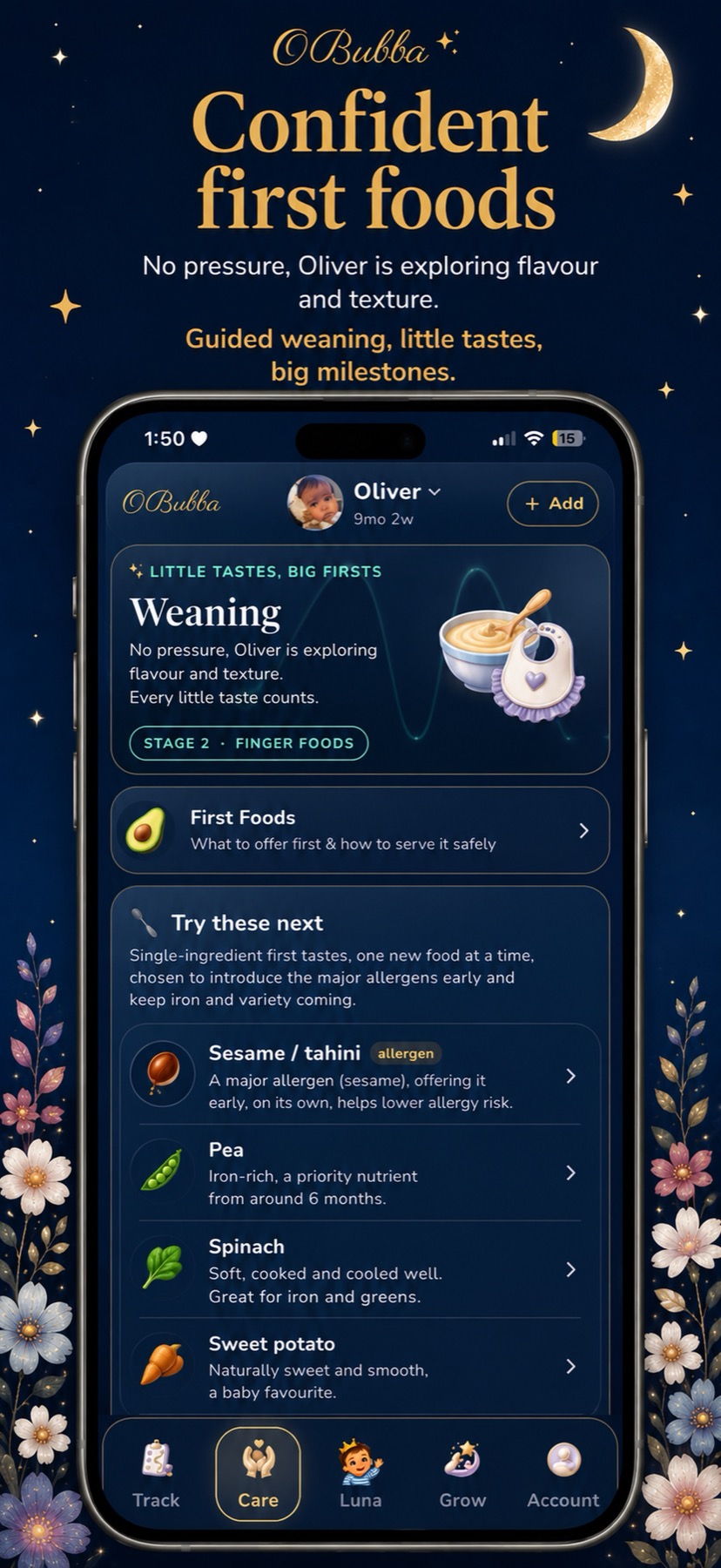
The recommendation engine then scores age-appropriate recipes:
- Iron-rich recipes receive extra weight. Iron does not get buried beneath colourful fruit ideas.
- One genuinely new allergen can move a recipe up. A recipe carrying two or more new allergens is deliberately moved down, because the app's own safety rule is to introduce them singly.
- Foods not yet tried get a modest lift. This supports variety without treating a repeat as failure.
- Already introduced allergens stop being labelled “new”. Dairy, milk and other ingredient names are reconciled to the app's friendly allergen categories.
- Reacted-to allergens are excluded. The engine checks both recent logs and the child's lifetime reaction set, so a reaction does not become invisible when an older day leaves the active history window.
- The full recipe is scanned. Allergens mentioned in ingredients, method or serving suggestions are included; an oat dish cannot be called allergen-free merely because a short curated label omitted gluten.
That ranking feeds two different surfaces. Recipe ideas for you shows a small set with badges such as iron-rich, new allergen or tried. This week's plan can turn six ideas into a saved list. Tapping a meal marks it tried, and the plan derives a deduplicated shopping list from the recipe ingredients. The full recipe garden is a Premium feature; the free surface shows a smaller selection.
The current planner displays six slots labelled Monday to Saturday, but these are flexible planning slots rather than a clinical schedule. The saved plan, shopping ticks and tried ticks persist on that device for that child and Monday-based week. They do not currently sync to a partner's device, and a stale plan drops away when a new week begins.
There are important limits:
- the day labels are planning prompts, not prescribed days or meal times
- the ranking is not a dietetic assessment or nutrient calculation
- it cannot see what the child ate but nobody logged
- it cannot judge chewing, swallowing, portion size, growth or reaction severity
- recipe filtering does not make a dish safe for every allergy or cross-contamination risk
- parents still need to read labels and follow a clinician's allergy plan
This is why OBubba behaves like a decision aid, not an automated feeding authority. It reduces the “what next?” mental load while leaving timing, quantities and clinical decisions with the family and their professionals.
After the meal, the same app can keep solids, milk, nappies, sleep, reactions, texture progress, growth and shared-carer notes together. That context is more useful than another folder of disconnected recipe screenshots.
Try OBubba free → and keep first tastes, weaning history and practical planning in the same calm home as sleep, feeds and family care.
A reusable weekly planning card
Copy this each week:
| Planning question | Your answer | |---|---| | Two iron anchors | 1. ___ 2. ___ | | Tolerated allergen to repeat | ___ | | One new allergen, if appropriate | ___ | | Familiar food for a texture step | ___ | | Family meal to adapt before seasoning | ___ | | Easy backup meal | ___ | | Ingredients already at home | ___ | | Safety preparation to remember | ___ |
If all you complete is two iron ideas, one familiar meal and a shopping list, the plan is already doing its job.
Frequently asked questions
Does my baby need a different meal every day?
No. Repetition helps babies learn flavours and saves family effort. Aim for variety across time, not novelty at every sitting. Tolerated allergens also need regular inclusion in the usual diet.
Should every baby meal contain iron?
Not every mouthful must be optimised, but iron-rich foods should appear regularly from around six months. If iron intake worries you, ask a health visitor or dietitian rather than relying on a meal count alone.
Can I use this plan for a six-month-old just starting solids?
Use the ingredients as inspiration, but simplify the frequency, combinations and texture. Begin when the baby shows all the readiness signs around six months, keep milk central and build gradually. A six-meal list can last longer than one week.
What if my baby eats none of the planned meal?
The attempt can still be recorded, but do not mark a food as introduced or tolerated unless your baby actually ate it. This matters especially for allergens. Stay calm, remove the food without pressure and offer it again another time when appropriate. Appetite varies. Seek advice for persistent feeding difficulty, pain, choking, dehydration, poor growth or any concern about health.
Can I mix spoon feeding and finger foods?
Yes. The NHS says there is no right or wrong choice between baby-led and spoon feeding; families can combine both. What matters is safe preparation, varied nutritious food and responsive feeding.
Does OBubba prescribe portion sizes?
No. Its planner suggests stage-matched meal ideas and records what was tried. It does not prescribe intake or replace hunger and fullness cues, growth assessment or personalised dietetic advice.
Reliable UK sources
- NHS Best Start in Life: Feeding your baby from 7 to 9 months
- NHS Best Start in Life: Feeding your baby from 10 to 12 months
- NHS: Food allergies in babies and young children
- NHS Best Start in Life: Preparing food safely
- NHS Best Start in Life: Recipes and meal ideas
This UK-oriented article provides general information, not individual medical or dietetic advice. Use corrected age and professional guidance where relevant. Ask your health visitor, GP, allergy team or paediatric dietitian about allergies, restricted diets, prematurity, growth or feeding difficulty. Call 999 for choking, breathing difficulty or another emergency.
Ready to try OBubba?
Use OBubba to track feeds, sleep, naps, nappies, growth, milestones and family handovers in one calm baby tracker app.