A baby has had a broken night. Their feeds feel different. A temperature has been logged. The sleep chart could explain the tiredness—but this is the moment when a baby app needs to know that sleep analysis is no longer the priority.
In the current OBubba app, a separate safety scan reads the health details a parent has already recorded. If it finds a concerning temperature, nappy or note, it can place one high-priority card above ordinary sleep, feeding and weaning patterns.
It does not diagnose, continuously monitor a baby or decide that everything is fine. It makes a handoff: from app pattern to human help.
And if a baby is blue, struggling to breathe, unresponsive or having a first seizure, do not open OBubba to log it. Call 999 now.
The safety handoff at a glance
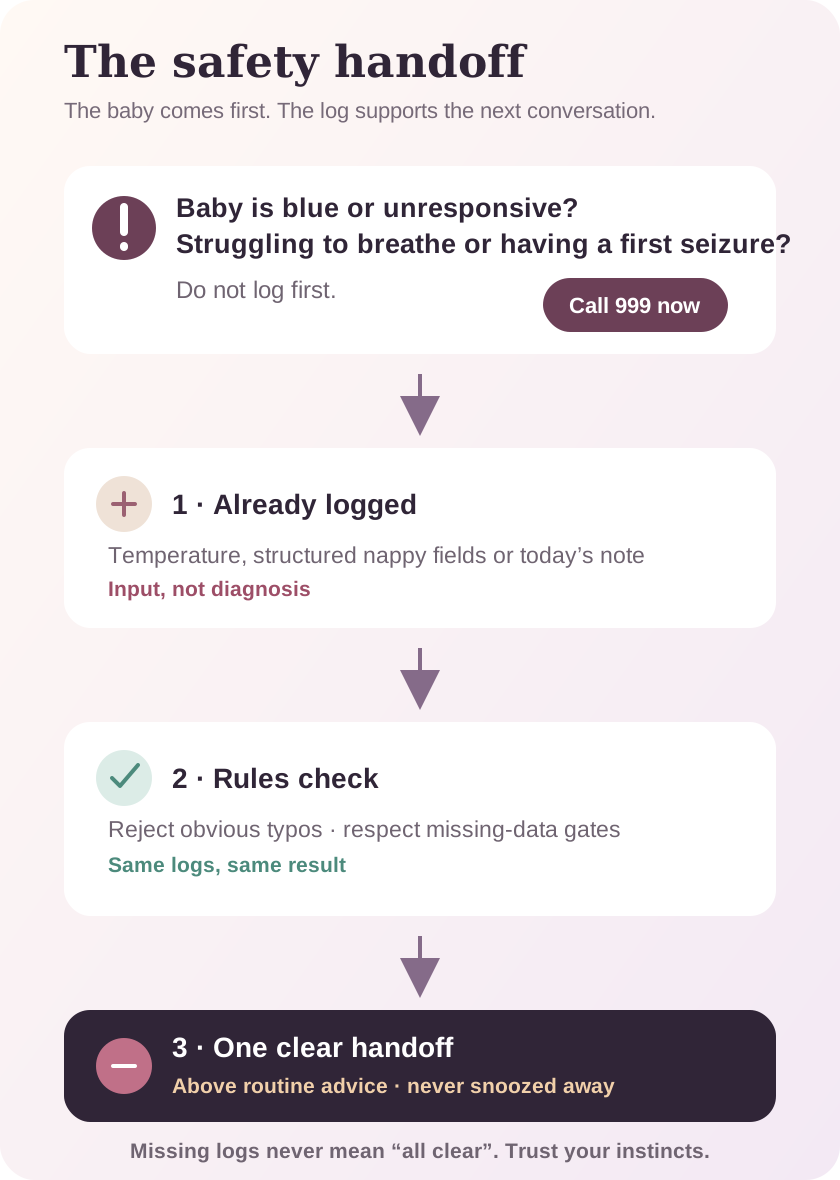
That distinction is the whole design. A symptom happening now outranks the phone. A detail already logged may help OBubba point the parent towards the right kind of help. No log is not reassurance.
What the app actually checks
OBubba builds one compact health signal from the baby record. It looks at:
- the highest and lowest valid temperature logged today;
- wet nappies across the last 24 hours, including the spacing between them;
- whether nappy logging has been consistent enough for a low count to mean anything;
- watery nappies today and concerning colours or blood recorded today or yesterday; and
- words in today’s notes that may describe an urgent sign, such as “unresponsive”, “floppy”, “seizure”, “choking” or “blue”.
The scanner is deterministic: the same logs produce the same result. It does not ask a generative model to improvise medical advice, infer a diagnosis or fill gaps with a confident story.
It also returns one highest-priority result, not a wall of warnings. A 40°C reading, for example, is not buried under a softer nappy observation. An emergency phrase such as “unresponsive” outranks a routine same-day referral. A concerning pale or bloody stool outranks a watery-nappy prompt.
The aim is not to make the app look clever. It is to make the next step easier to see.
Four safeguards that matter more than the alert itself
1. Obvious temperature typos are rejected
Temperatures are stored in Celsius inside the app even when the parent prefers Fahrenheit for display. The input and display conversion is tested in both directions.
Values such as 380, 45 or 3.8 are not allowed to manufacture a fever alert. At the low end, OBubba preserves genuinely concerning readings down to 30°C while rejecting decimal-slip values below that range. If a low and high reading are both logged on the same day, it uses temperature-instability wording instead of casually suggesting warming a baby who may also have a fever.
Those rules reduce obvious false alarms. They cannot tell whether a thermometer was placed correctly, whether the reading belongs to the right child or whether the number was copied accurately.
2. Fewer logged nappies is not automatically fewer real nappies
A sparse logger might record three nappies from a much busier day. OBubba therefore does not create a high-urgency dehydration card from a low count unless recent nappy logging looks reliable: at least four recent logged days, an average of at least three nappies a day and at least two entries today.
The low-nappy check also waits until around 11am, accounts for naturally longer gaps and switches off once a child is around 18 months, when nappies may no longer represent all urination.
That is a valuable restraint. It also means a quiet app cannot exclude dehydration. The NHS lists fewer or drier nappies alongside signs such as a dry mouth, few tears, unusual drowsiness and a sunken soft spot. If those signs are present, seek help based on the baby—not the completeness of the timeline. NHS: is your baby or toddler seriously ill?
3. Safety guidance cannot be snoozed away for a week
Routine OBubba suggestions can be snoozed. High-urgency cards and non-low health cards cannot. The same safety rule keeps them above the ordinary preview limit on both the Track screen and the full insight screen.
A dismissed health card is keyed to its date and specific title. A genuinely different sign can surface later instead of inheriting the old dismissal.
This is a small interface detail with a large trust consequence: personalisation should reduce noise, but it should not hide safety guidance because yesterday’s bedtime tip was more engaging.
4. Illness is not reframed as a sleep-training failure
The broader OBubba engine treats a fever-tagged day as disrupted. It excludes that night from the kind of pattern analysis that might otherwise suggest a sleep association or behavioural habit.
That prevents a sick night from becoming “proof” that a baby needs stricter settling. Health context changes the interpretation of sleep data.
What should a parent do with a temperature?
Use a digital thermometer in the armpit for children under five and follow its instructions. A high temperature is 38°C or more, but age changes the urgency.
The NHS says to call 111 or a GP urgently when:
- a baby under three months has a temperature of 38°C or higher, or you think they have a high temperature; or
- a baby aged three to six months has a temperature of 39°C or higher, or you think they have a high temperature.
Other symptoms can make the situation urgent at any temperature. The NHS advises immediate emergency help for signs including difficulty breathing, blue or grey skin or lips, a rash that does not fade under pressure, being very difficult to wake, or a first febrile seizure. NHS: fever in children · NHS: sepsis
OBubba’s internal routing rules are implementation safeguards, not a home triage protocol. Follow current local medical guidance and your instincts. You know what is different for your baby.
A practical way to use the feature
If the baby is stable and you are already keeping a record, log the detail once and accurately:
- Record the measurement, not an impression. Add the thermometer number and correct unit. Keep the device and method consistent where practical.
- Use the structured nappy fields. Colour, texture and wet/dirty status are more dependable than a long free-text description.
- Write the note you would say aloud. “Hard to wake” is more useful than “bad night”. Do not wait for the app to parse it before calling for help.
- Read the action, not just the headline. The card routes to the region-appropriate emergency, non-emergency or doctor wording available in the app.
- Take the record with you. OBubba’s visit-preparation summary puts health concerns under “Things to raise” alongside the recent feed, sleep and nappy record.
The log can help a parent remember times and details under stress. It does not replace an examination.
Why this belongs in an app about sleep and weaning
Sleep, feeding, nappies and illness overlap in real family life. A baby may feed less because they are unwell. Diarrhoea can affect hydration. Fever can fragment sleep. A pale stool is not a texture-stage problem. Treating each tracker as a sealed-off feature would make the app less useful precisely when context matters.
OBubba’s answer is not to diagnose across those domains. It is to use them to change priority:
- safety before optimisation;
- an explicit handoff before a sleep theory;
- one clear alert before several competing insights; and
- honest silence when the record is too incomplete.
That is the sort of intelligence a parent should be able to trust: not the loudest answer, but the answer that knows its boundary.
Try OBubba free → — track sleep, feeds, nappies and temperature in one baby timeline, with safety routing designed to keep health context above routine pattern advice.
Quick answers
Does OBubba monitor my baby in the background?
No. It checks information recorded in the app. It does not see, hear or measure the baby, connect to the thermometer, or know about symptoms that were not logged.
Can OBubba tell me whether my baby is seriously ill?
No. It can surface a safety card from certain logged signs and route towards human help. It cannot assess the baby, make a diagnosis or give an all-clear.
Why did a low wet-nappy count not create an alert?
The app deliberately requires a recent pattern of consistent nappy logging before treating a low logged count as a possible low real count. This reduces false alarms from incomplete diaries. Seek help if the baby seems dehydrated or unwell regardless of what the app shows.
Can I hide a health warning?
You can acknowledge the current card, but the reviewed app does not offer its normal week-long snooze for high-urgency or other meaningful health-safety guidance. A new, different health sign can surface separately.
Does OBubba use AI to diagnose symptoms from my notes?
No. The reviewed build uses a deterministic phrase scan and ordered safety rules. It may miss different wording, spelling or an unlogged symptom, so it must never be used as a symptom checker.
What if the app and my instincts disagree?
Trust your instincts and seek medical help. The NHS explicitly says that parents know what is different or worrying in their child. For an immediate emergency in the UK, call 999; for urgent advice, use NHS 111 or your GP as appropriate.
Product verification
- Current implementation reviewed: health-signal construction, health red-flag detector, temperature conversion and plausibility guards, nappy reliability gate, insight priority, snooze protection, Track preview curation and visit-preparation summary.
- 93 focused tests passed on 16 May 2027, including fever and low-temperature handling, typo rejection, dehydration false-alarm protection, competing-sign priority, safety-card curation, unit conversion, visit preparation and compact-phone UI construction.
- The hero is an editorial illustration made for this article, not a clinical scene or product screenshot. No family data is shown.
This article describes the reviewed build and uses UK NHS routes. OBubba is a tracking and education tool; it does not monitor a baby, diagnose illness, provide an all-clear or replace personalised clinical advice. If a baby seems seriously unwell, get medical help now.
Ready to try OBubba?
Use OBubba to track feeds, sleep, naps, nappies, growth, milestones and family handovers in one calm baby tracker app.