A baby app can sound calm, polished and certain. That does not tell you whether its answer came from a trusted public-health source, a pattern in your baby’s own logs, a language model—or nowhere you can check.
Parents deserve a better test than tone.
OBubba’s app includes a Sources & evidence library designed to make the foundations visible. It currently links to 20 original sources across seven areas: sleep and safer sleep, feeding and weaning, allergens and first foods, illness and fever, growth and development, pregnancy, and parent wellbeing.
But a source list is only useful when the app is also honest about what each answer is.
> A public-health recommendation, a pattern in your baby’s records and a medical diagnosis are three different things. OBubba should never blur them together.
The 30-second answer
When OBubba shows guidance, ask which layer you are seeing:
| Layer | What it uses | What it can reasonably say | What it must not imply | |---|---|---|---| | General guidance | Trusted health and research organisations | Broad safer-sleep, feeding, growth or wellbeing information | That an outside organisation endorses OBubba | | Your baby’s pattern | Sleep, feed, nappy, growth and care events your family recorded | A cautious observation such as “recent short naps often followed a longer wake” | That correlation is a diagnosis or a guarantee | | Safety routing | Built-in, deterministic red-flag rules | Stop normal coaching and point towards appropriate human help | A diagnosis, prescription or medicine dose | | Optional AI answer | The question and relevant baby context, after consent | A more conversational explanation inside the same scope | That AI is a clinician or the source of truth |
The most trustworthy answer is not always the cleverest one. Sometimes it is a direct link to the original source. Sometimes it is “we do not have enough of your data yet.” Sometimes it is “please seek urgent help.”
Where to find the evidence library
In the current app, Sources & evidence is available from Account. Bubba Coach also places a Sources & safety link beside its advice, so the evidence is not buried in a legal page far away from the answer.
The screen opens with the line “Trust, with receipts” and lets you move through seven subject shelves. Each source card explains what that organisation informs, then offers Open the original source.
That last part matters. OBubba is not asking you to accept its summary as the final word; it gives you a route out to the organisation itself.
What is actually on the source shelf?
The library is broader than sleep. Its 20 entries include, among others:
- The Lullaby Trust’s safer-sleep guidance, including the clear, flat, firm, separate sleep-space basics;
- BASIS, the Baby Sleep Information Source at Durham University, for evidence about normal infant sleep and night waking;
- NHS Best Start in Life weaning guidance, which explains introducing a varied diet alongside breast milk or first infant formula from around six months;
- NHS information about food allergies in babies and young children;
- NICE guidance on fever in under-fives;
- WHO Child Growth Standards, the reference behind the growth curves OBubba plots against; and
- NHS, WHO, CDC, Tommy’s, MBRRACE-UK and specialist support organisations covering feeding, development, pregnancy and parent wellbeing.
These links mean informed by, not approved by. The NHS, WHO, Lullaby Trust, NICE and other bodies listed do not thereby endorse OBubba. Nor does one shelf prove every sentence in the app has undergone a clinical trial.
The honest claim is narrower and more useful: parents can see the authoritative material that informs the app’s general guidance and open the originals themselves.
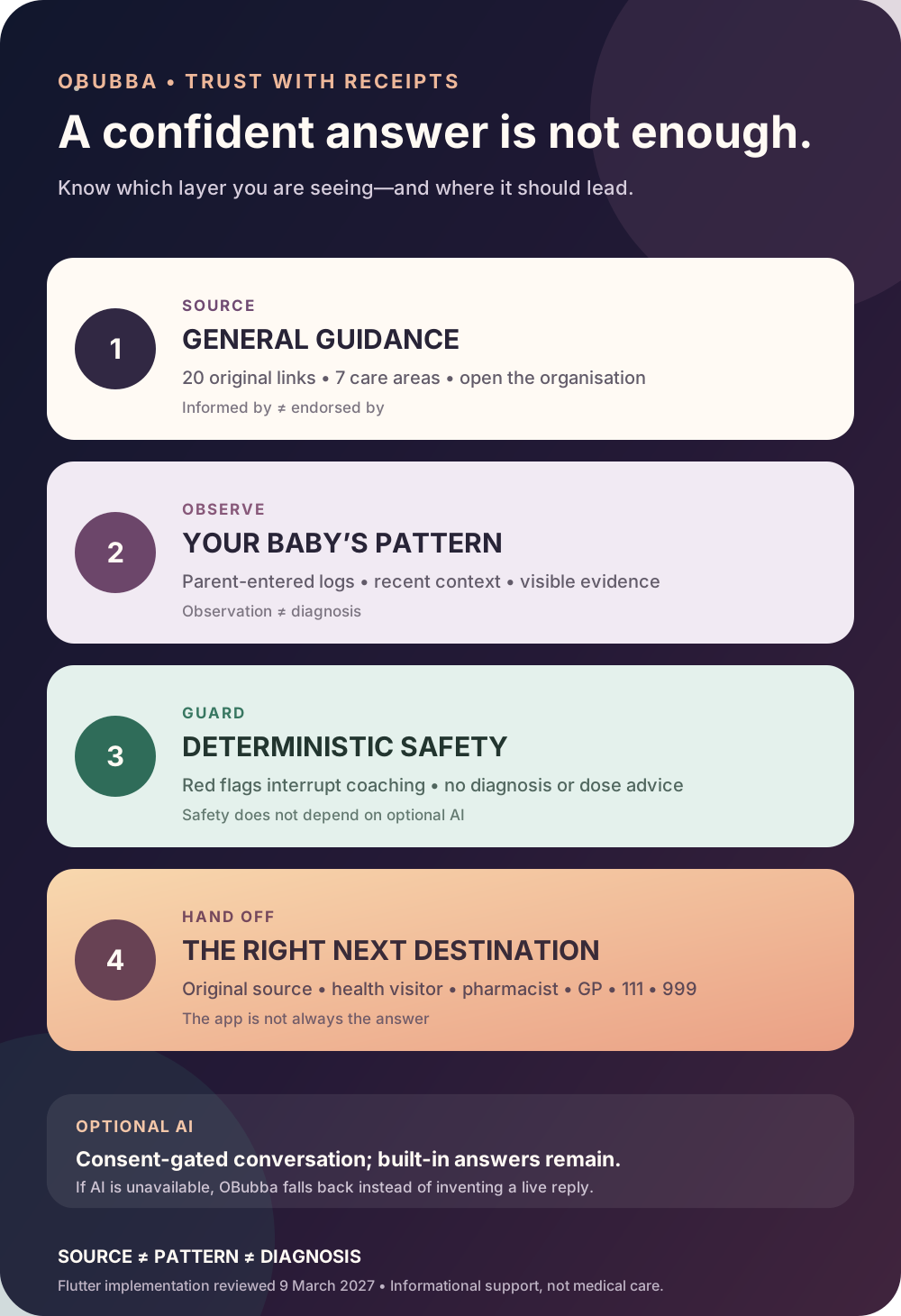
Layer one: general guidance has an original source
Some baby-care statements should not be personalised away.
For example, The Lullaby Trust says the safest place for a baby to sleep is in their own clear, flat, firm, separate sleep space in the same room as a parent or carer, and that babies should be placed on their back. A difficult night, a short nap or an app-generated schedule does not override safer-sleep guidance.
Likewise, NHS weaning guidance says introducing solid foods usually begins at around six months while usual breast milk or first infant formula continues. A tracker can help you remember foods, allergens and reactions; it should not turn a date prediction into proof that an individual baby is ready.
This is why the source layer comes first. Personalisation can make guidance more relevant, but it does not get to rewrite safety.
Layer two: a personalised insight should show its working
OBubba can do something a static article cannot: read the care history your family has entered.
That may include recent sleep length, time awake, feeds, nappies, night wakes, temperatures, growth measurements and which caregiver logged an event. From those records, the app can surface cautious patterns and time-sensitive prompts.
The important phrase is from those records.
If Luna says recent short naps and a long stretch awake point towards overtiredness, the useful evidence is not a generic internet claim. It is the specific nap and awake-time history underneath the answer. The current product design exposes that relationship with Based on [baby’s] logs, then offers expandable sections for more detail and relevant tools.
A good personalised observation should therefore answer four questions:
- What data was used? For example, the last few naps and the current time awake.
- How much evidence is there? One unusual day should carry less confidence than a repeated pattern.
- What is the uncertainty? “May,” “often” and “worth trying” can be more accurate than “is.”
- What can the parent do next? A gentle, reversible step is more useful than a dramatic verdict.
Your logs can support an observation. They cannot diagnose reflux, an allergy, an infection or a developmental condition.
Layer three: safety should not depend on a persuasive chatbot
The app’s implementation deliberately keeps safety and wellbeing routing in a built-in rules layer rather than sending those questions to optional AI.
The tested red-flag routes include situations such as a baby not breathing, active choking, a seizure, blue or floppy presentation, a swallowed button battery and serious head injury wording. When those triggers appear, normal coaching stops and the app directs the parent towards emergency help appropriate to their region.
The coach guardrails also reject AI text that tries to give medicine dosing or promotes leaving a baby to cry through methods the product does not support. Its prompt is instructed not to diagnose, prescribe, invent baby data or state a condition as fact.
That does not make OBubba a medical service. It makes the boundary clearer: the app can help organise information and recognise that the conversation belongs with a clinician, pharmacist, health visitor, NHS 111 or emergency service—not continue chatting as if everything is routine.
If you believe a baby is seriously unwell or in immediate danger, do not wait for an app. Call emergency services. In the UK, that is 999; for urgent non-emergency advice, use NHS 111.
Layer four: optional AI should remain optional
Some everyday sleep, crying, feeding and development questions can be easier to understand in a conversational answer. OBubba can use an optional AI route for that richer explanation.
In the current implementation, the first AI escalation is consent-gated. Declining leaves the built-in answers available. If the AI service is unavailable or times out, the app falls back to the built-in response instead of pretending it received a live answer.
That architecture is important because “AI off” should not mean “safety off,” and a weak connection should not remove the basic help already in the app.
Before enabling optional AI, read the current in-app privacy prompt. It explains the relevant baby context used for that route and where to change the choice later. Product data handling can evolve, so the live privacy screen—not a blog post—is the right place for the current detail.
A worked example: “Is my baby overtired?”
Here is how the four layers can work together without pretending to know too much.
1. General knowledge: infant sleep changes with age, night waking can be normal, and safer-sleep rules still apply.
2. Baby-specific evidence: today’s naps were short and the current awake stretch is longer than this baby’s recent settled pattern.
3. Cautious interpretation: “Those two signals can fit overtiredness” is more honest than “Your baby is definitely overtired.”
4. Reversible next step: begin a calm wind-down and observe what happens, rather than force an exact bedtime.
If the parent instead types that the baby is blue, floppy or struggling to breathe, the overtiredness conversation should disappear. Safety routing takes over.
A worked example: “Are we ready to start solids?”
The source layer begins with NHS guidance: complementary feeding generally starts at around six months, alongside breast milk or first infant formula, when the baby shows the appropriate readiness signs.
OBubba can then help with the practical memory work:
- recording first foods and textures;
- keeping an allergen history;
- noting a factual reaction;
- showing what has and has not been tried; and
- preparing a clear history to discuss with a health professional.
What it should not do is declare readiness from age alone, diagnose an allergy from a log, or advise a parent to retry a food after a worrying reaction without appropriate clinical guidance.
Seven questions to ask any baby app
You do not need to be a clinician or a software engineer to assess whether an app is behaving responsibly. Ask:
- Can I open the original sources?
- Does the app distinguish general guidance from my baby’s logged pattern?
- Can I see which records an observation is based on?
- Does it become less certain when data is sparse?
- Will red flags interrupt ordinary coaching?
- Can I decline AI and still use the core help?
- Does it clearly tell me when a human professional is the better next step?
An app that answers those questions well earns trust slowly. That is healthier than demanding it through a confident voice and a five-star badge.
Quick answers
Does OBubba claim to be approved by the NHS or WHO?
No. Its general guidance is informed by named sources, and the app links to them. Listing a body does not mean that body endorses the app.
Are personalised observations medical advice?
No. They are informational patterns based on the care events available to the app. They can help a parent notice and prepare questions, not replace individual clinical assessment.
Can I use Bubba Coach without optional AI?
Yes. The current routing keeps built-in answers, app help, safety and wellbeing paths available. Optional AI is consent-gated and has a built-in fallback.
Does Luna diagnose why my baby is crying or waking?
No. It can discuss common possibilities and relate them cautiously to logged context, but it is instructed not to diagnose or name a condition as fact.
Where should I verify safer-sleep or weaning advice?
Use the app’s Sources & evidence screen to open the original organisation. In the UK, good starting points include The Lullaby Trust and NHS Best Start in Life.
What if the app and my instincts disagree?
Trust your instincts and seek human help. A parent can see and feel things no tracker row contains. In urgent or emergency situations, use the appropriate health service immediately.
Try OBubba free → — bring sleep, feeds, nappies, growth, weaning and family care into one record, then get support that shows the difference between a source, your baby’s pattern and a safety handoff.
This article describes the current OBubba implementation reviewed on 9 March 2027. OBubba provides informational support, not diagnosis or medical care. Features, source links and privacy choices can change; review the current app screens. In an emergency, contact local emergency services immediately.
Ready to try OBubba?
Use OBubba to track feeds, sleep, naps, nappies, growth, milestones and family handovers in one calm baby tracker app.