OBubba opens with Egg & Avocado Mash near the top of Recipe ideas for you. Yesterday it suggested lentils. Another family sees a different shortlist.
Is the app prescribing what your baby should eat—or simply filling a random carousel?
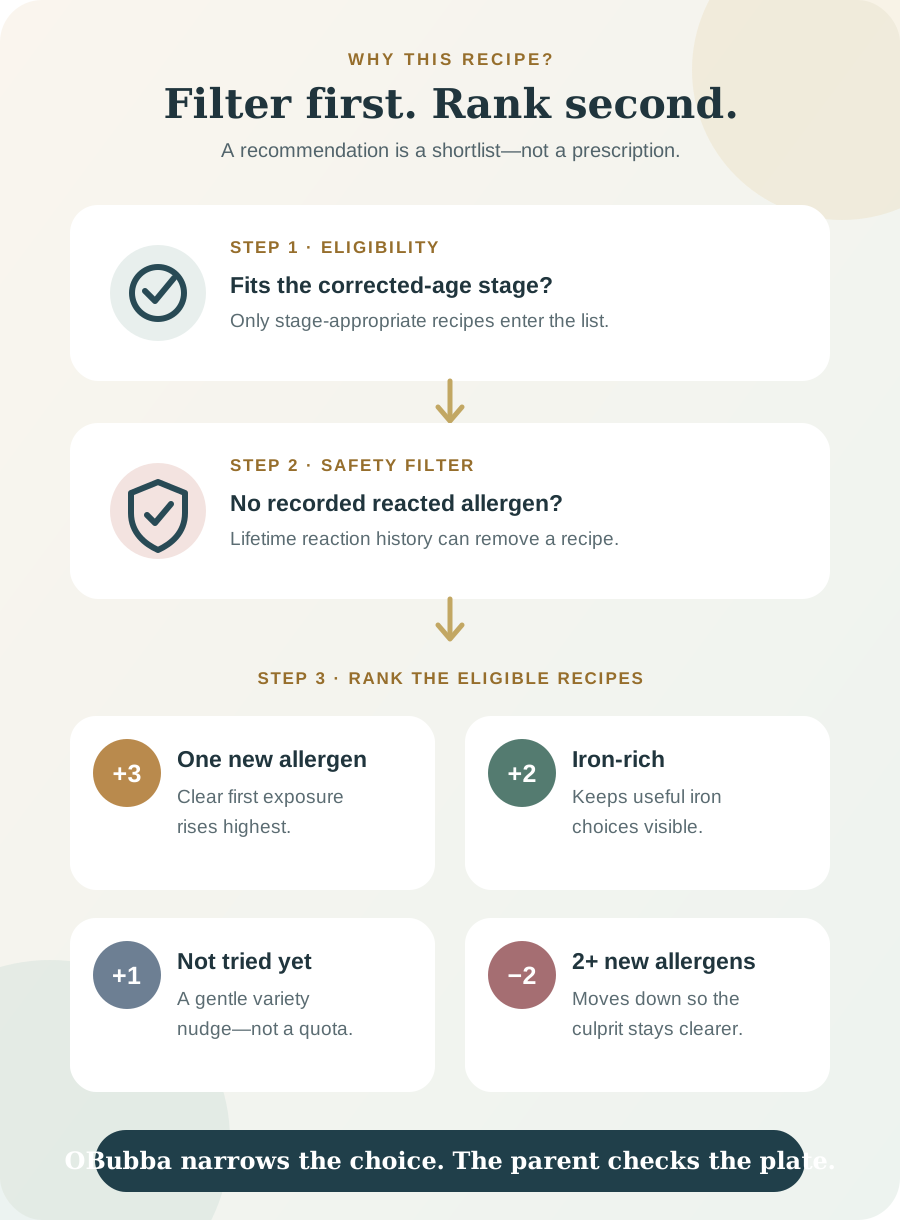
Neither. A recipe rises when it fits the baby's current weaning stage and helps fill a useful gap in the food history you have logged. The current app gives extra weight to one new allergen at a time, iron-rich food and a recipe not yet tried. It pushes recipes with several new allergens lower and removes any recipe containing an allergen recorded as reacted-to.
The result is a suggestion, not a nutrition assessment or a promise that every ingredient is safe in every form. The parent still checks readiness, texture, labels, preparation, appetite and the real food in front of them.
The short answer: it is trying to make the next choice useful, not perfect
Most recipe apps ask what looks tasty. OBubba can also ask what this baby’s recent record appears to need.
For each eligible recipe, the current engine considers:
- Does it fit the corrected-age stage? Recipes unlock progressively rather than showing family meals to a brand-new eater.
- Does it contain an allergen with a recorded reaction? If yes, it is removed from suggestions.
- Does it introduce exactly one allergen not yet recorded? That receives the strongest positive ranking nudge.
- Is it iron-rich? Iron-rich options receive another positive nudge.
- Has this exact recipe name been logged before? An untried recipe gets a smaller variety nudge.
- Would it introduce two or more new allergens together? It is deliberately moved down rather than celebrated as an efficient shortcut.
That is why the first recommendation can change after a food log. Once dairy is recorded as introduced, a dairy recipe no longer needs a new: dairy boost. Once a recipe is tried, the tried badge can appear and another useful option may move above it.
The actual ranking, in plain English
The current scorer is deliberately compact:
| Signal | Ranking effect | Why it exists | |---|---:|---| | Exactly one new allergen | +3 | helps introduce allergens singly so a reaction is easier to identify | | Iron-rich recipe | +2 | keeps iron-containing choices visible from around six months | | Exact recipe not previously logged | +1 | encourages variety without making novelty the only goal | | Two or more new allergens | −2 | moves a complicated first exposure below clearer one-allergen options |
These points choose order; they do not grade the baby’s diet. A score of six is not a nutritional quality score, and a lower-ranked recipe is not necessarily worse.
The app also does not promise that the highest-ranked six recipes form a complete weekly diet. They are a decision-reducing shortlist to use alongside milk feeds, family foods, accepted favourites and professional advice where needed.
First, the recipe has to fit the stage
The Recipe ideas section stays hidden before the app’s around-six-month window. From there, recipes unlock across four stages, from early smooth or mashable ideas through lumpier and finger-food options to more recognisable family meals.
For a premature baby, the current screen uses corrected age when the due date is available. That keeps recipe sections aligned with the rest of OBubba’s weaning guidance rather than offering a baby born early the chronological-age menu automatically.
Age is still not a readiness test. The NHS recommends starting solids at around six months and advises parents of premature babies to ask their health visitor or GP about timing. A baby needs the developmental skills to sit upright with steady head control, coordinate food to their mouth and swallow rather than push everything back out.
If your individual clinician has advised a different plan, that plan wins.
Why iron-rich recipes move upward
From around six months, babies begin getting additional nutrients from food alongside breast milk or first infant formula. The NHS recommends including iron-containing foods such as meat, fish, fortified cereals, dark green vegetables, beans and lentils as variety grows.
OBubba marks recipes as iron-rich using curated recipe data plus food-word checks. An iron-rich recipe gets two ranking points, which helps options such as lentil dishes, meat, egg, beans, tofu or fortified porridge avoid disappearing beneath an endless stream of fruit combinations.
The badge does not calculate how much iron baby swallowed, whether the serving met a daily target or whether absorption was adequate. A logged recipe is evidence of an offer, not a blood test or a measured nutrient intake.
If your baby was premature, has anaemia, restricted intake, feeding difficulty or a prescribed supplement, use their clinical plan rather than a recipe badge.
Why one new allergen outranks several
The NHS advises introducing foods that can trigger allergy from around six months, one at a time and in small amounts so a reaction can be spotted. If tolerated, those foods should remain part of the usual diet.
OBubba translates that into a ranking rule:
- one new allergen in a recipe: move it up
- two or more new allergens in the same recipe: move it down
- an allergen already recorded as introduced: it is no longer labelled new
- an allergen with a recorded reaction: remove recipes containing it
Imagine egg and gluten are both new. Egg & Avocado Mash may introduce egg alone and receive the one-allergen boost. Scrambled Egg on Toast contains egg, dairy and gluten; if several are new, it falls lower. Once egg and gluten are established and tolerated, the same mixed recipe can become a much clearer ordinary meal.
Lower does not mean forbidden. It means another recipe tells a cleaner first-exposure story today.
How the app recognises allergens beyond the headline
Recipe safety would be weak if it trusted only a hand-written badge. The current engine combines each recipe’s curated allergen list with its own detection across the recipe name, ingredients, method and baby-led-weaning serving note.
That catches practical details such as:
- oats or toast contributing gluten even when the headline list is incomplete
- yoghurt dip or naan mentioned only in a serving suggestion
- cheddar remaining a real dairy ingredient
- milk, wheat and eggs being reconciled to the app’s friendly canonical labels: dairy, gluten and egg
It also avoids two misleading shortcuts. Oat milk does not mark dairy as introduced, and breast milk or formula used merely to loosen a purée is not treated as a dairy ingredient of the recipe. Real yoghurt, butter or cheese still counts.
This makes the recommendation more consistent, but it is not label-reading. The app cannot know the brand, cross-contamination warning, recipe substitution or what is actually on the plate.
A recorded reaction changes the shortlist
When an allergen has a logged reaction, recipes containing that allergen are filtered from recommendations. The current screen passes the child’s lifetime reacted-allergen set, so the safety filter does not forget simply because an old daily log has moved out of the recent-history window.
The filter uses the fuller detected allergen set, including serving notes. A dairy-reacting baby should not be shown a dish whose only dairy clue is “serve with yoghurt dip”.
This is a conservative app behaviour, not a diagnosis. A rash after a mixed meal does not prove which ingredient caused it, and removing a recipe does not establish an allergy. Follow the advice of the clinician assessing the reaction. Do not deliberately reintroduce a suspected or diagnosed allergen because another app screen seems reassuring.
For severe breathing difficulty, swelling affecting the airway, collapse, marked floppiness or another life-threatening reaction, call 999.
What the badges on Recipe ideas for you mean
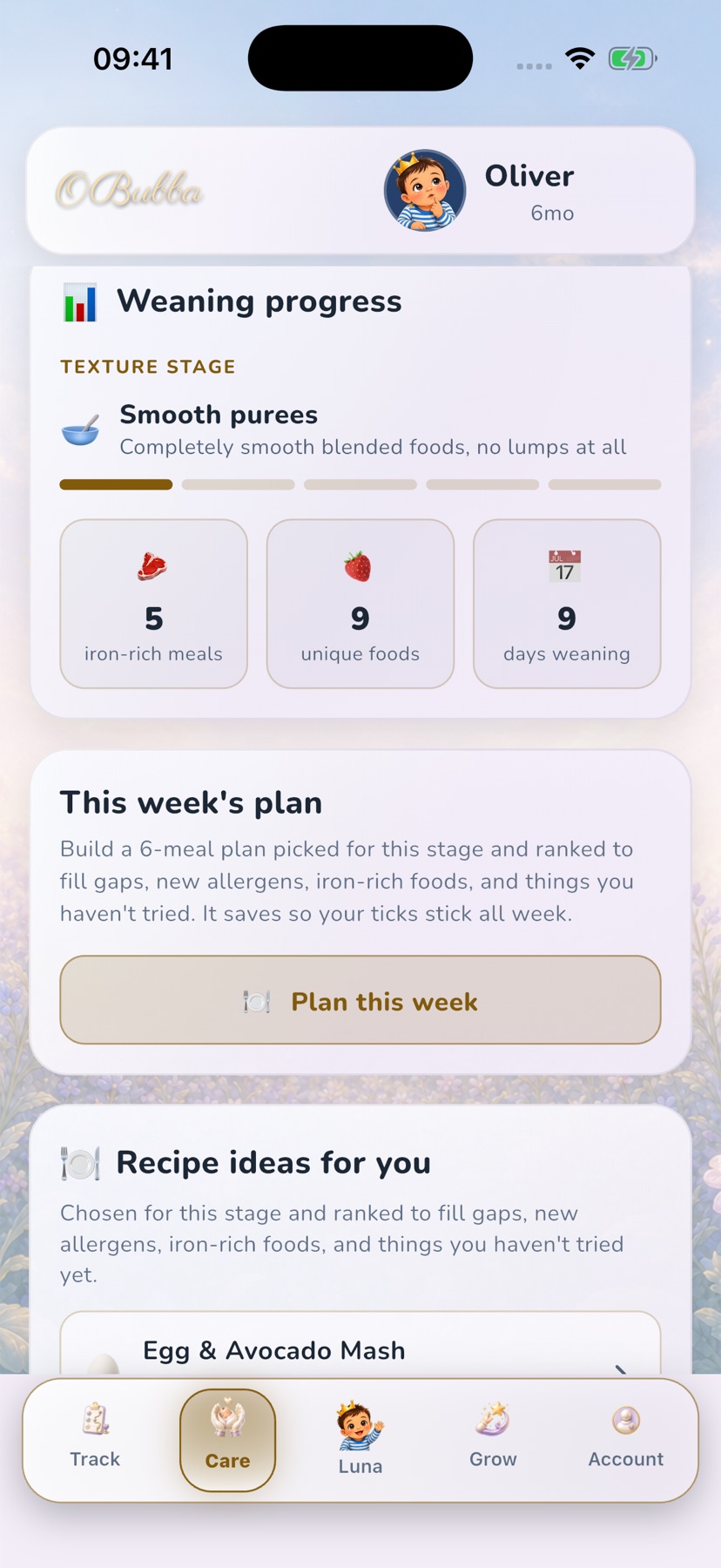
The live list can display three small explanations:
- iron-rich — the recipe carries the engine’s iron-rich signal
- new: egg or another allergen — this allergen has not been found in the food history
- tried — this exact recipe name already appears in the log
“Tried” is intentionally literal. If you logged “lentil pasta” and the library recipe is called “Soft Lentil Tomato Pasta”, the app may not know they are the same dish. Conversely, one log cannot prove a meaningful amount was swallowed.
Use the badge as memory support, not a legal record of exposure.
Why a safety warning can still appear inside a recommended recipe
Open a recipe and the sheet shows ingredients, method, a baby-led-weaning option and detected allergens. It also runs the app’s live food-safety checks over the recipe name and ingredients.
That can surface a preparation warning even though the recipe was recommended. This is not a contradiction:
- ranking asks whether the recipe is a useful idea
- the warning asks whether a named ingredient needs an age or preparation check
- the parent verifies the actual cut, softness, temperature, label and serving
The NHS says to consider the size, shape and texture of food, avoid small round and firm pieces, seat baby safely upright and supervise throughout eating. A database entry cannot perform the finger-and-thumb squash test or see a bone in fish.
What happens when you tap Plan this week
The weekly planner takes the top six current recommendations and saves them for the current child and Monday-to-Sunday week.
It then:
- keeps allergen and iron tags beside each meal
- lets the family mark a meal tried
- builds a shopping list from recipe ingredients
- removes quantities and some qualifiers from shopping items
- deduplicates repeated ingredients
- saves meal and basket ticks so they persist through the week
Regenerating replaces the plan and clears those ticks, so the app asks for confirmation first. The lifetime reaction filter is applied again during regeneration.
The plan is six ideas, not six compulsory meals or a claim that a six-month-old needs six specific solids meals in seven days. Early in weaning, the NHS says a small amount once a day can be enough while milk remains the main source of nutrition.
When to follow the recommendation—and when to choose something else
Use the recipe when:
- baby is ready for its texture and ingredients
- the new-allergen timing is calm and observable
- the food can be prepared safely today
- it fits the family’s time, culture and budget
- baby is well and interested
Choose something else when:
- baby is tired, unwell or has just had a difficult reaction
- the suggested texture is beyond what baby currently manages
- the family does not have the ingredients or energy
- a tolerated familiar food would make today’s meal calmer
- the recipe conflicts with allergy, dietetic or medical advice
Skipping a recommendation does not damage the model. Log what actually happened, and the next shortlist can respond to that record.
Try OBubba’s weaning tracker free → — keep first foods, allergens, reactions, textures, iron-rich offers, recipe ideas and the shopping list beside sleep, milk feeds, nappies and growth.
A practical three-check recipe test
Before serving any suggested recipe, ask:
1. Is it right for this baby today?
Check readiness, usual skills, health, appetite and any individual care plan.
2. Is every ingredient known and appropriate?
Read labels. Identify new allergens. Avoid stacking new allergens when you want a clear first exposure. Do not offer a food linked to a previous reaction without the appropriate clinical advice.
3. Is the actual serving safe?
Check temperature, bones, size, shape and softness. Seat baby upright and supervise. Do not add salt or use ordinary salty stock; avoid honey before 12 months and whole nuts under five years.
The algorithm gets you to a plausible recipe. These checks get the real food to the baby more safely.
Frequently asked questions
Why did the recommendation change after one meal?
A logged food can mark a recipe as tried or an allergen as introduced, removing those ranking boosts. Another iron-rich or one-new-allergen idea may then rise above it.
Does the top recipe mean my baby is deficient in something?
No. The ranking identifies logged gaps, not a deficiency. The iron badge does not measure intake or diagnose low iron.
Why is a recipe with several allergens lower down?
If two or more allergens are still new, the recipe receives a ranking penalty so a clearer one-new-allergen option can appear first. Once those allergens are established, the calculation changes.
Why is a familiar recipe still marked untried?
The app compares the library recipe name with logged food text. Different wording can prevent an exact match. The recommendation is memory support, not a perfect semantic reconstruction of every family meal.
Will OBubba recommend a food my baby reacted to months ago?
The current screen passes a lifetime reacted-allergen set into both recipe ideas and weekly-plan generation. Recipes containing that detected allergen are filtered even when the original reaction is outside recent daily history.
Is a recommended recipe automatically free from choking hazards?
No. The recipe sheet can show live wording-based warnings, but the app cannot see the food’s actual shape, firmness, bones, temperature or preparation. Follow current safe-weaning guidance every time.
Does Plan this week replace milk feeds?
No. Breast milk or first infant formula remains the main drink throughout the first year. The six saved ideas are planning prompts, not a command to replace six milk feeds.
Can I regenerate until I get only favourite foods?
You can regenerate, but it clears the week’s tried and shopping ticks. If you want a familiar meal, simply choose it; the plan is there to reduce decisions, not create a slot machine.
The parent remains the recommendation engine’s final layer
A useful app can remember which allergens are established, keep iron visible, avoid repeating a reacted-to ingredient and turn six recipes into one shopping list.
It cannot see whether the avocado is ripe, whether baby has a sore mouth, whether the packet contains an unexpected allergen or whether tonight needs toast rather than ambition.
That is the right division of labour: OBubba narrows the question; the parent answers it.
Sources and further reading
- NHS: Your baby's first solid foods
- NHS: Food allergies in babies and young children
- NHS Best Start in Life: From around 6 months
- NHS Best Start in Life: Preparing food safely
- NHS: Foods to avoid giving babies and young children
OBubba is a tracking, planning and education tool, not a dietetic assessment, allergy diagnosis or medical device. Seek qualified advice for feeding, growth, swallowing, nutrition or allergy concerns and follow your baby's individual care plan.
Ready to try OBubba?
Use OBubba to track feeds, sleep, naps, nappies, growth, milestones and family handovers in one calm baby tracker app.