Your baby fed at 5:40pm, 6:15pm and 6:55pm. The evening felt relentless—but the first part of the night was unexpectedly calm. After that pattern repeated, OBubba surfaced a card:
“Evening cluster feeds pay off.”
Does that mean you should squeeze in extra feeds before bed? Will a bigger evening intake make the baby sleep longer? Has the app proved that cluster feeding caused the better stretch?
No. We traced the current detector, its caller and tests for this guide. The card reports a narrower association in the baby’s own saved history: nights after a particular pattern of close evening feed entries had a first sleep stretch at least 30 minutes longer at the median than comparison nights.
That can turn a blurry evening into a useful observation. It is not a feeding prescription or a promise about tonight.

The short answer
The current insight stays silent unless all of these are true:
| Gate | Current rule | Why it matters | |---|---:|---| | Evening cluster | At least 3 qualifying feed entries after 5pm within one 90-minute span | Two close feeds are not called a cluster | | Measurable first stretch | The night has a bedtime and a recorded first wake | The app needs bedtime-to-first-wake minutes | | Cluster sample | At least 3 cluster nights | One lucky evening is not enough | | Comparison sample | At least 2 other nights | The app needs a personal alternative | | Difference | Cluster-night median is at least 30 minutes longer | Equal, worse or tiny differences produce no card |
The caller looks across up to 21 recent nights. It compares medians rather than averages, which makes one exceptionally long or short stretch less dominant.
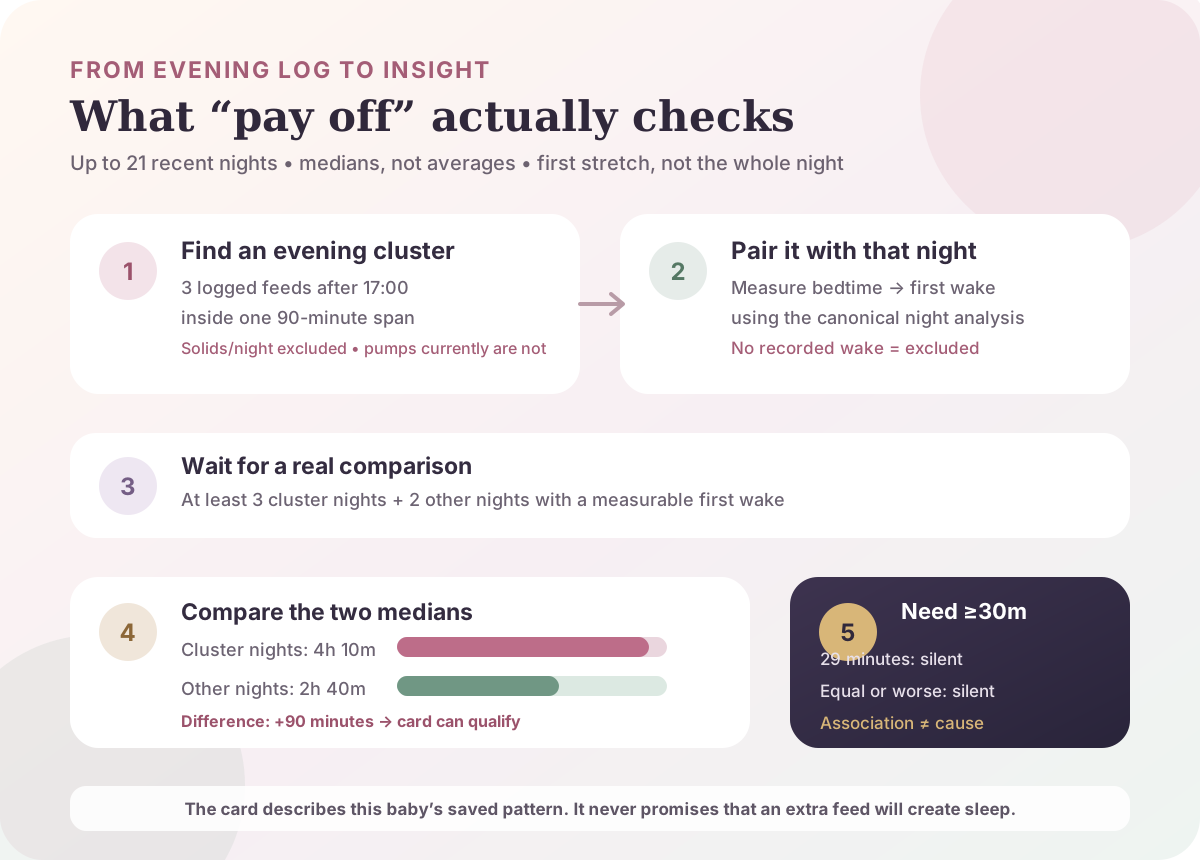
These are product thresholds—not medical definitions of cluster feeding or evidence that extra milk creates sleep.
What the app calls an evening cluster
The software definition is very literal:
- start with feed entries timestamped at or after 17:00
- exclude entries marked as solids and entries marked as night feeds
- sort the remaining timestamps
- look for any three consecutive entries whose first-to-third span is more than zero and no more than 90 minutes
So 6:00pm, 6:40pm and 7:15pm qualify: the first and third are 75 minutes apart. Three feeds at 5:00pm, 6:30pm and 8:00pm do not.
The detector treats breast and bottle feed entries alike. It does not measure milk transferred at the breast, require a bottle amount, assess swallowing, or know whether one long feeding spell was split into several saves. Three timestamps are evidence about logging pattern—not proof of three complete feeds.
There is also an important current implementation gap: pumping sessions are not explicitly excluded here. Elsewhere, OBubba correctly treats expressed output as different from milk the baby drank, but this helper filters solids without filtering entries whose feed type is Pump. A pump entry mixed with two baby feeds could therefore help create a false evening cluster. If the card appears, review the underlying entries before trusting the comparison.
What “first stretch” means
The card does not compare total night sleep, number of wakes, total awake time or morning mood. It uses one measurement:
bedtime → first recorded night wake
If bedtime is 7:30pm and the first wake is 11:30pm, the first stretch is four hours. The canonical night analysis deduplicates its wake events before producing that timing, so a wake and associated feed should not automatically become two separate wakes.
The distinction matters. A baby might have a longer first stretch and then wake frequently after midnight. The card can still appear because it is describing the opening stretch only. “Pay off” must not be read as “the whole night was better”.
The zero-wake blind spot
A night with no recorded wake has no measurable first-stretch value in the current engine, so it is left out before this comparison.
That is statistically awkward. A genuinely wake-free night may be the most successful night in a parent’s eyes, yet it contributes nothing to this card. The same thing happens when a wake occurred but was not logged.
This creates possible selection bias:
- if cluster evenings often lead to no recorded wake, their best nights are missing
- if non-cluster nights are more likely to be incompletely logged, that side may be distorted
- a parent who stops logging after a good bedtime creates different evidence from one who records every wake
The card’s sample label counts only the usable nights passed to it. It is not necessarily the number of complete nights in the family’s history.
A worked example
Suppose the usable history contains:
| Night type | First stretches | Median | |---|---|---:| | Evening cluster | 4h, 4h 10m, 4h 20m | 4h 10m | | Other evenings | 2h 30m, 2h 50m | 2h 40m |
The median difference is 90 minutes, so the card can qualify. It would show a confidence label such as “3 cluster nights vs 2 other.”
Change the cluster median to 3h 05m and the other median to 2h 40m. The difference is 25 minutes, below the product’s 30-minute gate, so the detector stays silent.
If cluster nights are equal or worse, it also stays silent. The engine never produces a negative “cluster feeds made sleep worse” version from this detector.
That one-sided design is reassuring, but it creates another interpretation limit: silence can mean worse, equal, a small advantage or simply too little data.
Association is not cause
The card compares two groups from the same baby, which is more personal than a generic schedule chart. It still does not control for:
- age and developmental change across the 21-night window
- a growth spurt or illness
- bedtime and the final wake window
- day sleep and nap quality
- total daytime milk intake
- a dream feed
- how effectively milk transferred
- whether a parent logged more carefully on difficult nights
Cluster feeding and a longer first stretch may both happen on higher-appetite days. A calm bedtime routine may accompany the cluster. The baby may simply have matured across the sample. The logs can show what travelled together; they cannot isolate why.
The current card copy says a busy evening is “usually buying” a longer stretch and describes topping the baby up. That wording is stronger than the evidence. A more accurate reading is:
> “In the nights you logged, close evening feeds were followed by a longer median first stretch. Keep following your baby’s cues and see whether the pattern continues.”
Do not add feeds to chase the card
Current NHS guidance describes cluster feeding as common, particularly in the first three to four months and sometimes around a growth spurt. It can happen during the day or night. The advice is responsive: notice hunger and fullness cues rather than imposing a rigid clock pattern.
For breastfeeding, responsive feeding recognises nutrition, comfort and reassurance. Offer the breast according to the baby’s cues and your own wish to feed; do not delay a hungry baby to preserve an interval.
For bottle feeding, follow hunger cues, pace the feed and stop when the baby shows they need a break or have had enough. Do not encourage a baby to finish a bottle or add an extra bottle merely because an app found a correlation. The NHS specifically cautions that formula-fed babies can cluster feed but should not be overfed.
The useful action is notice, not manufacture.
Cluster feeding does not prove milk supply is low
Frequent feeding alone cannot measure breast-milk supply. A timer records duration and sequence; it cannot see attachment or swallowing.
Look at the wider picture:
- long, rhythmic sucks and visible or audible swallowing
- rounded cheeks during sucking
- comfort and attachment
- wet and dirty nappies appropriate for age
- alertness and behaviour between feeds
- weight and growth over time
The NHS advises asking a midwife, health visitor or breastfeeding specialist for help early if there are concerns about intake. A skilled person watching a full feed is more informative than the clock.
What to do on a feed-heavy evening
If the baby is otherwise well and feeding effectively:
- Follow early cues. Rooting, hand-to-mouth movement and restlessness often come before crying.
- Notice effective drinking. Record timing if helpful, but watch swallowing and attachment rather than minutes alone.
- Respond to fullness cues. Turning away, stopping sucking, splaying fingers or spilling milk can signal a bottle-fed baby needs a pause or is finished.
- Make the parent comfortable. Bring water, food, a charger and physical support within reach.
- Keep bedtime flexible. A cluster is not a reason to hold an exhausted baby awake for one more entry.
- Review the whole night tomorrow. First stretch, later wakes, nappies, parent rest and how feeding felt all matter.
If you have a feeding or supplementation plan from a neonatal, midwifery or feeding team, follow that plan rather than a general app insight.
Why the card might not appear
Common reasons include:
- only two evening feeds fell inside the 90-minute span
- one entry was before 5pm
- a feed was marked as a night feed
- fewer than three qualifying cluster nights exist
- fewer than two usable comparison nights exist
- the median advantage is under 30 minutes
- cluster nights were equal or worse
- nights had no recorded first wake
- bedtime or wake timing was incomplete
The insight is dismissed per day in the current app. Choosing Lovely acknowledges today’s card; it does not turn the association into a permanent rule.
When to seek feeding help
Ask your midwife, health visitor, GP or breastfeeding specialist for prompt help if feeding is painful, the baby cannot attach or stay attached, swallowing is not apparent, feeds are persistently exhausting, wet nappies are below the expected pattern, or weight gain is a concern.
Seek urgent medical advice if the baby is not feeding normally and you are worried, has fewer wet nappies than usual, is unusually drowsy or shows signs of dehydration. Call 999 for severe breathing difficulty, blue or grey colour, collapse, or a baby who is limp, floppy or unusually unresponsive.
Do not wait for five nights of app evidence when the baby in front of you needs help.
Why this cross-domain insight is still valuable
Used carefully, the feature does something most feed timers do not: it connects an evening feeding pattern with the sleep that followed and shows the actual medians and sample split.
Its best use is emotional and practical. It can help a parent say:
> “Those intense evenings are not automatically ruining the night. In our recent record, they often came before a longer opening stretch.”
That is a kinder, more grounded story than “my supply failed” or “I have created a bad habit”. The trust comes from keeping the conclusion proportionate: personal history, visible evidence, honest exclusions and no promise.
Explore OBubba’s baby feeding and sleep tracker → — keep breast, bottle, pumping, nappies and night sleep in one record, so patterns can cross categories without losing the details that make them interpretable.
Frequently asked questions
Does the card mean I should offer more milk before bed?
No. Follow hunger and fullness cues and any individual feeding plan. The card reports an association in past logs; it does not prescribe an extra feed or amount.
Does cluster feeding make babies sleep longer?
Not necessarily. In this detector, some babies’ saved cluster nights had a longer median first stretch. Other factors may explain the difference, and the card says nothing about the rest of the night.
Does a breastfeed have to last a certain number of minutes to count?
No. The helper uses timestamped feed entries and does not set a minimum duration. That is convenient but means a tiny or accidentally duplicated entry can count. Duration also does not measure milk transfer.
Can bottle feeds count?
Yes. The current comparison includes non-solids daytime feed entries after 5pm, including bottles. Feed responsively and never force a baby to finish a bottle to create a cluster.
Can pumping count by mistake?
Yes, in the current implementation. Pump entries are not explicitly filtered from the evening-cluster helper. Review the source logs if the card does not match what the baby actually drank.
Why are nights with no wake missing?
The engine calculates the first stretch from bedtime to the first recorded wake. With no wake, that value is null and the caller excludes the night. This is a known limitation of this comparison.
Reliable UK sources
- NHS Best Start in Life: Cluster feeding
- NHS Best Start in Life: Feeding on demand
- NHS: Is my baby getting enough breast milk?
- UNICEF UK Baby Friendly Initiative: Responsive feeding
- UNICEF UK Baby Friendly Initiative: Breastfeeding assessment tools
This article provides general information for UK families. OBubba cannot measure milk transfer, assess attachment, diagnose low supply or guarantee sleep. Follow advice from your baby’s own midwife, health visitor, GP, neonatal or feeding team.
Ready to try OBubba?
Use OBubba to track feeds, sleep, naps, nappies, growth, milestones and family handovers in one calm baby tracker app.