You have found someone you trust. The bottles are ready, the sleep bag is clean and you have explained the bedtime routine twice. Yet as the moment to leave gets closer, your brain produces twenty more instructions and a strong urge to cancel.
The first evening away from your baby can feel enormous even when the plan is safe and ordinary.
A good babysitter handover is not a complete history of your baby. It is one clear page covering today's rhythm, safe sleep, feeds, allergies and medicines, what usually settles them, emergency contacts and when you will return. Then walk through the home once and let the sitter repeat the important parts back.
The goal is not to make the evening unfold exactly as it does with you. It is to make safe, responsive care easy when you are not in the room.
The ten-minute handover
| Minute | Cover this | The useful level of detail | | --- | --- | --- | | 0-2 | Today's rhythm | Last feed, last nap, next likely sleep and whether today has been unusual | | 2-4 | Feed plan | What, roughly when, safe preparation and what not to offer | | 4-6 | Bedtime and safe sleep | Short routine, sleep clothing, clear cot, place on back and what to do after a wake | | 6-7 | Comfort | Two or three things that usually help; one thing that tends to make baby more upset | | 7-8 | Health | Allergies, conditions, recent medicine and exact written instructions for anything authorised | | 8-9 | Emergencies | Address, exits, emergency contacts, where essentials are and when to call 999 | | 9-10 | Communication | Return time, when to contact you, how many updates you actually want and the backup plan |
If the handover needs forty minutes, it contains too much, or the care arrangement is not ready yet. Practise on an afternoon visit first if either adult still feels unsure.
Before the first evening: choose confidence over convenience
Meet the sitter before the night if possible. Let them spend time with your baby while you are still home and watch how they respond to cues, crying and ordinary unpredictability.
The NSPCC's current home-alone and babysitter guidance says there is no legal minimum age for a babysitter. It also warns that if the babysitter is under 16, the parent remains legally responsible for the child's safety. Whatever the sitter's age, choose someone with the experience, judgement and confidence to care for this baby safely.
Ask practical questions:
- Have you cared for a baby of this age before?
- Are you comfortable preparing this type of feed?
- What would you do if baby would not settle?
- Do you know infant CPR and first aid?
- How would you respond to choking, an allergic reaction, breathing difficulty or a baby who is hard to wake?
- Are you comfortable contacting me early rather than trying to manage alone?
- Do you understand the safe-sleep setup we use?
Trust your reaction to the conversation. A sitter does not need to copy your parenting personality, but they do need to respect safety instructions, ask when uncertain and stay within what they are competent to do.
For the first attempt, many families choose a familiar grandparent, relative or sitter, stay nearby and keep the care window short. That is not overprotective. It is a sensible rehearsal.
Tell them what happened today, not the ideal schedule
A babysitter needs the day your baby has actually had.
Share:
- when baby woke this morning
- the last nap start and end
- the last milk feed and approximate amount, or the most recent breastfeed
- any solids offered and any reaction
- the next likely feed or sleep
- whether baby is teething, recovering from illness, overstimulated or unusually tired
- any medicine already given today
“Bedtime is always 7pm” is less useful than “Bedtime is usually around 7pm, but the last nap ended at 5:15, so follow tired cues and do not force the clock.”
Give a range when a range is honest. A forecast can help the sitter anticipate; it should not make them hold an exhausted baby awake or pressure an alert baby to sleep.
Keep the bedtime routine short enough to repeat
Choose the smallest version of bedtime that still feels familiar:
- nappy and sleep clothes
- feed if one is due
- dim room and one familiar story or song
- cuddle or normal settling method
- into the cot following your safe-sleep setup
Show where everything is rather than describing it from the doorway. Point out the correct sleep bag, spare sheet, nappies, wipes and low light. If there is a monitor, demonstrate the controls and explain that it does not replace checking the baby.
Be explicit about what the sitter may do if settling takes longer. “Pick her up, cuddle until calm and try again” is actionable. “She self-settles” is not enough if tonight she does not.
Also give permission to abandon the performance of bedtime: if baby becomes very distressed, the sitter can comfort them, call you and prioritise safety over achieving the usual time.
Every sleep is still a safe sleep
Do not assume a familiar grandparent or experienced sitter knows your current safe-sleep guidance. Walk through it without apology.
Current safer-sleep guidance for babies includes:
- place baby on their back for every sleep
- use their own firm, flat, waterproof sleep surface
- keep the cot or Moses basket clear of pillows, duvets, bumpers, nests, toys and loose objects
- keep baby's head uncovered and avoid overheating
- aim for a room temperature around 16-20°C
- for the first six months, the safest place is in the same room as the carer, in a separate cot or Moses basket
- never fall asleep with baby on a sofa or armchair
The Lullaby Trust's safer-sleep guide for childminders, nannies and nursery settings advises checking temperature at the chest or back of the neck rather than using cool hands or feet as a guide.
Remove unsafe items before you leave rather than asking the sitter to remember what not to use. Do not introduce a new pillow, nest, sleep positioner or improvised prop because “it might help while we are out.”
If baby rolls independently, still place them on their back at the start of sleep. Explain your normal response if they roll so the sitter is not improvising at 9pm.
Give a feed plan that can survive one missed detail
For milk feeds, label prepared items clearly and explain:
- which milk to offer
- the approximate timing or hunger cues
- the amount baby commonly takes, without requiring them to finish it
- how to prepare, warm and test it safely
- paced-feeding or positioning preferences
- how long a prepared or started feed can be kept under the instructions you follow
- where used bottles should go
Never prop a bottle. Baby should be held and observed during the feed.
For solids, keep the first babysitting evening familiar. Provide food your baby has already tolerated, served in a texture appropriate for their skills. Avoid using the sitter's shift for a first allergen exposure or a deliberate texture challenge.
Write down:
- confirmed allergies and the agreed emergency plan
- foods not to offer
- how food should be cut or prepared
- whether baby uses finger foods, a spoon or both
- the difference between gagging and choking
- where any prescribed emergency medicine is kept and exactly how the professional plan says to use it
If the sitter is not confident with feeding or choking first aid, solve that before the evening rather than relying on a note.
Medicines need a closed-loop handover
Do not leave an assortment of medicines with “give this if needed.” If a medicine may be needed, provide the original packaging, supplied measuring device and exact written instructions based on the label, prescription or clinician's plan.
Record:
- exact product and formulation
- amount authorised
- the actual time of the last dose
- the earliest next time under the instructions you were given
- who to contact before any uncertain dose
Ask the sitter to confirm the plan back to you. The person who gives a dose should log it immediately and message: “Given and logged at 8:40pm.” Planned, measured and swallowed are different events.
If anyone is uncertain whether a dose was already given, do not guess or repeat it automatically. Check the record and obtain advice from a pharmacist, GP or NHS 111 as appropriate. Our baby medicine handover guide explains the full closed-loop process.
For a nursery or registered setting, their official medication consent and administration process remains the source of truth.
Make emergency information visible
Put one page somewhere obvious, not buried in a chat thread, with:
- your full home address and postcode
- both parents' or guardians' phone numbers
- one nearby backup adult
- the baby's GP details if useful
- relevant allergies, medical conditions and care plans
- where keys, exits, first-aid supplies and the fire extinguisher or blanket are
- the emergency number: 999
Tell the sitter to call 999 first in a life-threatening emergency, then call you. Examples include severe breathing difficulty, a baby who cannot be woken, a seizure, a severe allergic reaction or choking that is not resolving with appropriate first aid.
Do not make “call us before taking any action” the rule for an emergency. Your phone may be on silent or out of signal.
Before leaving, check smoke and carbon-monoxide alarms are working, hazards are secured and the sitter knows whether anyone else is expected at the door. Agree that they will not invite visitors, leave the baby with somebody else or take baby out unless that is explicitly part of the plan.
Decide what updates will help rather than tether you home
Choose the communication rhythm before you leave. For example:
- one message after the feed
- one message when baby is asleep
- immediate contact for medicine, vomiting, injury, breathing concerns, unusual crying or anything that feels wrong
- no need to message for ordinary wakes unless the sitter wants support
Repeatedly asking “Are they okay?” every seven minutes can make both adults more anxious. A defined update is kinder.
Keep your phone audible and share where you will be and roughly how quickly you can return. If plans change, tell the sitter rather than quietly extending the evening.
When you come home, ask for facts before interpretation: feeds, sleep, nappies, medicine, anything unusual and what helped. “She hated bedtime” may mean five minutes of protest; a simple timeline is easier to understand.
Briefing, temporary care link or permanent sharing?
Different carers need different access. More access is not automatically better.
| Option | Best for | What changes | | --- | --- | --- | | Copied handover briefing | One evening where the sitter mainly needs current context | A static text snapshot; no account access | | Temporary Bubba Care link | A sitter or grandparent who needs the guide and simple live logging | Opens in a browser; feeds, nappies and naps can flow back during the active session | | Family sharing | A co-parent or regular carer using the same ongoing baby record | Continued live access to the shared child's timeline until disconnected |
For a first evening with an occasional sitter, a briefing or temporary session is usually more proportionate than sharing the baby's permanent sync code.
Treat any live care link as private. Send it directly, do not include it in a public screenshot, and end or replace the session when the care period finishes.
How OBubba gives a babysitter right-sized access
OBubba's Bubba Care tool is designed for the person helping for an evening, without giving them the parent's account or permanent family access.
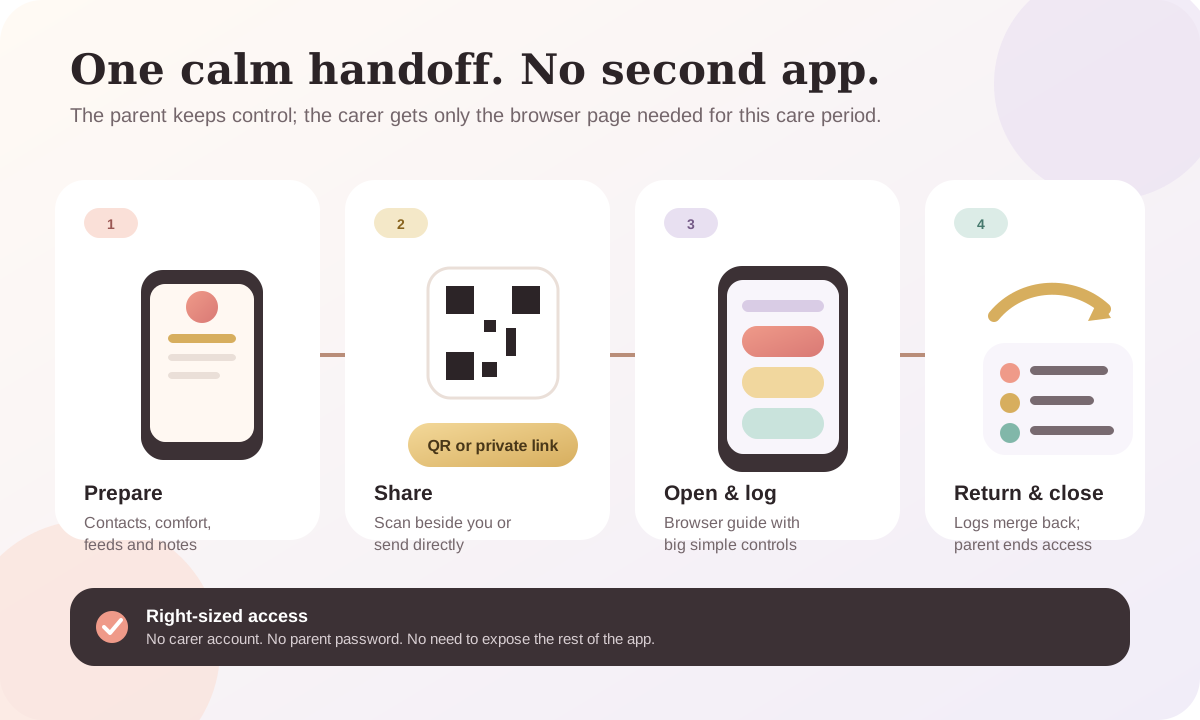
The parent adds emergency contacts, feeding details, comfort and routine notes, then creates a private link or QR code. The sitter opens it in a browser. They do not need to install OBubba or create their own login.
During the active session, the carer can log feeds, nappies and naps. Those entries appear in the parent's app. When the parent ends the session, OBubba pulls the carer's remaining logs into the baby timeline, clears the carer page and revokes that link. If a different carer will help next time, New carer saves the existing logs before creating a fresh link.
The parent can also save the care guide as a PDF when a static backup is more appropriate. Bubba Care does not replace the spoken handover, medicine instructions or emergency plan. It keeps the practical details and the evening's simple logs in one controlled place.
This is different from Family sharing, which is designed for a trusted co-parent or regular carer who needs ongoing access to the shared baby's record. For one evening, the temporary link is usually the smaller and clearer access surface.
See how OBubba handles a baby care handover and turn the first evening away into one clear plan instead of fifteen screenshots.
What if baby does not settle for the sitter?
That does not mean the evening failed or that your baby is not ready to be cared for by someone else.
Babies notice a different voice, smell, hold and sequence. The sitter should use familiar cues, respond warmly and avoid cycling rapidly through every soothing trick. If baby remains distressed, they can call you and agree whether you return.
Do not judge the entire care arrangement from one unusual bedtime. Review whether the sitter felt supported, whether the instructions were clear and whether a shorter daytime practice would help before the next evening.
The win is not “baby slept exactly as usual.” The win is that baby was safe and comforted, the sitter knew what to do, and you came home to a clear account of the evening.
The handover to remember
Give the sitter today's reality, not your baby's whole biography. Walk through feeds, bedtime and the sleep space. Make health and emergency information visible. Agree the communication plan. Ask them to repeat back anything safety-critical.
Then leave without adding five new rules at the door.
It is normal to miss your baby, check your phone and feel both free and uneasy. Trust grows through small, well-prepared experiences. One calm evening can become evidence that your baby can be safely cared for by more than one loving adult, and that you are allowed to step outside the house as a person, too.
This article provides general information for UK families. It does not replace individual medical advice, a professional care plan or infant first-aid training. Call 999 in a life-threatening emergency.
Frequently asked questions
What should I leave for a babysitter looking after my baby?
Leave today's feed and sleep context, the short bedtime routine, safe-sleep instructions, comfort methods, allergies and health information, exact medicine instructions if applicable, emergency contacts, the home address, supplies and your expected return time.
Should the babysitter follow the exact bedtime?
Give the usual time as a range and explain today's last nap. Safety, hunger cues and tiredness matter more than achieving one exact minute. A different carer may also need longer to settle baby.
Should I ask for photos all evening?
Agree one or two useful updates, such as after a feed and when baby is asleep. The sitter should contact you immediately for health or safety concerns. Constant photo requests can distract from care and may increase anxiety.
Can a babysitter give my baby medicine?
Only within a clear, appropriate plan using the exact product, original instructions and measuring device. Confirm the last actual dose, authorised amount and when to contact you or a professional. Never leave vague “if needed” instructions.
Does a babysitter need the full baby tracker account?
Usually not for one evening. A copied briefing or temporary Bubba Care link can provide proportionate context. Permanent Family sharing is better reserved for a trusted co-parent or regular carer who needs ongoing access.
Can OBubba replace a babysitter handover conversation?
No. OBubba can organise current context and provide a temporary logging route, but the parent must still choose a suitable sitter, demonstrate the home and sleep setup, explain medical plans and confirm that safety-critical information was understood.
Ready to try OBubba?
Use OBubba to track feeds, sleep, naps, nappies, growth, milestones and family handovers in one calm baby tracker app.