AI baby tracker
Start with the next real moment
One useful log is enough to begin. There is no catch-up target and no need to reconstruct a missed feed or nap from memory.
A clear answer before you log
OBubba explains its learning timeline: log real moments for days 1–3, personal guidance begins around day four, and the sleep picture gets clearer across roughly twelve complete nights.
A clear answer
Personal guidance in OBubba begins around day four, after the app has seen enough of your baby's real days. A clearer sleep picture forms across roughly twelve complete logged nights. Those timings describe how the app learns, not when a baby will sleep differently. Suggested timings remain guides and baby cues come first.
What to look for
You do not need a perfect diary. Log the next real feed, nap, wake or nappy when it is useful. OBubba uses that history to organise a more personal picture over time, while you stay free to simplify any category that stops helping.
One useful log is enough to begin. There is no catch-up target and no need to reconstruct a missed feed or nap from memory.
Record naps, feeds and wakes as they happen. OBubba is building context, so there is no personal plan to follow yet.
When enough real moments are available, OBubba can begin suggesting nap and bedtime timings from your baby's own recent rhythm.
Keep bedtime and morning-wake records when you can. The app explains that the deeper pattern is still building instead of pretending the first few nights are conclusive.
With roughly twelve complete logged nights, OBubba has more context for night patterns and trend comparisons. This is a product-learning milestone, not a promised sleep result.
Suggested timings are guides. Follow your baby, and stop logging any category that no longer answers a real question or supports a handover.
A calmer boundary
A peek inside OBubba
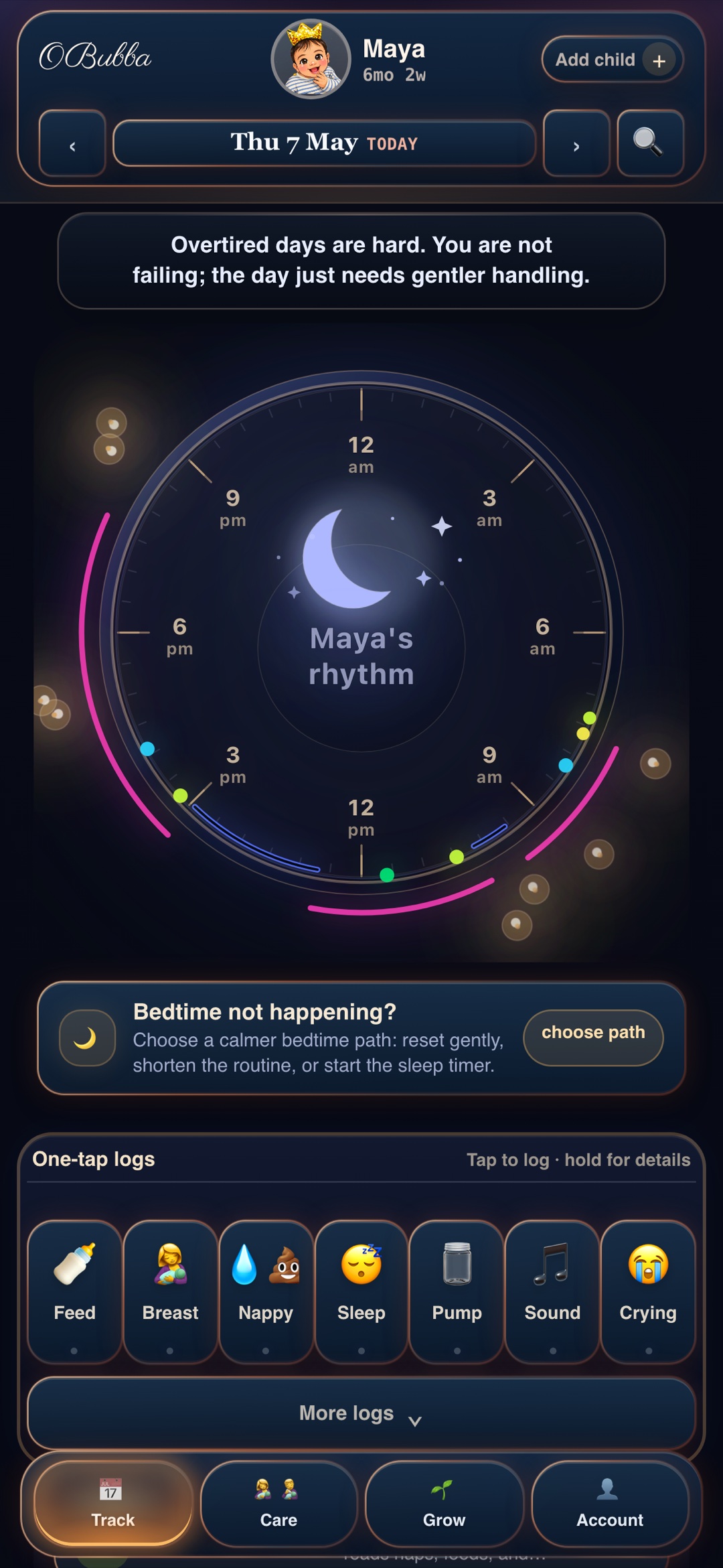
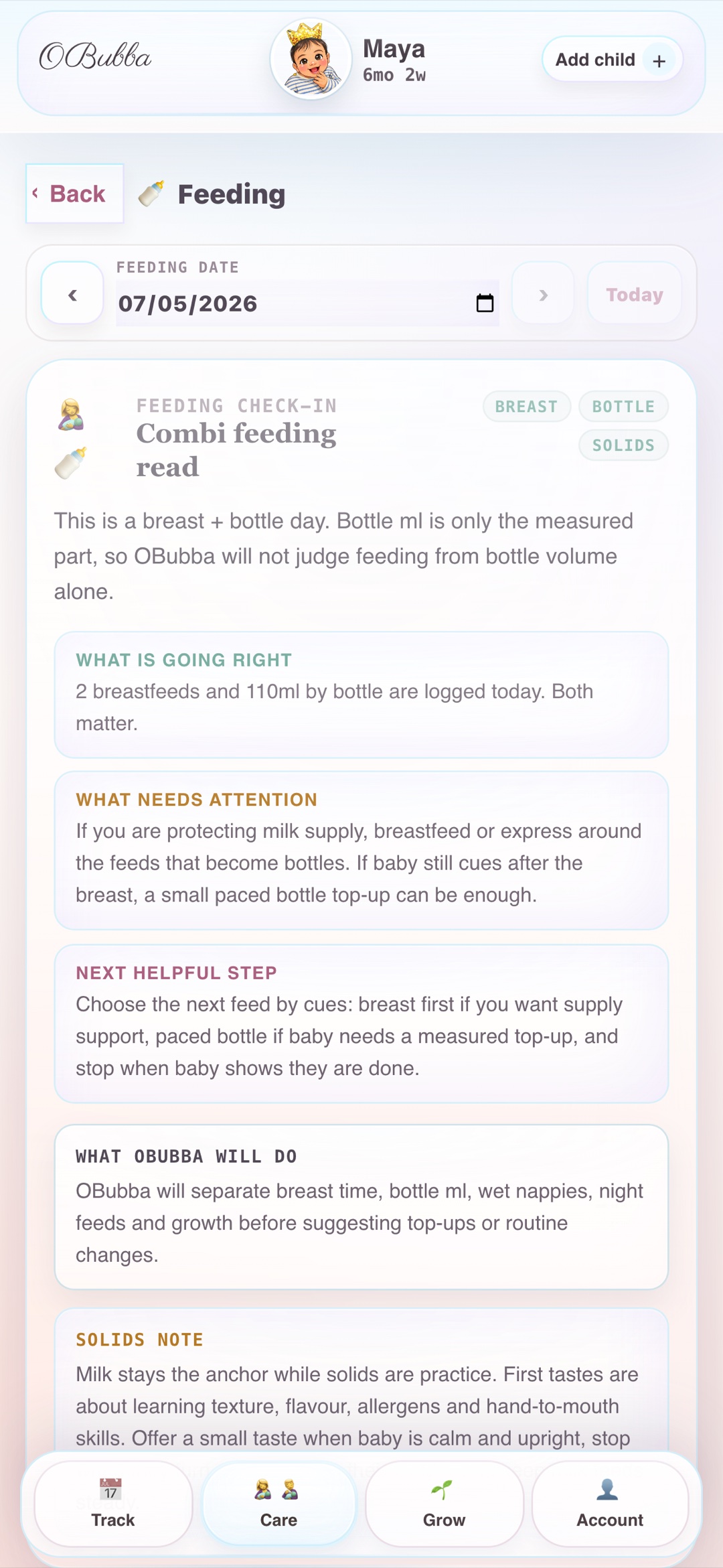
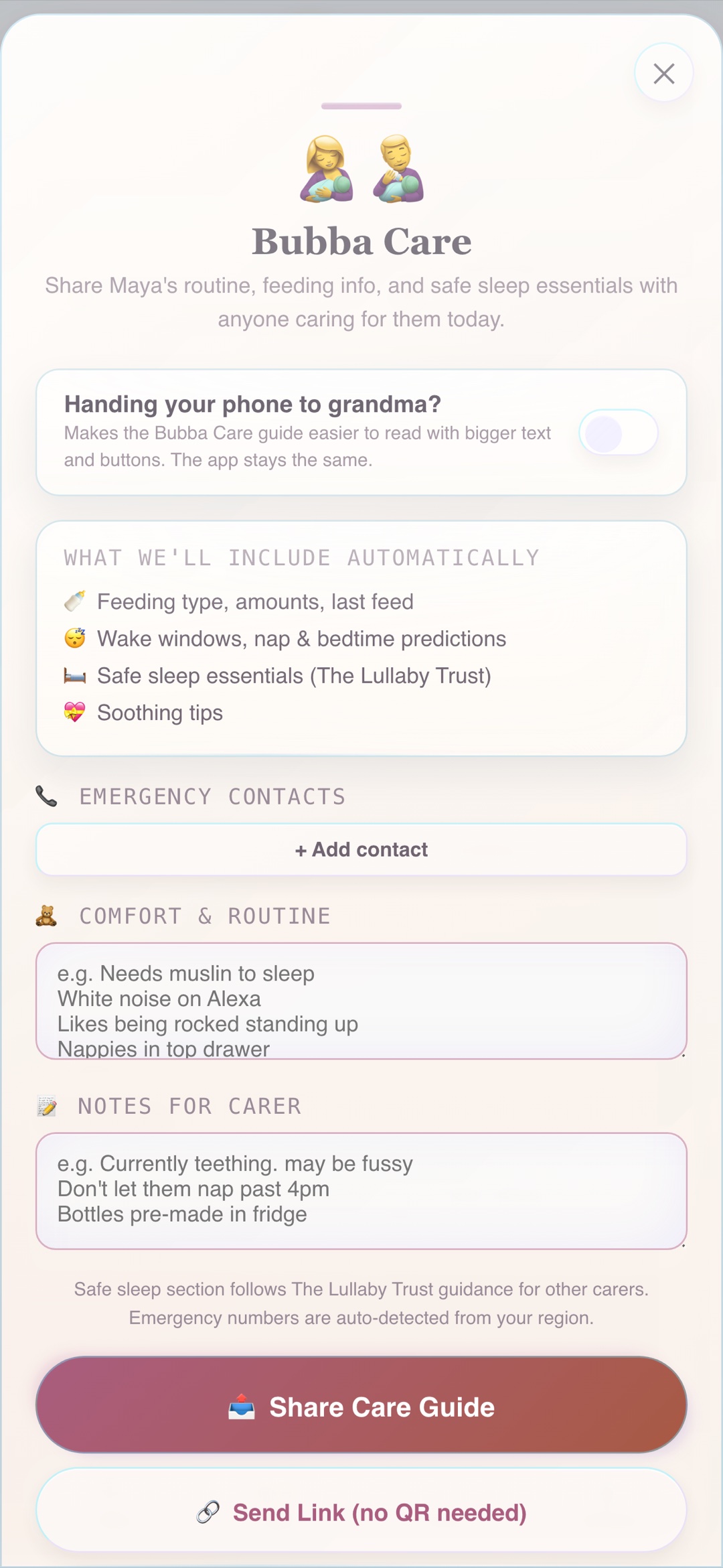
Use the smallest useful record
Use OBubba for the details that answer a real question: the last feed, the current nap, the morning wake or a handover. A missed log does not create homework, and no prediction outranks the baby in front of you.
Why this guide exists
Recent parents describe tracking as helpful for memory and pattern-spotting, but also ask when they can simplify because logging can become stressful. Current sleep-app listings compete on personalisation. OBubba answers that market with its own verified learning timeline and explicit limits.
FAQ
Personal guidance can begin around day four when enough real moments have been logged. The deeper sleep picture gets clearer across roughly twelve complete nights. This does not guarantee a change in your baby's sleep.
For the deeper sleep picture, OBubba needs enough bedtime, overnight and morning-wake context to organise a complete night. You do not need to log every daytime category perfectly.
Do not catch up from memory. Start again with the next real moment. Guidance adapts to what is actually recorded and should always be treated as a guide.
No. Suggested timings are gentle guides, not rules. Follow your baby's cues and adjust or ignore a suggestion that does not fit the real day.
No. OBubba's built-in guidance works from the history in the app. Deeper conversational Luna answers are optional; after consent, a question and relevant log context can be sent to Google Gemini. The current Privacy Policy explains the boundary.
Simplify or stop a category when it no longer helps memory, a care handover or a specific question. For feeding, nappy, medicine or health concerns, follow the plan from your midwife, health visitor, GP or other qualified professional.
Try OBubba
OBubba is free to start. Premium is unlocked during pregnancy and through corrected age week 8; after that, the current app shows what remains core and what is Premium.