Christmas Day ran late. Your baby slept for 22 minutes in the car, refused the cot at Grandma's, fed more overnight and woke at a completely unfamiliar time. Does Boxing Day now need a strict sleep reset?
Usually, no. One festive day has not broken your baby's sleep. For the next 24–48 hours, restore three familiar anchors—morning light, responsive feeds and a short bedtime routine—then let naps and bedtime move modestly around the sleep your baby actually had.
Do not try to erase a late day by withholding a needed nap, cutting feeds or forcing an exhausted baby to reach the old bedtime. Christmas created a temporary change in inputs, not a parenting failure.
> Reset the cues around sleep before you try to reset the clock.
What happened yesterday—and what to do today
| Christmas sleep pattern | Gentle Boxing Day response | |---|---| | Late bedtime, usual morning wake | Keep the morning calm and bright. A nap may be needed earlier than usual; use tired cues and the baby's typical awake range rather than stretching the day. | | Late bedtime, late morning wake | Accept that the whole day may run a little later. If you want to move back, nudge one anchor by about 10–15 minutes rather than demanding an hour-long correction. | | Short or missed naps | Offer the next reasonable nap promptly. If naps stay poor, use an earlier bedtime instead of chasing a long late rescue nap. | | A long, late nap | Bedtime may need to move modestly later. Keep the routine familiar even if the clock time changes. | | Extra night feeds or cuddles | Respond to hunger and distress as usual. One unusual night does not establish a permanent habit; review only if the pattern continues. | | Sleep happened in the car | Count the sleep that happened, not the nap you planned. On arrival, move the baby out of the car seat and into an appropriate sleep space if they still need to sleep. |
These are choices, not rules. Newborn sleep is especially variable, and a baby with a feeding, growth or medical plan should follow that individual advice.
The first 24 hours: rebuild rhythm without a battle
1. Start the day with light and ordinary life
Open the curtains and use normal household sound once the family is up. Daylight and activity help distinguish day from night; dim light, a quiet voice and minimal stimulation help at night. That day–night contrast is more useful than repeatedly checking whether every nap begins at the old time.
The NHS baby sleep guide recommends ordinary light and noise during the day, with low light, quiet voices and no play during night care. It also emphasises that every baby has an individual sleep pattern.
Do not wake a newborn or a baby on a clinical feeding plan merely to make the schedule neat. Follow the advice you have been given.
2. Keep feeds responsive
A busy room, unfamiliar faces or travel can change when and how much a baby feeds. Offer breast or bottle feeds responsively rather than delaying milk to protect a nap or bedtime.
For an older baby eating solids, return to familiar meals and milk feeds without asking them to compensate for yesterday. Sleep timing is not a reason to ration milk.
3. Count every real sleep
The 22-minute car nap, the contact nap at a relative's house and the doze during a feed all affect the next stretch of wakefulness. Planning as if they never happened can create an overtired baby; treating each as a full restorative nap can place bedtime too early.
Record the approximate sleep and make the next decision from the baby in front of you. If you need to plan another family event, use this guide to arranging naps around an appointment or event.
4. Protect the next reasonable nap
Make the sleep space familiar and lower stimulation a little earlier than you might on an ordinary day. The goal is an opportunity to sleep, not a guaranteed nap of a particular length.
If the nap fails, reset with light, a feed or quiet play, then try again when tired signs return. Repeating a long settling attempt can turn the whole day into a negotiation.
5. Avoid dramatic nap caps
Waking a deeply tired baby very early from every nap can produce the old bedtime on paper and a much harder evening in practice. Equally, a very late long nap may push bedtime later.
Make the smallest useful adjustment. If a late nap is likely to become bedtime, you may gently wake an older baby at a sensible point and use a slightly later bedtime. If you are unsure, preserve sleep and reassess the next anchor.
6. Use the familiar bedtime sequence
A short routine—nappy, sleepwear, feed, book or song, cuddle, cot—can stay the same even when bedtime moves. The NHS suggests a simple soothing routine because it helps babies recognise that sleep is approaching.
Keep the routine short on an overtired night. Boxing Day is not the evening to add a new settling method, remove several comforts and insist on an exact minute.
The next 48 hours: return by repetition
On day two, repeat the same day–night signals and compare with your baby's usual pattern:
- Is morning wake moving back towards its familiar range?
- Are naps beginning with less struggle?
- Is bedtime naturally closer to normal?
- Are night wakes settling, or was only one night unusual?
If the day is still shifted but your baby is otherwise comfortable, adjust one anchor by 10–15 minutes. Morning light, the first nap or the start of the bedtime routine is usually easier to move than every sleep at once.
If everything has already returned, stop correcting. A successful reset can be delightfully uneventful.
Parents wondering whether a later family morning is itself a problem can read should I let my baby sleep in at weekends?. If the confusion is really about which sleep marks night, see what time counts as baby bedtime?.
Newborns, older babies and toddlers need different expectations
Newborns
Newborn sleep is spread across day and night, feeding drives much of the rhythm and there may be no stable schedule to restore. Focus on feeds, safe sleep, daylight during awake daytime periods and quiet night care. Do not apply an older baby's wake-window plan to a newborn.
Older babies
An older baby may have recognisable nap and bedtime ranges, but one day can still vary. Use their personal pattern as context rather than a deadline. Tired cues, illness, feeds and the sleep already taken today can override yesterday's plan.
Toddlers
Toddlers often respond well to a clear wind-down and the same sequence each evening. Give simple advance warnings, reduce stimulating play and return to the family boundary calmly. A late Christmas bedtime may take a couple of ordinary evenings to fade.
Safer sleep after celebrations
Boxing Day tiredness can make accidental sleep the bigger risk. The same safer-sleep principles apply at home and away:
- use a firm, flat, clear mattress in an appropriate cot or travel cot
- do not add pillows, folded blankets or another mattress to make a travel cot feel softer
- keep decorations, gift ribbon, bags, cords, toys and loose bedding outside the sleep space
- never sleep with a baby on a sofa or armchair
- do not bed-share if anyone in the bed has drunk alcohol, taken recreational drugs or used medicine that causes drowsiness
- use a car seat for travel, then take the baby out when you arrive
The Lullaby Trust's safer sleep on holiday guidance explains how to check a travel cot and why alcohol, drowsy medicines, sofas and armchairs require particular care. If you are exhausted, arrange a safe handover before you start settling the baby.
How the real OBubba app handles a festive off-day
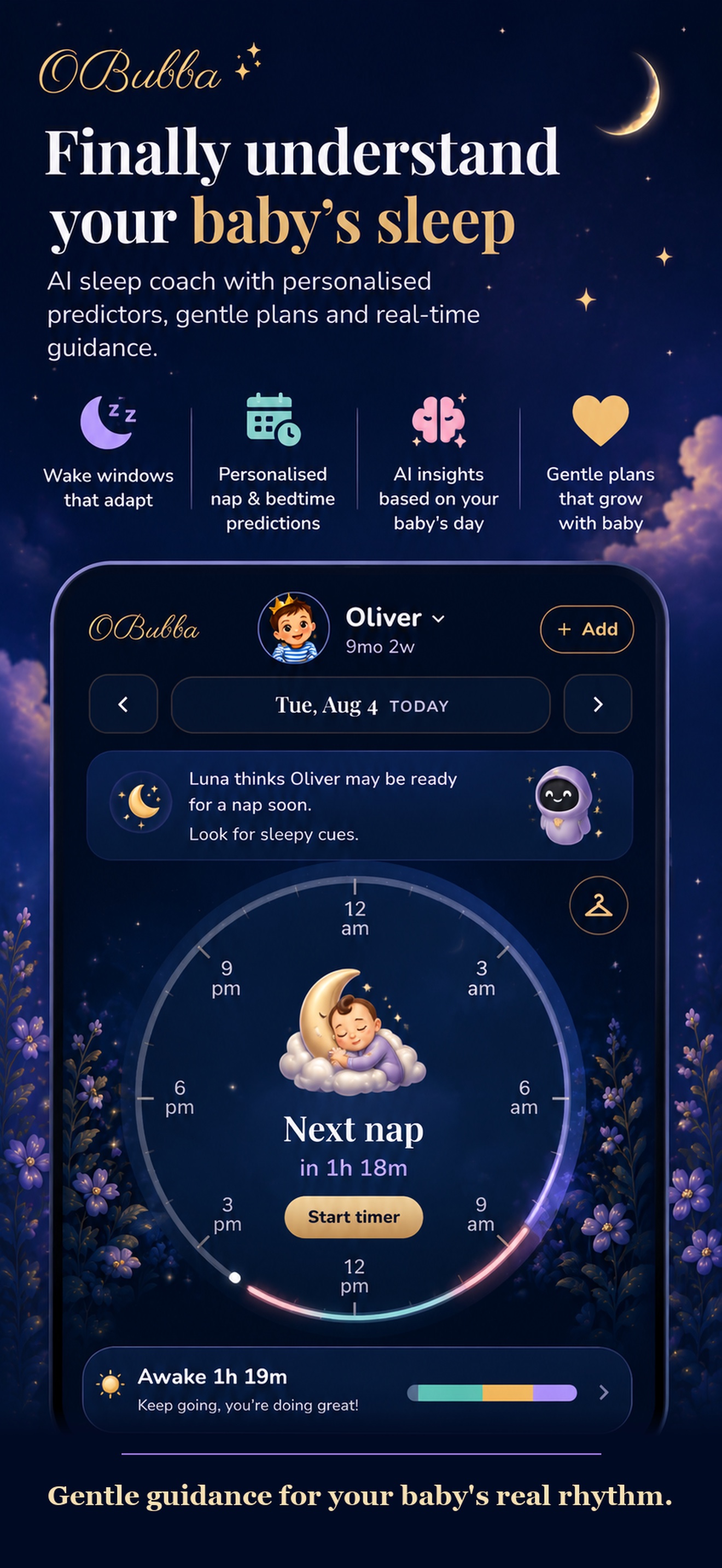
OBubba does not look at a baby and decide whether they are tired, hungry, ill or safe to sleep. Its useful job is narrower: it remembers what actually happened, separates exceptional days from the baby's normal pattern and gives tonight's timing some personal context.
Tell OBubba that Christmas was not an ordinary day
In Track, open Today type and choose the description that fits: Grand for a day at grandparents' home or Travel for a journey or night away. The current app keeps that label for the selected baby.
Those tagged days are excluded from the wake-window baseline OBubba learns from. That matters after Christmas: a car nap, late family meal or one-off bedtime should remain useful history without quietly becoming the baby's new “normal”. If Christmas happened at home and was simply unusual, record the real sleep without forcing a label that does not fit.
Adjust only the day that needs help
Adjust Schedule lets a parent set preferred wake, nap and bedtime targets Just today, Gradually or Every day. For a Boxing Day bridge, Just today is often the most honest choice: it helps plan this particular day without pretending the family's long-term preference has changed.
You can also keep the schedule on Auto and simply log the naps that occur. The app should support the decision, not create another target to fail.
Let Tonight's Guidance use today—not Christmas in theory
Tonight's Guidance can lead with a bedtime estimate based on today's sleep. It only uses a personal awake-window estimate after enough samples have been recorded, so a newly tracked baby is not presented with false precision.
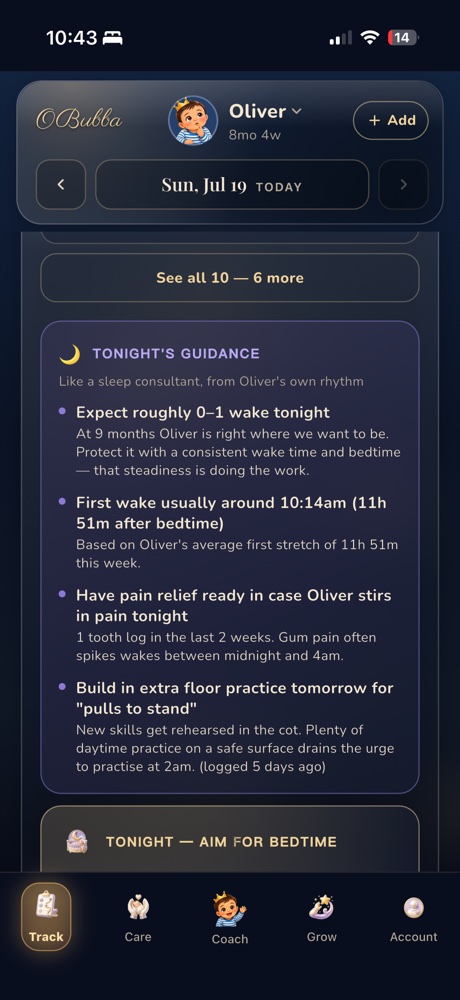
OBubba's disruption analysis is intentionally quiet after a single rough night. Its recovery card needs at least seven recorded nights and evidence of a genuine rise in wakes before it appears. It then compares recent nights with that baby's earlier baseline and waits for two nights close to baseline before saying Back to baseline.
That restraint is a feature. One festive night does not automatically become a regression, a diagnosis or a sleep-training problem.
Try OBubba free → — track real sleep, mark unusual days and plan tonight without letting Christmas rewrite the baby's normal rhythm.
When it may not be “just Christmas”
Coincidence is possible. New waking can also arrive with illness, pain, feeding difficulty, a nap transition or developmental change.
Pause the schedule reset and seek health advice if your baby has breathing difficulty, is hard to wake, is feeding much less, has fewer wet nappies, has a fever that concerns you or simply seems unlike themselves. Use NHS 111, your GP or emergency care according to the symptoms and urgency.
If your baby is recovering from an illness rather than a late party, use the more cautious post-illness sleep reset plan.
Quick answers
How long does it take to reset baby sleep after Christmas?
After one or two unusual days, many families only need 24–48 hours of familiar light, feeds, naps and bedtime cues. There is no guaranteed deadline. Newborns vary widely, and illness or a larger time-zone change needs a different plan.
Should I wake my baby at the usual time on Boxing Day?
Not automatically. Consider age, feeds, yesterday's total sleep and any clinical advice. An older baby who slept in may have a later day; you can move one anchor gradually. Do not wake a newborn or a baby on a feeding plan merely to tidy the schedule.
Should bedtime be early after a missed nap?
Often a modestly earlier bedtime is more workable than forcing a long late nap, but use the baby's behaviour and the sleep they actually had. “Earlier” may mean 20–30 minutes, not several hours.
Will extra Christmas night feeds become a habit?
One night does not prove a new habit. Respond to hunger and distress, then watch what happens over the next few ordinary nights. Feeding decisions should follow the baby's age, growth and individual advice—not a desire to restore the clock.
Do I need to restart sleep training after Christmas?
Usually not after a single disrupted day. Restore the familiar routine first. If a settling approach was already working for your family, resume its usual steps when the baby is well and the day has stabilised; do not intensify it to compensate for Christmas.
Should I log a bad Christmas nap in OBubba?
Yes—log the sleep that happened. If the day was at grandparents' home or involved travel, use the matching Today type so OBubba can keep that exceptional day out of baseline learning. The record remains useful without being treated as ordinary.
OBubba supports family organisation and pattern awareness. It cannot assess tired cues, feeding needs, illness, development or whether a sleep space is safe, and it does not replace advice from a health visitor, GP or other qualified professional.
Ready to try OBubba?
Use OBubba to track feeds, sleep, naps, nappies, growth, milestones and family handovers in one calm baby tracker app.