You cooked a tiny lentil dinner. Your baby ate two spoons, painted the tray with one and left enough in the pan for tomorrow. Which part can go in the fridge—and which part now belongs in the bin?
The short answer: yes, suitable cooked baby food can be chilled, frozen and reheated safely. Cool batch-cooked food promptly—ideally within 1 to 2 hours—then refrigerate it for up to 2 days or freeze it. Defrost thoroughly, reheat only once until it is steaming hot throughout, stir well and let it cool before serving. Throw away food that has already been in the baby's bowl or touched by their used spoon or hands.
Cooked rice needs tighter handling: cool it within 1 hour, refrigerate or freeze it straight away, use refrigerated rice within 24 hours, and never reheat it more than once.
> Save the untouched portion, not the half-eaten bowl.
The baby-food leftovers table
| Food situation | Keep or discard? | What to do | |---|---|---| | extra food still in the clean pan | Keep | divide into small portions, cool promptly, then chill or freeze | | food spooned into a clean container before the meal | Keep | refrigerate within 1–2 hours and use within 2 days, or freeze | | half-eaten bowl | Discard | saliva and used utensils have contacted it; do not chill for tomorrow | | untouched food on the serving plate | Usually keep | only if the baby, used spoon and hands did not touch it and it has not sat out too long | | cooked rice | Keep with extra care | cool within 1 hour; refrigerate up to 24 hours or freeze | | previously reheated leftovers | Do not reheat again | serve what is needed, then discard the rest | | food carried without a cool bag | Time-limited | NHS advice says eat it as soon as possible and within 4 hours maximum, then discard leftovers |
The easiest waste-saving habit happens before the highchair: put one small serving into the baby's bowl and keep the remaining clean food separate. Offer a little more from the untouched container if your baby is still hungry.
How long can homemade baby food stay in the fridge?
Current NHS Best Start in Life guidance says batch-cooked food should be cooled ideally within 1 to 2 hours. If refrigerated, use it within 2 days.
That two-day limit assumes the food was:
- cooked properly
- cooled promptly
- transferred with clean hands and utensils
- covered and refrigerated at a safe temperature
- kept separate from raw meat and fish
- not already eaten from
Put raw meat and fish in a container at the bottom of the fridge so drips cannot contaminate ready-to-eat food.
Do not use smell, appearance or a hopeful taste as the safety test after the time limit. Follow a product's use-by date and storage instructions even if it seems fine.
How to cool baby food quickly
A deep saucepan of thick stew can stay hot in the centre for a long time. Make cooling easier before the clock becomes a worry:
- Portion the food. Divide it into small, shallow containers rather than leaving one large hot mass.
- Keep the clean batch separate. Serve the baby's first amount into another bowl.
- Cool promptly. NHS guidance suggests an airtight container placed under cold running water while the food is stirred when faster cooling is needed.
- Refrigerate or freeze within the safe window. Aim for 1 to 2 hours from cooking; rice has a 1-hour window.
- Add a date label. “Lentil dhal—Tuesday” is more useful than six identical orange freezer cubes.
Do not leave food on the counter for an afternoon because it is “still cooling”. Do not put an enormous, steaming pan into a packed fridge where it may warm the food around it. Smaller portions cool more predictably.
Can I freeze homemade baby food?
Yes. Freezing small portions can reduce waste and make one safe family base stretch across several meals.
Use clean freezer-safe containers or suitable freezer trays, cover them, label the food and date, and freeze only a quantity you are likely to use. Once solid, individual cubes can be moved into a labelled freezer-safe container if that system works for you.
Freezing pauses bacterial growth; it does not repair food that was handled badly before freezing. Food that sat out too long, was undercooked or came from the baby's half-eaten bowl should not be “rescued” in the freezer.
Check the appliance instructions and any product-specific storage guidance. A home-cooked purée, a commercial pouch and a family casserole do not automatically share the same storage life.
How should I defrost baby food?
Defrost frozen food completely before reheating. NHS guidance gives two safer routes:
- in the fridge, never on the worktop at room temperature
- with a microwave's defrost setting, followed by prompt cooking or reheating
Once fully defrosted, eat the food within 24 hours.
For an evening meal, move one portion from freezer to fridge the night before. If plans change, do not leave the thawed container travelling around in a changing bag all day. Keep it cold and respect the 24-hour window.
How do I reheat baby food safely?
Reheating means heating the food again thoroughly, not taking the chill off.
- Take out only the portion you need.
- Reheat it on the hob, in the oven or in the microwave until steaming hot all the way through.
- Stir or turn it during reheating, especially in a microwave.
- Let it stand if the package or microwave instructions say to.
- Stir again, then cool it to a safe eating temperature.
- Test before offering it to your baby.
Microwaves can leave a cold centre and very hot edges. Thick foods such as mash, porridge and pasta sauce need especially thorough stirring. A container that feels warm outside does not prove the middle is hot.
Only reheat previously cooked food once. If the baby eats half of that reheated portion, discard what remains.
Can baby eat leftovers cold?
Some suitable cooked leftovers can be eaten cold when they were cooked properly, cooled within the safe window and kept refrigerated. The Food Standards Agency says correctly cooked and cooled leftovers can be eaten cold within their storage time.
This does not make every cold food suitable for a baby. Texture, choking preparation, allergens and individual dietary advice still apply. A cold soft omelette strip may be practical; a hard refrigerated chunk that no longer squashes easily may need adapting.
If you choose to reheat, heat until steaming throughout and cool it again. Do not merely warm the surface.
Why is rice different?
Uncooked rice can contain spores of Bacillus cereus. The spores may survive cooking. If cooked rice sits warm for too long, bacteria can grow and may produce toxins; reheating does not reliably undo poor storage.
For a baby's rice:
- serve it immediately, keep it hot, or cool it within 1 hour
- divide a big batch into shallow portions to cool faster
- put it straight into the fridge or freezer after cooling
- keep refrigerated rice for no more than 24 hours
- reheat until steaming hot throughout
- never reheat it more than once
It is the storage before reheating—not rice itself—that creates the avoidable risk. Rice can remain one of many starchy foods in a varied diet.
What about shop-bought jars, pouches and baby food?
Follow the manufacturer's instructions after opening. Storage rules vary by product and packaging.
Put the amount you expect to use into a clean bowl instead of feeding directly from the jar or pouch if you want to save the remainder. Once a used spoon returns to the container—or the baby sucks from the pouch—treat the remainder as baby-touched food and follow the product's discard instructions.
Do not heat a sealed pouch or container unless its directions explicitly say how. Check for damage, swelling, a broken seal and the use-by date before serving.
Food on the go
Use a cool bag with ice blocks or frozen bottles of water for foods that need chilling, including yoghurt, cooked meat, egg dishes and refrigerated leftovers.
NHS guidance says food that has not been kept cold should be eaten as soon as possible and within 4 hours maximum. Discard what remains. On a hot day, in a warm car or when the cool bag has lost its chill, choose the cautious option.
A spoon, bib and attractive container do not make a picnic portion shelf-stable. Pack fewer perishable portions and add a safe room-temperature alternative when useful.
Five mistakes that create most of the confusion
1. Saving the bowl rather than the batch
The clean pan can become tomorrow's lunch. The bowl the baby explored cannot.
2. Reheating the whole container
Scoop out one portion. Reheating the family-sized tub uses up its one safe reheating cycle and creates more waste.
3. Cooling rice like ordinary stew
Rice needs the fridge or freezer within one hour, not two.
4. Trusting one microwave touch-test
Stir, heat throughout, stand when directed, stir again and check before feeding.
5. Treating the freezer as a reset button
Freeze promptly handled food. Discard food that was already left out, contaminated or reheated.
How the real OBubba weaning planner helps
We checked the current implementation, not only the website feature list.
In Care → Weaning, OBubba uses corrected age and the baby's solids history to rank recipe ideas. Iron-rich recipes, foods not yet tried and carefully paced new allergens can move up; recipes containing an allergen linked to a recorded reaction are filtered from the plan using the child's longer-term record.
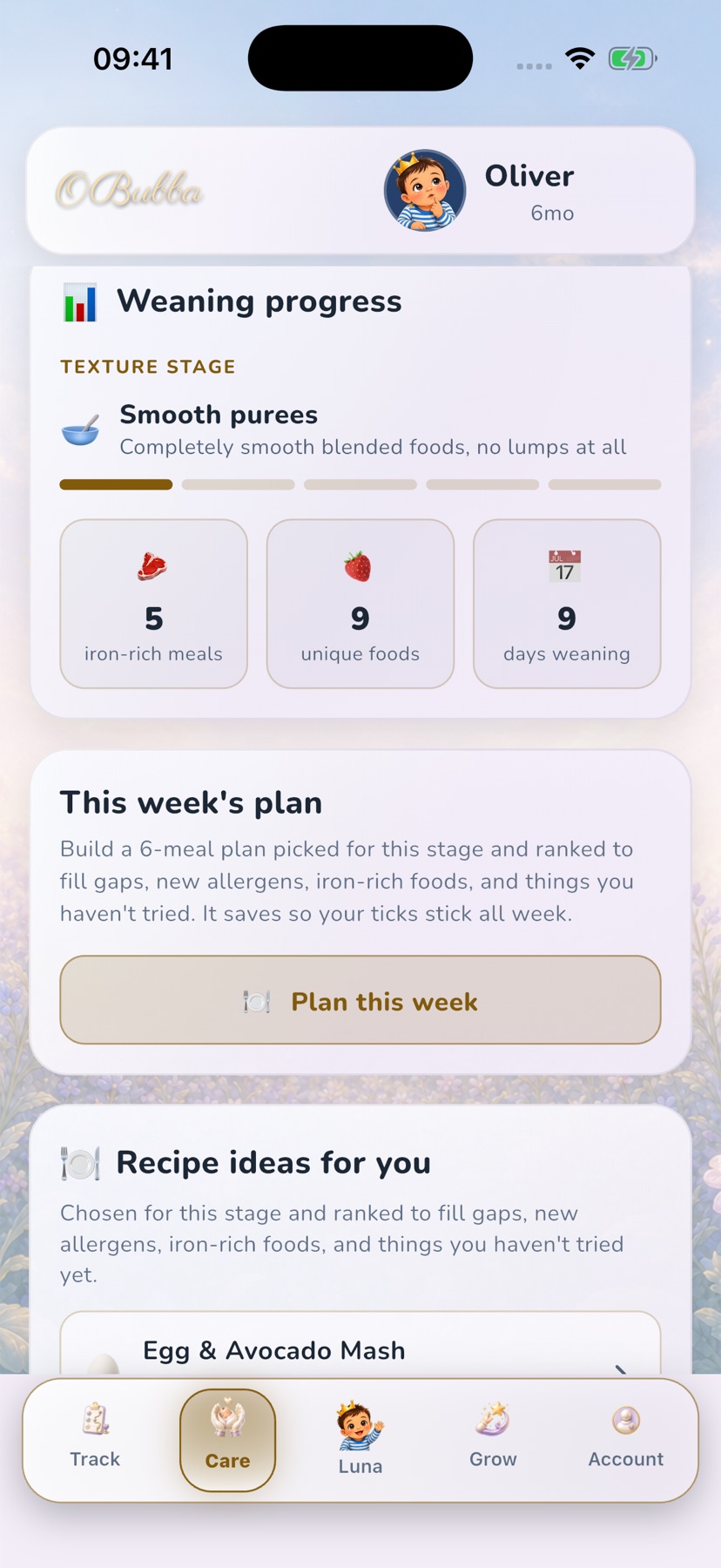
The current weekly workflow:
- generates six meal ideas rather than assigning a compulsory meal to every day
- shows recipe ingredients, method, baby-led serving notes and detected allergens
- scans recipe text for hazards such as honey under 12 months, whole nuts, round foods, hard raw fruit and vegetables, raw shellfish or egg, rice drink and added salt
- saves tried ticks for the current child and week
- derives a deduplicated shopping list from the selected recipes
- keeps recorded reacted-to allergens out of regenerated suggestions
That makes batch cooking easier to plan. It does not turn the phone into a food-safety sensor. OBubba does not know:
- when a container entered the fridge
- how cold the fridge or cool bag stayed
- whether a used spoon touched the saved portion
- whether the centre reached steaming hot
- how many times a meal was reheated
- whether a piece is soft enough in front of you
Use the app to decide what might help this week. Use labels, clean portions and the current NHS timings to decide whether this specific leftover is safe to serve.
Try OBubba free → — personalised recipe ideas, allergens, reactions, texture progress and a six-meal shopping plan beside the rest of your baby's care.
For a lower-effort cooking system, see Baby-Friendly Family Meals Without Cooking Twice. For the wider safety checklist, use Foods Babies Should Avoid.
Frequently asked questions
Can I reheat baby food twice?
No. Previously cooked food should be reheated only once. Heat one small portion and leave the rest chilled or frozen.
Can I put warm baby food in the fridge?
Cool it promptly and get it refrigerated within 1 to 2 hours. Divide a large batch into small, shallow portions so it does not stay hot in the centre. Rice should be cooled and chilled within 1 hour.
How long does homemade baby food last in the fridge?
NHS guidance says use batch-cooked food within 2 days. Cooked rice should be used within 24 hours.
Can I save food my baby did not finish?
Not if it was in their bowl or contacted their used spoon, mouth or hands. Save only the clean untouched batch that was kept separate.
Do I need to reheat frozen fruit purée?
Follow the recipe or product guidance. Fully defrost it safely in the fridge; some suitable foods can be served cold. If reheating a previously cooked food, heat it until steaming throughout and then cool it before serving.
Can I reheat baby food in a microwave?
Yes. Use a suitable container, follow the microwave instructions, stir during and after heating, allow any stated standing time and check for hot and cold pockets before feeding.
The bottom line
Batch cooking is safe and useful when the clean food is portioned before the meal, cooled promptly and labelled. Refrigerate ordinary cooked baby food for up to two days, or freeze it. Defrost thoroughly, reheat only once until steaming hot throughout, then cool before serving.
Remember the two exceptions tired parents most often need: rice gets one hour to cool and one day in the fridge; the half-eaten bowl gets discarded.
Sources
- NHS Best Start in Life: Storing and reheating food
- NHS: Children’s food safety and hygiene
- NHS: Your baby’s first solid foods
- Food Standards Agency: Cooking food and using leftovers safely
- Food Standards Agency: Can you reheat rice?
This UK-oriented guide covers cooked complementary foods, not the separate storage rules for breast milk, prepared infant formula or specialist feeds. Follow product instructions and individual advice from your health visitor, GP, dietitian or clinical team.
Ready to try OBubba?
Use OBubba to track feeds, sleep, naps, nappies, growth, milestones and family handovers in one calm baby tracker app.