The forecast says 12°C, but the wind makes it feel colder. Your baby will be still in the pram while you are walking. Do they need a vest, sleepsuit, cardigan, coat and blanket, or is that far too much once you step into a warm café?
The most useful answer is not a rigid outfit chart. Start with the feels-like temperature, choose several light layers you can remove, account for the pram, carrier or car seat, and check your baby's chest or the back of their neck during the outing.
The NHS suggests one extra clothing layer for a baby compared with an adult as a practical winter starting point. It is not a rule to follow blindly: your pace, wind, sunshine, body heat in a carrier and a warm shop can all change what your baby needs.
The quick baby-outfit guide by temperature
Use this as a packing guide for a healthy baby, not a prescription. The examples assume ordinary daytime clothes and should be adjusted for wind, sun, rain, time outside and how your baby feels.
| Feels-like temperature | Sensible starting point | Useful extra to carry | |---|---|---| | 28°C and above | One very light, breathable layer or just a nappy in a shaded, private place | Wide-brim sun hat, shade and plenty of feeds | | 24–27°C | A lightweight cotton vest, romper or loose single layer | Spare dry layer for air-conditioned spaces | | 20–23°C | Light outfit; a short-sleeve vest plus thin trousers or a romper may be enough | Thin cardigan for breeze or shade | | 16–19°C | Vest plus outfit, with a light removable outer layer | Cardigan or light jacket | | 10–15°C | Several light layers and a warmer outer layer | Hat and blanket for a stationary pram, removed indoors | | 5–9°C | Warm fitted layers plus coat or pramsuit while outside | Mittens, warm hat and weather cover that preserves airflow | | Below 5°C | Full winter layers; keep exposed skin covered and reassess the length of the outing | Warm dry spares and a shorter route near shelter |
Why “feels like” rather than only the large number on the forecast? The Met Office explains that feels-like temperature accounts for wind and humidity. A calm 12°C and a windy, damp 12°C can feel quite different.
There is no medically approved garment formula for every number. A thick fleece, thin cotton cardigan and insulated pramsuit cannot all be counted as “one layer” in the same way. The table helps you choose a starting bundle; your baby is the final check.
Use layers you can actually remove
Two or three light layers are usually easier to manage than one extremely thick item. Air between layers helps with warmth, while a cardigan or jacket can come off quickly when the sun appears or you enter a heated building.
A practical order is:
- Base layer: nappy and vest or bodysuit.
- Main outfit: romper, sleepsuit, top and trousers, or another comfortable fitted outfit.
- Outer layer: cardigan, light jacket, coat or pramsuit chosen for the conditions.
- Weather protection: a sun hat, warm hat, mittens, parasol or properly ventilated rain cover when needed.
Do not keep adding layers because your baby's hands feel cool. Hands and feet are often cooler than the torso.
How to tell if your baby is too hot or cold
Feel your baby's chest, tummy or the back of their neck. You want comfortably warm skin, not sweaty, hot, clammy or notably cold.
Signs your baby may be too warm
- sweating or damp hair
- a hot chest or back of neck
- flushed cheeks
- heat trapped inside the pram or carrier
- unusual irritability alongside obvious warmth
Stop somewhere safe, remove one layer and recheck. Do not wait until you reach your destination if the baby is clearly overheating.
Signs your baby may need another layer
A cool torso is more useful evidence than cool fingers. Add one fitted or outer layer, protect the baby from wind and check again after several minutes.
If a baby is unusually cold, floppy, difficult to wake, breathing abnormally, feeding poorly or otherwise unwell, seek urgent medical advice. Clothing guidance cannot diagnose hypothermia, fever or illness.
What should a baby wear in a pram?
A baby lying still does not generate the same warmth as an adult walking briskly. A pram can also shelter them from wind, but the hood, footmuff and covers can create a warmer pocket of air than the forecast suggests.
Start with light removable layers and check inside the pram rather than judging from your own temperature. On a cold day, a fitted outfit and outer layer may be combined with an appropriate footmuff or blanket. Keep the face completely clear and remove the extra warmth when you enter a shop, bus, train or warm home.
On a hot or sunny day:
- use the pram's ventilated hood, parasol or purpose-made sunshade
- keep babies under six months out of direct sunlight
- choose loose, lightweight clothing
- check the chest or neck regularly
- offer normal milk feeds responsively
Never drape a muslin, blanket or cloth over the whole pram. The NHS warns that covering a pushchair can restrict airflow and lead to overheating, even when the fabric looks thin.
What should a baby wear in a carrier or sling?
Your body gives off heat and acts like an additional layer. Babies in carriers often need less clothing than babies sitting away from the adult in a pram, especially when the adult is walking.
Use breathable layers, keep the head and face uncovered and check both temperature and position. The carrier itself also adds fabric around the baby's body.
Follow the NHS TICKS principles:
- Tight: secure enough to hug baby close
- In view: you can see the face at all times
- Close enough to kiss: baby's head is high on your chest
- Keep chin off chest: the airway stays open
- Supported back: baby remains comfortably upright
The NHS sling-safety guide also says not to feed a baby while they are in a sling. Take them out for a feed and reposition them carefully afterwards.
If you put your own coat around both of you, treat it as another warm layer. Never zip fabric over the baby's face.
What should a baby wear in a car seat?
The harness needs to sit close to the body. A thick coat or padded snowsuit can compress during a collision and leave dangerous slack.
Remove bulky outerwear before fastening your baby. Use thin fitted layers, tighten the harness according to the car-seat instructions and, if warmth is needed, place a blanket over the secured straps. A local-authority road-safety guide gives the same advice: bulky coats prevent a child-seat harness fitting snugly.
Also remove hats and extra layers once the car warms. A cold car at the start of the journey can become hot quickly.
If the baby falls asleep in the car seat, keep the harness correctly fastened while travelling. On arrival, move them to a clear, firm, flat sleep space as soon as practical rather than treating the car seat as routine sleep furniture.
What should baby wear outside in hot weather?
In heat, clothing must solve two competing problems: keeping the baby cool and protecting delicate skin from ultraviolet light.
The NHS advises:
- keep babies under six months out of direct sun
- keep older babies in shade as much as possible, particularly from 11am to 3pm
- use loose, lightweight clothing and a wide-brim hat
- use SPF 30 or higher sunscreen for babies six months and older, with UVA and UVB protection
- reapply sunscreen every two hours and after swimming or sweating
- never leave a baby in a parked car
One breathable layer is often enough in genuinely hot weather. Shade is safer than adding heavy clothing for sun protection. Long, loose sleeves can protect skin, but they should be lightweight and checked for trapped heat.
Fully breastfed babies under six months usually need more frequent breastfeeds rather than extra water. Once solids have started, offer sips of water with meals and more often in hot weather while continuing normal milk feeds. See the baby water and weaning guide for the age-specific detail.
What should baby wear outside in cold weather?
Use multiple light layers, a warm outer layer, covered feet and an outdoor hat. A stationary baby may need more insulation than the adult pushing the pram.
Cold-weather details that matter:
- wind can make exposed skin lose heat quickly
- damp clothing stops insulating well, so carry a dry spare
- a rain cover must be used according to the pram instructions and retain ventilation
- scarves, loose cords and anything near the face create avoidable hazards
- check the torso after the first ten minutes rather than assuming the starting outfit was perfect
Remove the hat, coat, pramsuit, footmuff or thick blanket once you move into a heated space. The NHS specifically advises removing extra clothing indoors and in a warm car, bus or train, even if that means waking the baby.
Sunny, windy and rainy days change the answer
Sunny
Direct sunlight can make a sheltered pram warmer than the air reading. Prioritise shade and airflow. A sun hat protects the face and neck outdoors, but take it off indoors.
Windy
Wind increases heat loss from exposed skin. Add a light wind-resistant outer layer or use the pram hood without sealing the pram. Check that fabric cannot blow across the face.
Rainy
Keeping dry matters as much as keeping warm. Use a correctly fitted rain cover with ventilation and check the temperature inside. Remove wet clothing promptly.
Changeable
Pack the next layer rather than putting every possible layer on at the door. A cardigan, hat and dry vest take little space and let you respond to the conditions you actually meet.
Does a newborn need more clothing than an older baby?
Newborns are less effective at regulating body temperature, so the “one more layer than you” rule is a useful starting point. Premature or medically vulnerable babies may have individual instructions from their neonatal team.
Older mobile babies generate more heat when crawling, cruising or playing. A toddler running in the park may need fewer layers than a younger baby sitting still in a buggy at the same temperature.
Age never replaces the chest check. Adjust for what the child is doing, not merely their month count.
Outdoor clothes are not sleep clothes
A baby who dozes during a walk may still be wearing a coat, hat or pramsuit suitable for outside. Those items should not continue into routine indoor sleep.
When you return home, remove outdoor layers and dress for the room temperature. Hats, padded coats and snowsuits can cause overheating indoors. The baby sleepwear and TOG guide explains how to make that separate decision safely.
Common baby-dressing mistakes
Dressing for the season instead of the day
An October afternoon can be warmer than a wet June morning. Read the current temperature and wind rather than relying on “winter outfit” labels.
Counting every fabric as equal
A thermal base layer and a thin cotton vest do not provide the same warmth. Look at material and thickness, not only the number of garments.
Trusting cold hands
Check the chest, tummy or back of the neck instead.
Forgetting your body heat
A sling, your chest and a shared coat can add considerable warmth.
Covering the pram with a muslin
Shade must preserve airflow. Use a parasol or designed sunshade and keep checking the baby.
Keeping a coat under the car-seat harness
Bulky padding can stop the harness fitting correctly. Buckle over thin layers and put warmth over the straps.
Leaving every layer on indoors
The outfit that was right on a windy pavement can be far too warm in a café or car.
How the current OBubba app helps
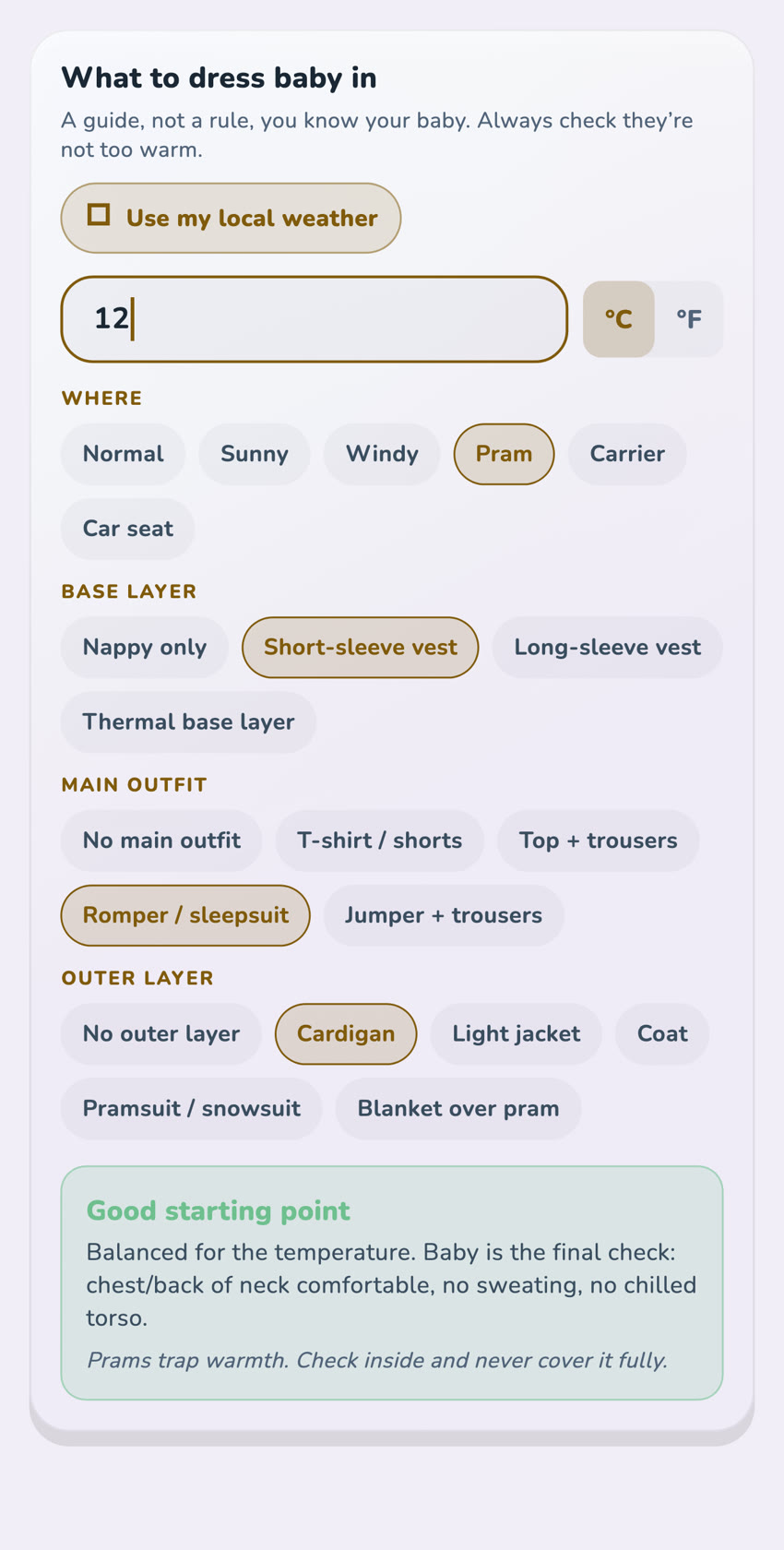
OBubba's Care → Outdoor tool turns the pre-walk clothing check into a quick, editable decision.
The current implementation:
- fetches a fresh local weather reading only when the parent taps Use local weather
- also accepts a manual outdoor temperature in Celsius or Fahrenheit
- shows both current and feels-like readings after a requested weather check; the quick weather sheet uses feels-like for its outerwear band
- fills the detailed calculator with the actual local air temperature, then adjusts the layer grading for the selected context
- distinguishes normal, sunny, windy, pram, carrier and car-seat contexts
- lets the parent select the actual base layer, main outfit and outer layer
- grades that combination as balanced, a little light, too light, probably warm or too warm
- provides context-specific reminders about shade, airflow, body heat and wind
- overrides the ordinary result with a car-seat warning if a bulky coat or snowsuit is selected
That is more useful than a static “12°C outfit” picture because the same clothes behave differently in a carrier, exposed wind and a sheltered pram.
The app still cannot feel your baby's skin, see whether a hood covers the face, know how thick a particular coat is or confirm that a harness fits. It does not replace the weather warning, product manual, UV advice or a parent's direct check. Its job is to make a sensible starting choice easier and surface the safety detail that is easy to miss while getting out of the door.
The Outdoor outfit check is free. Premium adds deeper personalised sleep analysis and planning after the early-free period. The whole app is unlocked during pregnancy and through your baby's first two corrected-age months.
Check the outfit before you leave → Use the outdoor outfit check alongside sleep, feeds, nappies, weaning, health notes and the rest of your baby's day.
A 60-second leaving-the-house check
Before you go:
- Read the current temperature and feels-like value.
- Check for wind, rain, strong sun and weather warnings.
- Dress baby in light layers that can come off.
- Account for the pram, carrier, car seat and your own body heat.
- Pack one useful spare layer rather than wearing everything at once.
- Keep baby's face visible and airflow clear.
- Recheck the chest or back of the neck after the first part of the outing.
- Remove outdoor layers as soon as you enter a warm space.
The bottom line
Dress for the feels-like temperature and the way your baby is travelling, not for the season printed on the calendar. Light removable layers, a clear airway and one direct chest or neck check are more dependable than any rigid chart.
In a pram, protect from wind without sealing in heat. In a carrier, remember that your body is a layer. In a car seat, keep bulky coats outside the harness. On hot days, prioritise shade and airflow; on cold days, build warmth gradually and remove it indoors.
OBubba can compare the weather, context and clothes you selected. You still make the most important check: the real baby in front of you.
This article offers general information for healthy babies and is not a substitute for advice from your midwife, health visitor, GP, neonatal team or another qualified professional. Follow product instructions and local severe-weather guidance. Seek urgent medical help if your baby is unusually hot or cold, difficult to wake, breathing abnormally, feeding poorly or otherwise seriously unwell.
Ready to try OBubba?
Use OBubba to track feeds, sleep, naps, nappies, growth, milestones and family handovers in one calm baby tracker app.