Free baby sleep tools
🌊 Sleep regression checker
Sleep often gets bumpy around big developmental jumps. Enter your baby’s age to see which ones line up with now, and what tends to help.
Try it now
Runs in your browser. Nothing you type is saved or sent anywhere.
Common sleep shake-ups by age
| Age | What is going on | What helps |
|---|---|---|
| Around 4 months | Sleep cycles mature and become more adult-like, so babies surface more fully between cycles. This one is permanent progress, not a phase to wait out. | Keep bedtime early, protect the first nap, and give your baby gentle chances to resettle before stepping in. |
| Around 6 months | Rolling, sitting and a new awareness of the world can make naps short and nights restless. | Practise new skills in the day, keep the bedtime routine calm and predictable, and check the wake windows have stretched with age. |
| 8 to 10 months | Crawling, pulling to stand and separation awareness often arrive together, alongside the drop from three naps to two. | Lots of floor time, a consistent goodbye routine, and a move to two naps when the third keeps getting refused. |
| Around 12 months | First steps and early words can disrupt naps, and some toddlers start refusing the second nap. | Try not to drop to one nap too soon. Most children are not ready until 13 to 18 months. |
| Around 18 months | A big leap in independence, plus molars, can bring bedtime protests and early waking. | Offer simple choices in the routine, keep limits gentle and consistent, and comfort through teething. |
| Around 2 years | Language and imagination take off. Bedtime stalling and new fears are common. | A visual routine, a nightlight if helpful, and a calm, short goodnight. |
Regressions are usually progress
A “regression” is usually a sign your baby’s brain and body are developing. Sleep often settles again within two to six weeks, especially when the basics stay steady.
When it is not a regression
Not every rough patch is developmental. Teething, illness, a late bedtime, too much day sleep or a change in routine can look the same. OBubba looks at your baby’s logs and points to the most likely cause, so you are not guessing.
Let OBubba do this for you
This chart is the average baby. OBubba learns yours.
OBubba learns your baby’s own wake windows from what you log, predicts the next nap and bedtime, and spots over 30 common sleep disruptions with a gentle plan for each. Free to download.
Questions parents ask
Frequently asked questions
How long does a sleep regression last?
Typically two to six weeks. Keeping bedtime, naps and the routine steady usually helps it pass sooner.
Is the 4 month sleep regression real?
Yes. Around this age sleep architecture matures, so babies wake more fully between sleep cycles. It is a lasting change, and settling skills help most.
Should I sleep train during a regression?
Many families wait until things settle. If you do want to work on sleep, gentle and responsive approaches are a good fit from about six months.
Related guides
More free tools
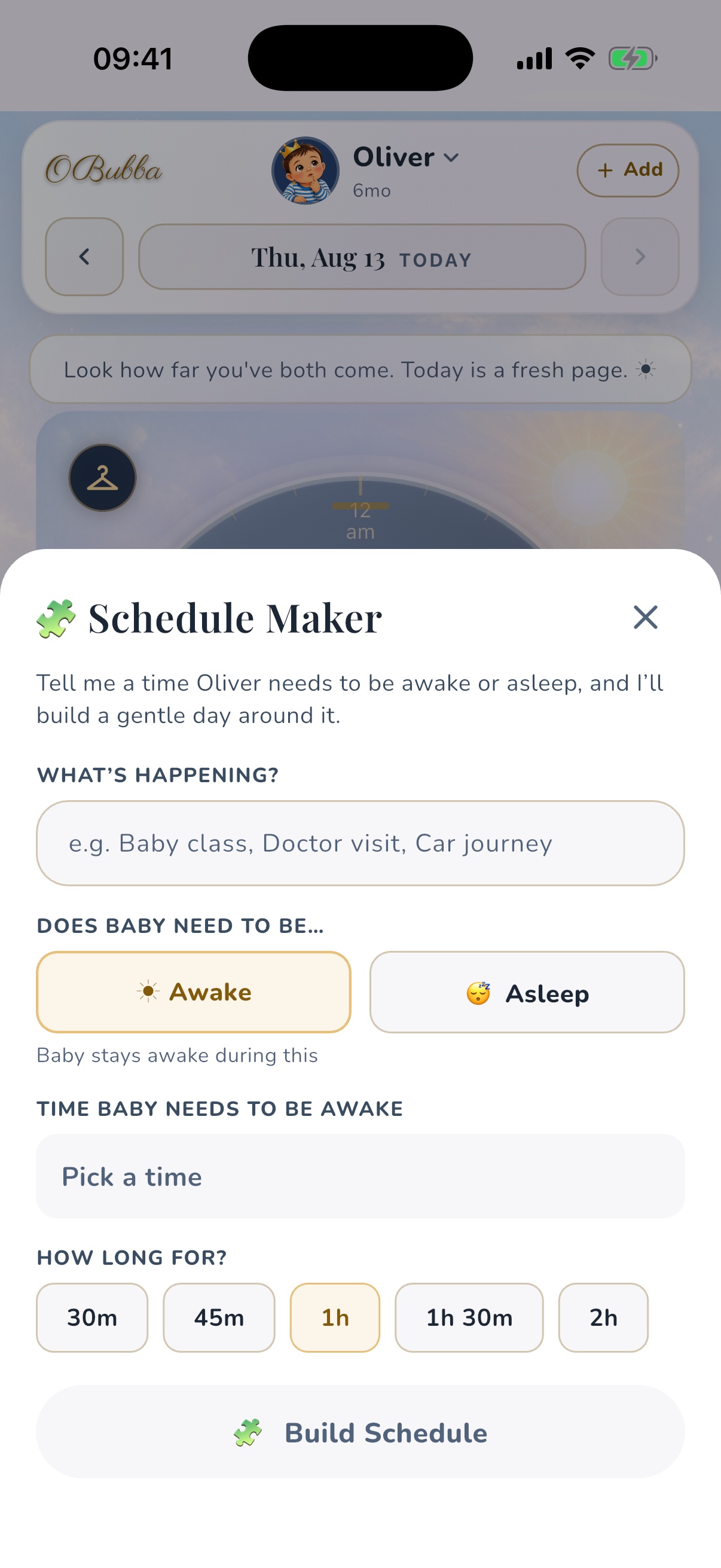 Baby sleep schedule makerA full sample day of naps and bedtime from your baby’s age and wake-up time.
 Wake window calculatorHow long your baby can comfortably stay awake between sleeps.
 Why is my baby waking at night?Answer a few questions to see the most likely reasons for night wakes.
 Baby bedtime calculatorThe right bedtime from when the last nap ended.
 How much sleep does my baby need?How much sleep your baby needs in 24 hours, at night and in the day.
 Nap transition checkerIs your baby ready to drop a nap? Four signs to check.
Sources
OBubba tools give general, age-based information. They are not medical advice and do not diagnose anything. Every baby is different. If you are worried about your baby, speak to your health visitor, midwife, GP or call NHS 111 (or your local equivalent).