Free baby sleep tools
🔁 Nap transition checker
Dropping a nap too early is one of the most common causes of overtired evenings. Answer four questions about the last two weeks to see if your baby looks ready.
Try it now
Runs in your browser. Nothing you type is saved or sent anywhere.
Typical nap transitions
| Transition | Usual age |
|---|---|
| 4 naps to 3 | 3 to 5 months |
| 3 naps to 2 | 6 to 9 months |
| 2 naps to 1 | 13 to 18 months |
| Dropping the last nap | 30 to 48 months |
Look for a pattern, not a bad day
Every baby has odd days. A real transition shows up most days for a week or two. Developmental leaps, teething and illness often cause a temporary nap strike that is not a sign to drop the nap.
How to make the change gently
Stretch wake windows a little at a time, use an earlier bedtime while the new pattern settles, and expect a couple of weeks of adjustment.
Let OBubba do this for you
This chart is the average baby. OBubba learns yours.
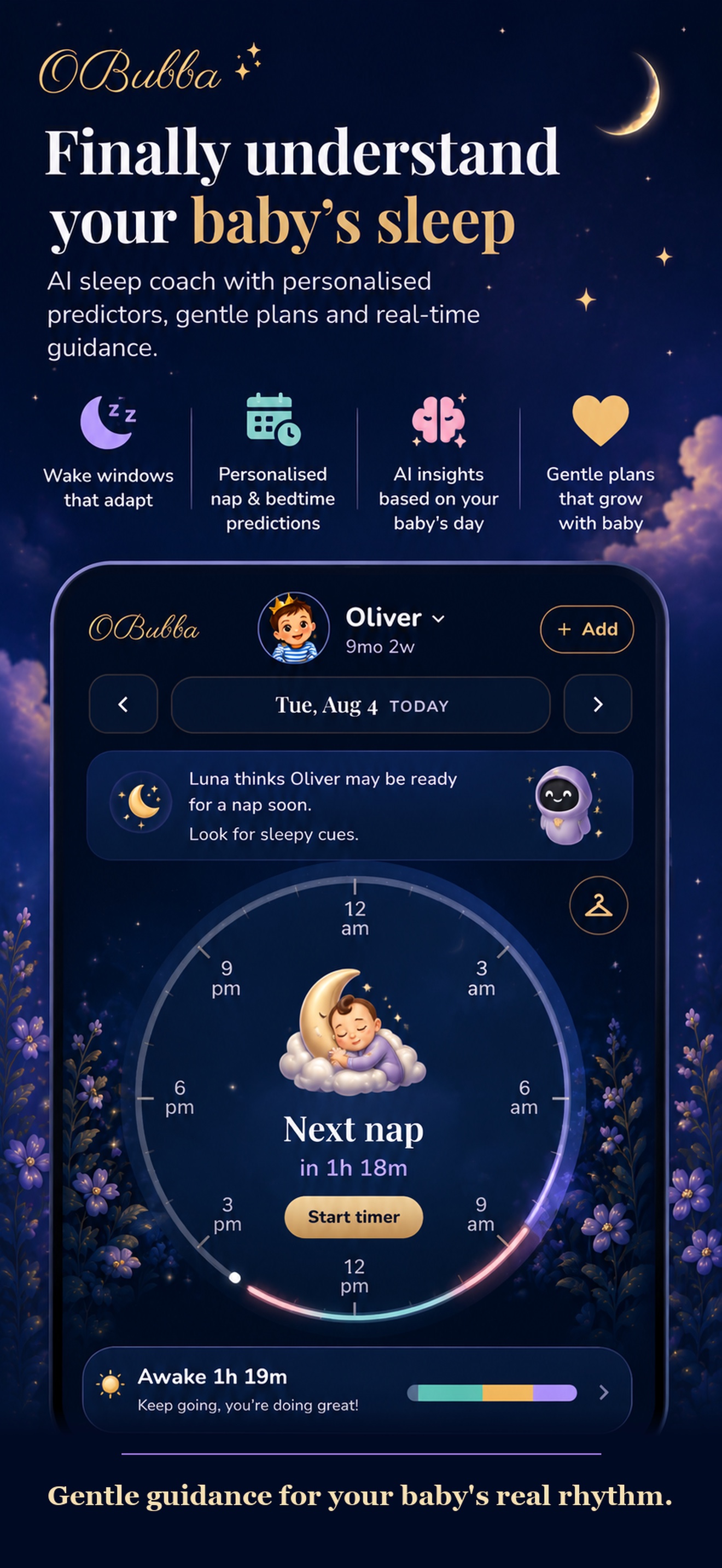
OBubba learns your baby’s own wake windows from what you log, predicts the next nap and bedtime, and spots over 30 common sleep disruptions with a gentle plan for each. Free to download.
Questions parents ask
Frequently asked questions
When do babies go from 3 naps to 2?
Usually between 6 and 9 months, most often around 7 to 8 months.
When do babies go to one nap?
Usually between 13 and 18 months. Dropping to one nap at 12 months is a common cause of overtired toddlers.
My baby is refusing the second nap at 11 months. Should I drop it?
Often not yet. Try a slightly longer first wake window or a shorter first nap before dropping it altogether.
Related guides
More free tools
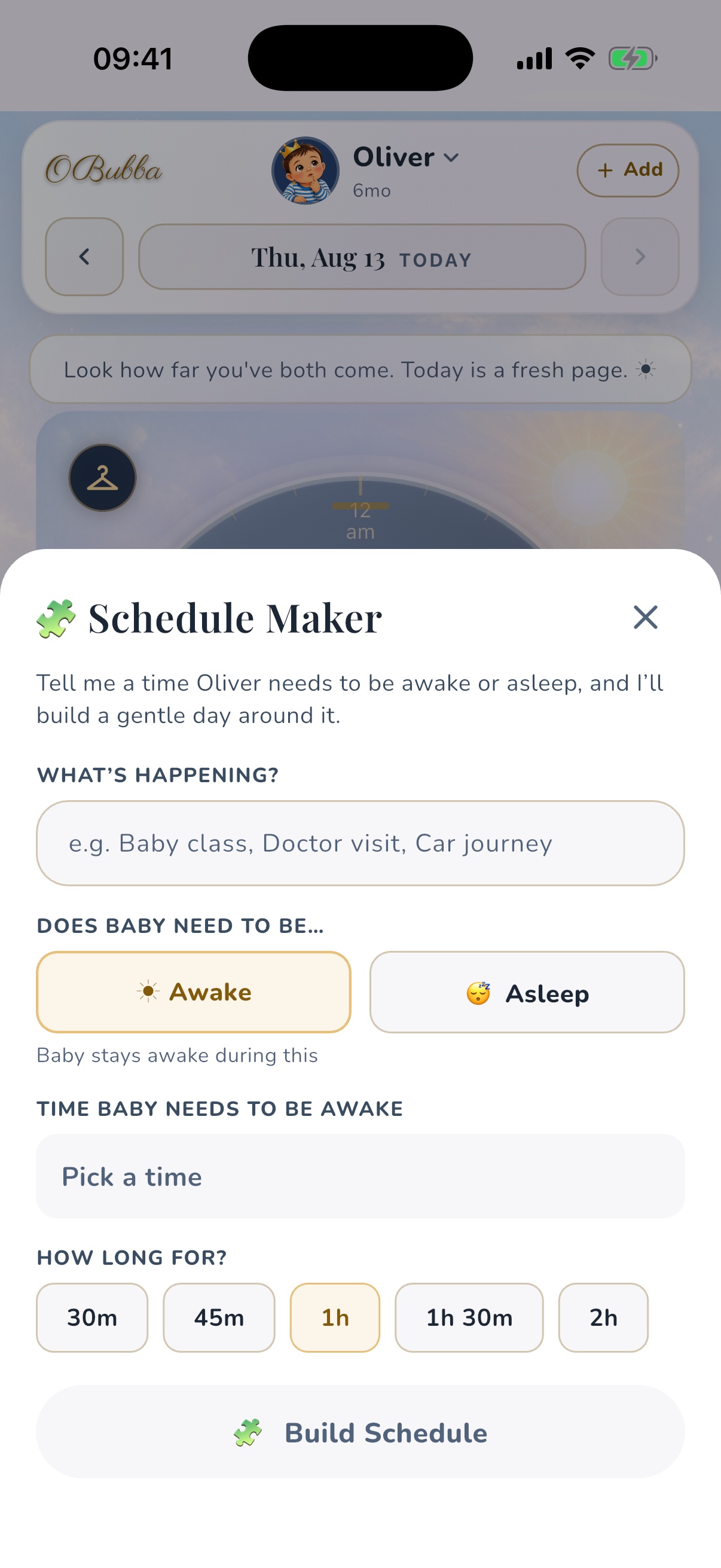 Baby sleep schedule makerA full sample day of naps and bedtime from your baby’s age and wake-up time.
 Wake window calculatorHow long your baby can comfortably stay awake between sleeps.
 Why is my baby waking at night?Answer a few questions to see the most likely reasons for night wakes.
 Baby bedtime calculatorThe right bedtime from when the last nap ended.
 How much sleep does my baby need?How much sleep your baby needs in 24 hours, at night and in the day.
 Sleep regression checkerWhich common sleep shake-ups line up with your baby’s age, and what helps.
Sources
OBubba tools give general, age-based information. They are not medical advice and do not diagnose anything. Every baby is different. If you are worried about your baby, speak to your health visitor, midwife, GP or call NHS 111 (or your local equivalent).