January invites an overhaul. New wake time. Perfect naps. Three homemade meals. Daily walks. Teeth brushed twice. A beautiful bedtime routine. Everybody sharing the work without being asked.
Then the baby wakes at 5:42am, refuses breakfast, sleeps in the pram and needs a cuddle through the slot where the “new routine” said independent play.
Do not build a perfect baby schedule for New Year. Choose one tiny anchor: a useful action attached to something that already happens, such as opening the curtains after the morning wake, offering a meal after the first nap or reading one board book before bedtime. Repeat the smallest version for a week, follow the baby’s cues and let the rest of the day remain flexible.
> A routine says “when this happens, we usually do this next.” A rigid schedule says “this must happen at 9:05, whatever the baby is telling us.” Start with the first one.
Pick one January anchor
| What feels difficult | One tiny anchor | Minimum version on a hard day | What it must not become | |---|---|---|---| | mornings and nights have blurred | open the curtains after the morning wake | stand by the window for one minute | deliberately waking a newborn or a baby who needs recovery sleep | | bedtime begins differently every night | dim lights and read one short book before the final settle | one page and the same goodnight phrase | withholding a feed or ignoring distress to preserve the sequence | | solids are easy to forget | offer one age-appropriate meal after a reliable wake or nap | sit together with one familiar food | pressuring the baby to eat, replacing needed milk or counting an empty bowl as success | | toothbrushing disappears in the evening rush | brush after the final meal or before the bedtime story | a brief gentle attempt | pinning down a distressed baby or treating perfection as more important than gradual familiarity | | leaving the house takes an hour | reset the nappy bag after the first nap | nappies, wipes and one spare outfit | packing instead of responding to hunger, tiredness or illness | | carers keep asking what happened | give a 30-second handover at each change of carer | last feed, last sleep and anything important | turning care into a scorecard between adults |
Choose the row that removes the most friction this week. Do not begin all six on 1 January.
Routine, rhythm and schedule are different
Parents are often told to “get the baby into a routine” as though everybody means the same thing.
- A routine is a recognisable sequence: nappy, sleepwear, feed, book, cuddle.
- A rhythm is the broad shape that emerges: morning light, awake periods, naps, feeds, play and quieter evenings.
- A schedule assigns clock times or ranges to those events.
All three can be useful. They are not equally suitable at every age.
A newborn may have a repeatable night-care sequence without predictable feed or nap times. An older baby may gradually develop more recognisable nap and meal ranges. A toddler may cope with clearer clock anchors while still needing flexibility around illness, nursery and missed sleep.
The NHS guidance on helping babies sleep is deliberately individual: babies vary in how and when they sleep. It suggests ordinary daylight and activity during the day, quieter low-light care at night and a simple soothing bedtime routine. It also reminds parents that routines change as babies grow, teethe and become unwell.
That is a better New Year model than copying another family’s colour-coded day.
The one-anchor method
1. Name one real problem
Avoid vague goals such as “be more organised” or “fix sleep”. Choose a moment you can recognise:
- the bedtime wind-down starts after the baby is already frantic
- breakfast is offered when the baby is too tired to explore food
- nobody knows whether the second toothbrushing happened
- the nappy bag is rebuilt while everybody waits by the door
- a partner comes on duty without knowing the last feed
A specific problem makes a small action possible.
2. Attach the action to an event, not only a clock
Baby days move. Event anchors move with them.
Instead of “breakfast at 8am”, try “breakfast after the first comfortable morning wake, when the baby is alert”. Instead of “book at 6:45pm”, try “book after sleepwear and before the final settle”. Instead of “pack the bag at 10am”, try “replace used items after the first nap”.
The clock can still help. Nursery collection, medicine prescribed for a particular time or an appointment may need an exact time. But ordinary family routines often survive better when tied to a reliable event.
3. Define the smallest version
The minimum version protects the routine from all-or-nothing thinking.
- bedtime routine: dim lights and one familiar phrase
- meal: sit safely together and offer one familiar food
- play: two minutes of floor time while the baby is alert
- outdoor time: step into the garden or stand at an open doorway while holding the baby safely
- handover: say the last feed, last sleep and one current concern
Doing the minimum is not failing. It is what makes the anchor usable on a teething, travel or short-nap day.
4. Decide what success means
Success should describe family friction, not control over the baby.
Useful measures include:
- we remembered the action on five of seven days
- the other carer could take over without reconstructing the day
- bedtime began before everybody was overwhelmed
- we offered food without pressure
- the bag was ready for the appointment
“Baby slept through”, “baby finished the bowl” and “baby never cried” are not fair routine targets. A repeated cue creates an opportunity; it does not control hunger, sleep or emotion.
5. Review after seven ordinary days
Ask:
- Did the anchor happen often enough to judge?
- Did it reduce a decision or add another burden?
- Did it still respect feeds, tired cues and health needs?
- Does it belong at this point in the day?
- Should we keep it, move it, shrink it or drop it?
Do not add a second anchor merely because the first worked twice. Let the useful action become boring before expanding the plan.
A gentle sleep anchor
The strongest sleep resolution is not “sleep through by February”. It is a cue the family can actually repeat.
The NHS says a simple, soothing bedtime routine may help a baby settle and provides one-to-one time. Possible steps include changing into night clothes, dimming lights, reading, singing, cuddling and brushing teeth once teeth appear. These are examples, not a compulsory checklist.
Choose two or three familiar steps in a consistent order. A bath is optional. Feeding to sleep is not automatically a bad habit. A baby who is hungry, unwell or distressed still needs a responsive parent.
Try this minimum:
- make the room quieter and dimmer
- do the necessary care
- use one repeated book, song or phrase
- settle in the way that currently works safely for your family
Keep the sequence while allowing the start time to move with naps and tiredness. Read a simple baby bedtime routine you can actually repeat for age-specific examples.
Newborn feeds and safer sleep come before any sleep experiment. Do not delay a feed, extend an exhausted awake period or wake a baby simply to make the tracker look consistent.
A gentle weaning anchor
If your baby has not yet shown the three developmental readiness signs at around six months, “start breakfast on 1 January” is not an appropriate resolution. Use the solids-readiness guide and speak to your health visitor when you are unsure.
Once weaning has begun, an anchor can make offering food easier without measuring success by how much disappears.
For example:
- after the first nap, wash hands and sit together
- offer one familiar food plus an age-appropriate opportunity to explore variety
- keep the baby upright and directly supervised
- let the baby decide whether and how much to eat
- stop when they show they have had enough
The NHS guide for 7- to 9-month-olds describes a gradual move towards three meals, not a deadline that arrives on a birthday. It notes that intake varies from day to day, that repeated exposure to tastes and textures can take time and that breast milk or first infant formula remains important throughout the first year.
That means the routine target is “we created a calm opportunity”, not “the baby ate the planned portion”. Continue responsive milk feeds and any individual dietetic, allergy or growth plan.
If a meal regularly lands in a tired period, move the anchor. The baby is not failing the routine; the routine may be badly placed.
A toothbrushing anchor
The first tooth creates a small daily task that is easy to lose inside bedtime.
The NHS baby tooth-care guidance recommends brushing as soon as teeth begin to come through, using a tiny smear of fluoride toothpaste. Brush at least twice a day: just before bed and at another time that fits the family routine.
A practical anchor might be:
- morning brush after the parent brushes their own teeth
- evening brush after the last meal and before the bedtime book
The NHS also reassures parents not to panic when very little brushing happens at first; building familiarity matters. Keep trying gently, use the recommended toothpaste and ask a dentist, health visitor or pharmacist if you need product or technique advice.
A shared-care anchor
Some of the most valuable routines are for adults, not babies.
At each handover, say or write:
- when and how the baby last fed
- when they last slept and woke
- the last nappy if it affects the next decision
- medicine already given, with exact name, dose and time
- any allergy, illness or safety information
- what usually helps right now
This is not a report card. It prevents two carers from duplicating a medicine, offering a bottle that was just finished or spending 20 minutes guessing why the baby is tired.
Use the shared baby tracker guide if more than one phone records the day.
What to do when the routine breaks
Expect it to break.
The baby wakes early
Move the event-anchored parts of the day. Do not force every nap, meal and bedtime back to yesterday’s clock by stretching a tired baby.
A nap happens in the car
Count it as sleep. The next action can move. A planned meal “after Nap 2” should follow the nap that actually happened, not the cot nap imagined that morning.
The baby refuses the meal
End without pressure, continue milk feeds and offer another safe opportunity later or the next day. Do not double the next portion to catch up.
Illness or teething changes everything
Meet comfort, hydration, feeding and medical needs. Shrink the routine to the safest familiar cues and pause experiments. Follow your baby’s professional advice and use NHS 111 or emergency services according to the symptoms.
The adults forget
Resume at the next natural anchor. Do not perform three missed routines at bedtime or treat a blank day as a broken streak.
How OBubba’s real app supports flexible routines
OBubba does not train a baby, prescribe meals or make a routine clinically correct. Its useful job is to hold the plan lightly while the real day moves.
Add an action to the day—not another fixed timetable
In Track → Today’s Plan → Add to plan, the current app lets parents create Bath, Play, Meal, Activity, Feed, Outing, Care or custom items. An item can be one-off or recur every day, include a note and use an optional reminder.
Instead of requiring an exact time, it can sit after wake, before or after a numbered nap, before bedtime or any time. The app resolves that anchor against the current day plan, so an “after Nap 2” item moves when the projected nap moves. Completing a recurring item marks only that day; it does not delete the future routine.
Adding custom plan items is currently a premium feature. The value is flexibility, not another list to complete. Parents can leave an item unticked, edit it, turn a recurring anchor off or remove it.
Build around the one thing that really is fixed
Open Track → Today’s Plan → Schedule for the Schedule Maker. Enter a baby class, doctor visit, car journey or another event, choose whether the baby needs to be awake or can be asleep, and set the event time and duration. The app builds a suggested day around that constraint.
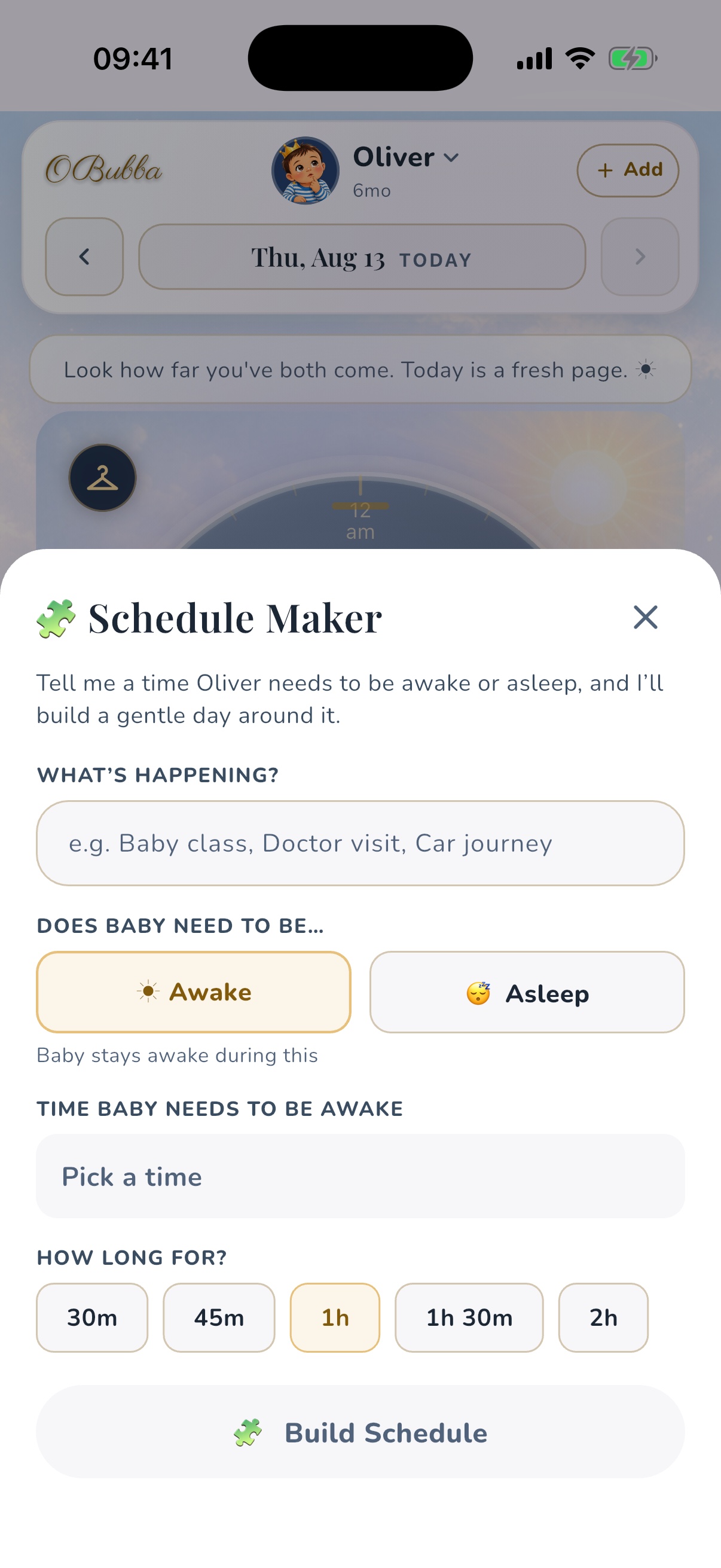
This is for planning, not forcing. If the baby sleeps unexpectedly, feed responsively or becomes unwell, the real baby replaces the generated schedule.
Keep bedtime familiar without making it compulsory
Open Care → Bedtime ritual to edit a separate step list for each child. Parents can add, remove and reorder steps, change their duration or note, and walk through one step at a time.
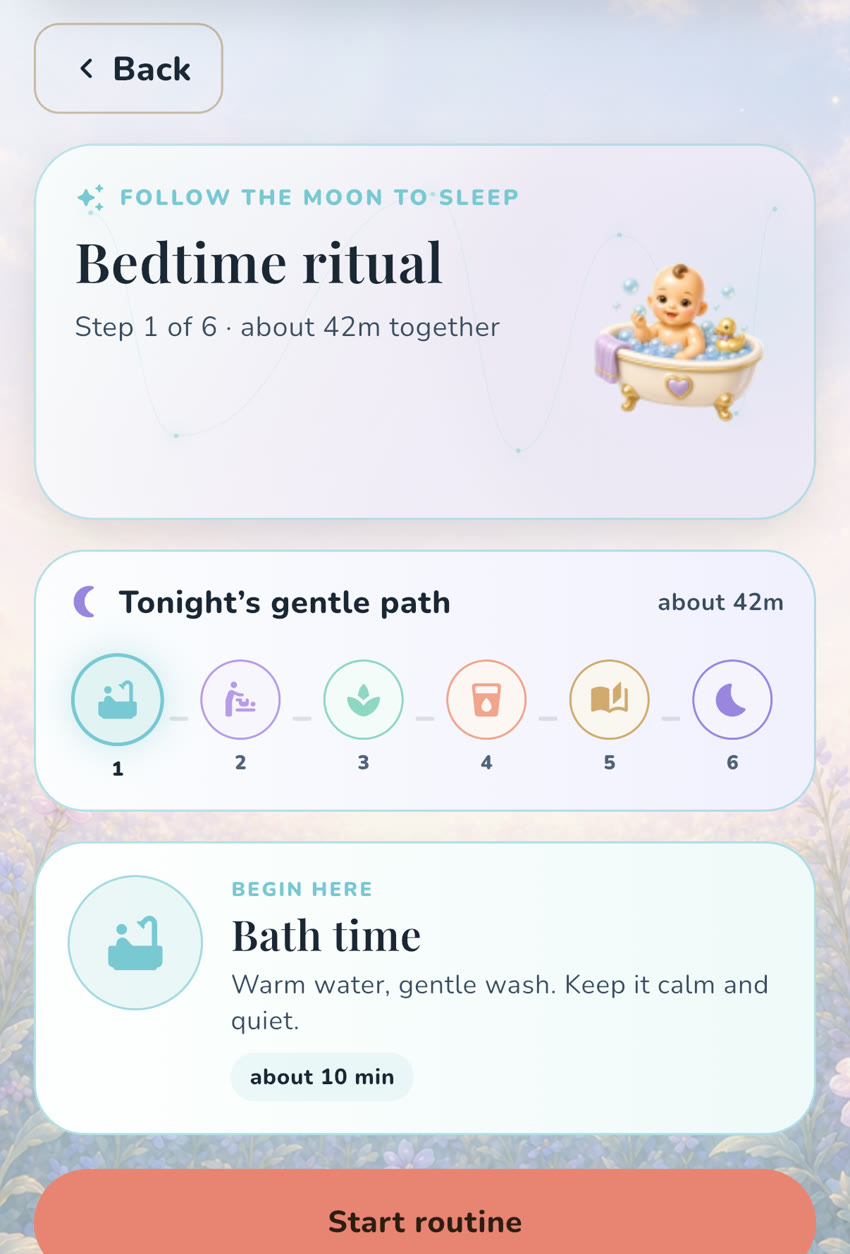
For a New Year anchor, delete any default step that does not fit. Not every baby needs a bath, massage or particular settling method. The familiar sequence belongs to the family.
Keep reminders subordinate to care
An optional reminder can follow an event anchor, but it cannot know that the baby is hungry, asleep, distressed or in a medical appointment. Dismiss it, move it or turn it off. A notification is a memory aid, never an instruction to wake, withhold milk or continue an activity.
Try OBubba free → — bring sleep, feeds, weaning, bedtime cues and shared care into one flexible day, then add only the routine that genuinely makes family life lighter.
A seven-day New Year reset
Day 1: observe
Write down the one moment that creates the most repeated decision.
Day 2: choose the trigger
Attach one action to wake, a nap, a meal, a carer change or bedtime.
Day 3: prepare the environment
Put the book by the chair, toothbrush by the sink, safe meal equipment together or nappy-bag replacements in one place.
Days 4–6: repeat the minimum
Keep the baby’s cues in charge. Notice whether the anchor reduces friction.
Day 7: review
Keep, move, shrink or remove it. “This routine did not help” is useful information, not a failed resolution.
Quick answers
Does my baby need a strict routine?
No. Newborns in particular need responsive feeds, sleep opportunities and care rather than a clock-led timetable. Older babies may develop more predictable patterns, but illness, development and individual sleep needs still create variation.
What is the best first routine for a baby?
Choose the point that helps your family most. A simple bedtime wind-down is a common starting place because it can provide familiar cues without dictating the whole day. Morning light, one calm meal opportunity or a clear carer handover may be more useful in another family.
Should feeds happen at exact times?
Follow your baby’s hunger and fullness cues and any individual feeding plan. A routine may make it easier to remember opportunities, but do not delay a needed breast or bottle feed to protect the clock.
How long does a baby routine take to work?
There is no guaranteed habit deadline. Review whether the action is practical after about a week of ordinary use. Sleep, appetite and development may not change even when the routine successfully reduces adult decision-making.
What if nursery has a different routine?
Share the baby’s important needs and ask what nursery can realistically follow. Keep one or two familiar home anchors, such as the bedtime sequence, rather than trying to recreate every daytime minute.
Can I start sleep and weaning routines together?
You can continue ordinary bedtime cues while beginning solids when the baby is developmentally ready, but avoid launching several rigid goals at once. Milk, safe food preparation, upright supervision and responsive feeding matter more than matching meals to naps perfectly.
Is missing a day bad for consistency?
No. Resume at the next natural opportunity. Consistency means recognisable repetition across real family life—not an unbroken streak.
OBubba supports parent-entered planning, reminders and pattern awareness. It cannot assess readiness for solids, supervise eating or sleep, prescribe feeding, diagnose a health problem, guarantee a nap, verify a safe sleep space or replace advice from a health visitor, dentist, dietitian, pharmacist, GP, NHS 111 or emergency service.
Ready to try OBubba?
Use OBubba to track feeds, sleep, naps, nappies, growth, milestones and family handovers in one calm baby tracker app.