The first few tastes can create a surprisingly dramatic nappy. Poo that was loose, yellow and familiar may become thicker, darker, smellier or full of recognisable pieces of food. That change can feel alarming when nobody warned you what digestion practice would look like.
For most babies, a gradual move towards thicker, more formed and more strongly scented poo is normal after solid food begins. Brown, tan, yellow, orange and green can all appear. Texture and frequency may wobble while the gut meets new foods.
What matters is not one “perfect” nappy. Look at the whole pattern: how hard or watery the poo is, whether your baby seems comfortable and well, whether they are feeding normally, and whether wet nappies have changed.
Three colour changes deserve prompt attention rather than a wait-and-see diary entry:
- white, grey or chalky-pale poo
- red or clearly blood-streaked poo
- black, tar-like poo after the newborn meconium days
This guide explains the ordinary changes, the warning signs and what is genuinely useful to record.
Quick guide: colour, texture and the next step
| What you notice | Common interpretation | What to do | |---|---|---| | Brown, tan, yellow, orange or green; baby is otherwise well | Often normal variation, influenced by milk, food and digestion | Observe the pattern and continue normal feeds | | Thicker, paste-like or increasingly formed poo | Common as the amount and variety of solid food grows | Keep textures varied and milk feeds responsive | | Visible soft food pieces | Can happen while chewing and digestion skills mature | Check food was served safely; observe without trying to “fix” one nappy | | Dry, hard lumps or small pellets; straining or pain | Possible constipation | Increase suitable fluid and fibre; seek advice if it persists or baby is distressed | | Repeated very watery poo | Possible diarrhoea, especially with vomiting, fever or illness | Prioritise feeds and fluids; watch wet nappies and seek advice for warning signs | | Mucus that keeps recurring, especially with blood or illness | Needs context and may require assessment | Contact your GP or NHS 111 for advice | | Red or blood-streaked poo | Blood must be checked, even though causes vary | Contact your GP or NHS 111 promptly | | White, grey or chalky-pale poo | Can signal a problem with bile flow or the liver | Contact your GP promptly; do not wait for several more nappies | | Black, tar-like poo after the first newborn days | May represent digested blood | Seek urgent medical advice |
A food can tint a nappy. Beetroot can look red and dark berries can look almost black. But do not use a recent meal to dismiss a warning colour when you are unsure. Photograph the nappy for a clinician if appropriate, record what baby ate and ask for advice.
Why does poo change when solids begin?
Before weaning, a baby's gut is processing a liquid milk diet. Solid food adds starch, fibre, protein, fat, plant pigments and textures that are digested in different ways. The result is often less liquid, more bulk and a stronger smell.
The change usually tracks exposure rather than the calendar. A baby licking a little steamed broccoli may show almost no difference. Several weeks later, with a wider variety and larger amounts, nappies may look much more like an older child's stool.
The NHS recommends starting solid foods at around six months, once all three developmental readiness signs appear together. At first, how much baby eats is less important than learning tastes and textures; breast milk or first infant formula still provides most energy and nutrients.
That means a changed nappy does not mean milk should be reduced. Keep offering normal milk feeds responsively while food experience builds. If you are still deciding when to begin, use our three-sign solids-readiness checklist.
What does normal post-solids poo look like?
There is a broad normal range. A single nappy may be:
- soft and paste-like
- thicker than before
- lumpy but still easy to pass
- green after green vegetables
- orange after carrot or sweet potato
- darker brown after a mixed meal
- speckled with skins, seeds or soft food fragments
- much smellier than milk-only poo
Some changes are fast. Others take weeks. Breastfed babies may move from mustard-yellow and loose to brown and more formed. Formula-fed babies may already have thicker, tan or brown poo, so the shift can look less dramatic.
Food pieces do not automatically mean that nothing was absorbed. Babies are still developing chewing skills, and some fibrous plant material passes through visibly in adults too. Serve food in a safe texture, keep progressing texture as baby can manage it, and look at growth, wellbeing and the overall feeding pattern rather than trying to grade digestion from one pea skin.
How often should a baby poo after starting solids?
There is no compulsory daily number. Frequency varies with the baby, milk feeding, food variety, fluid intake and their existing rhythm.
A baby may poo more often when fruit and vegetables increase, or less often as stool becomes bulkier. Frequency alone is a weak signal. A baby who goes every other day and passes a soft poo comfortably may be fine; a baby who poos daily but produces hard pellets and cries may be constipated.
The NHS describes constipation signs as including fewer than three poos in a week, difficulty passing poo, unusually large stools, and dry, hard, lumpy or pellet-like poo. Appetite may fall and the tummy may feel firm.
Use the number as one part of the story, not the whole diagnosis.
Poo colour after starting solids
Brown or tan
Brown is a common destination as diet becomes more varied. It can range from light tan to deep brown. If the poo is soft enough to pass and baby is well, the shade alone usually needs no action.
Yellow or orange
Milk, squash, carrot, sweet potato and other foods can keep poo yellow or make it orange. Again, comfort and texture matter more than matching a colour chart exactly.
Green
Green can be normal. Vegetables, formula, iron-containing foods and ordinary variation can all affect shade. A green nappy is different from green vomit, which is a medical warning sign and needs urgent assessment.
Red
Red food can tint poo, but blood can also appear bright red or as streaks. A small anal tear from a hard stool is one possible cause; infection, allergy and other problems are also possible. Parents cannot reliably identify the cause from colour alone.
If you think there is blood, contact your GP or NHS 111 promptly. Seek urgent help sooner if the bleeding is substantial or your baby is pale, floppy, difficult to wake, in severe pain or otherwise seriously unwell.
Black
Dark green and deep brown can look nearly black under warm bathroom lighting. Truly black, sticky or tar-like poo is different. Meconium is normal only in the first newborn days; black poo later can indicate digested blood and needs urgent medical advice.
Do not rely on a photo's automatic colour correction. Look in natural light if possible and seek help when uncertain.
White, grey or chalky pale
Very pale poo is not an ordinary weaning colour. It may mean bile is not reaching the gut normally. The NHS lists pale, creamy poo as a reason to ask for an urgent GP or midwife appointment or call NHS 111.
Contact your GP promptly if a stool is white, grey or chalky pale. Do not wait for the app to detect a trend or for another meal to “add colour”.
Texture: soft, formed, watery or pellet-like?
Colour gets attention, but texture is often more useful for everyday decisions.
Soft and paste-like
This is very common after solids begin. It is thicker than milk-only poo but still easy to pass. No treatment is needed just because it looks different.
Formed but soft
As meals increase, poo may hold a shape. Formed does not equal constipated. If it remains soft, passes without pain and baby is comfortable, it can be normal.
Hard, dry or pellet-like
This pattern suggests constipation, particularly with pain, a firm tummy, reduced appetite or obvious difficulty passing it. Starting solids is a common time for constipation because diet changes and fluid or fibre may not yet be balanced.
Continue normal milk feeds. Offer sips of water with meals from around six months, and include suitable fibre sources such as pear, prune, vegetables, pulses and oats. Our guides explain constipation after starting solids and how much water to offer.
Do not give a laxative, suppository or enema to a baby unless a qualified health professional has advised it.
Very watery
One loose nappy is not automatically diarrhoea. Repeated watery stools, especially with vomiting, fever, poor feeding or a baby who seems unwell, need closer attention.
The main short-term risk is dehydration. The NHS lists fewer wet nappies, few or no tears, a dry mouth, sunken eyes, a sunken fontanelle, drowsiness and irritability among dehydration signs in babies.
Continue breastfeeding or formula and offer small amounts more often if needed. Do not dilute formula. A pharmacist or clinician can advise whether oral rehydration solution is appropriate. Fruit juice and fizzy drinks can make diarrhoea worse.
Mucousy
A small amount of mucus can be difficult to judge and one isolated nappy may not signal illness. Repeated obvious mucus, mucus with blood, diarrhoea, vomiting, poor feeding, pain, fever or poor growth deserves medical advice.
Avoid diagnosing a food allergy from mucus alone. A useful food-and-symptom history helps a professional assess the pattern without unnecessary food restriction.
Is it constipation or just the new normal?
Ask four questions:
- Is the poo hard? Dry lumps and pellets matter more than simply going less often.
- Does passing it hurt? Crying, withholding or obvious distress points towards constipation.
- Has fluid changed? Milk remains important, with small water sips alongside meals from around six months.
- What has the pattern done over several days? A single firmer nappy after banana is different from a worsening week of pellets and pain.
Do not remove whole food groups after one nappy. Aim for variety, make gradual changes and seek help early if constipation persists. Pressure around eating can make meals harder without resolving the bowel problem.
Could it be a food allergy?
Poo changes alone rarely identify an allergen. An immediate allergy can also involve hives, swelling, coughing, wheeze, vomiting, pallor or sudden floppiness. Delayed reactions can be harder to recognise and may involve repeated gut symptoms, eczema or poor growth.
If breathing is affected, the tongue or throat swells, or baby becomes floppy or difficult to wake, call 999. For a possible reaction without emergency symptoms, stop the new food and seek medical advice. Keep a clear record of the food, amount, time and symptoms rather than testing the food again on your own.
Our baby-allergen introduction guide explains how to introduce one allergen at a time in a suitable form and keep established allergens in the diet once tolerated.
What is useful to track?
You do not need a forensic description of every nappy. Record enough to spot a change and answer a clinician's questions:
- time and whether it was wet, dirty or both
- broad texture: soft, paste-like, formed, watery or pellet-like
- colour when it is unusual or clinically relevant
- pain, straining, fever, vomiting or behaviour change
- recent new foods and allergens
- milk feeds and water offered
- whether wet nappies are fewer than usual
- a short note about medicines or iron supplements
A pattern is more useful than a dramatic adjective. “Three watery nappies since 9am, one wet nappy, vomited twice and refusing milk” gives clearer information than “terrible poo”.
For a concerning colour, a well-lit photograph may help a health professional. Store and share any image carefully because it is health information; the OBubba flow described below records labels and notes, not nappy photographs.
How the current OBubba app handles nappy changes
OBubba's real nappy log starts with wet, poo or dirty, then opens optional detail only when it is useful. Parents can record textures such as paste-like, watery, formed, pellet-like or Bloody/streaked, and colours including yellow, brown, orange, green, dark, pale and red.
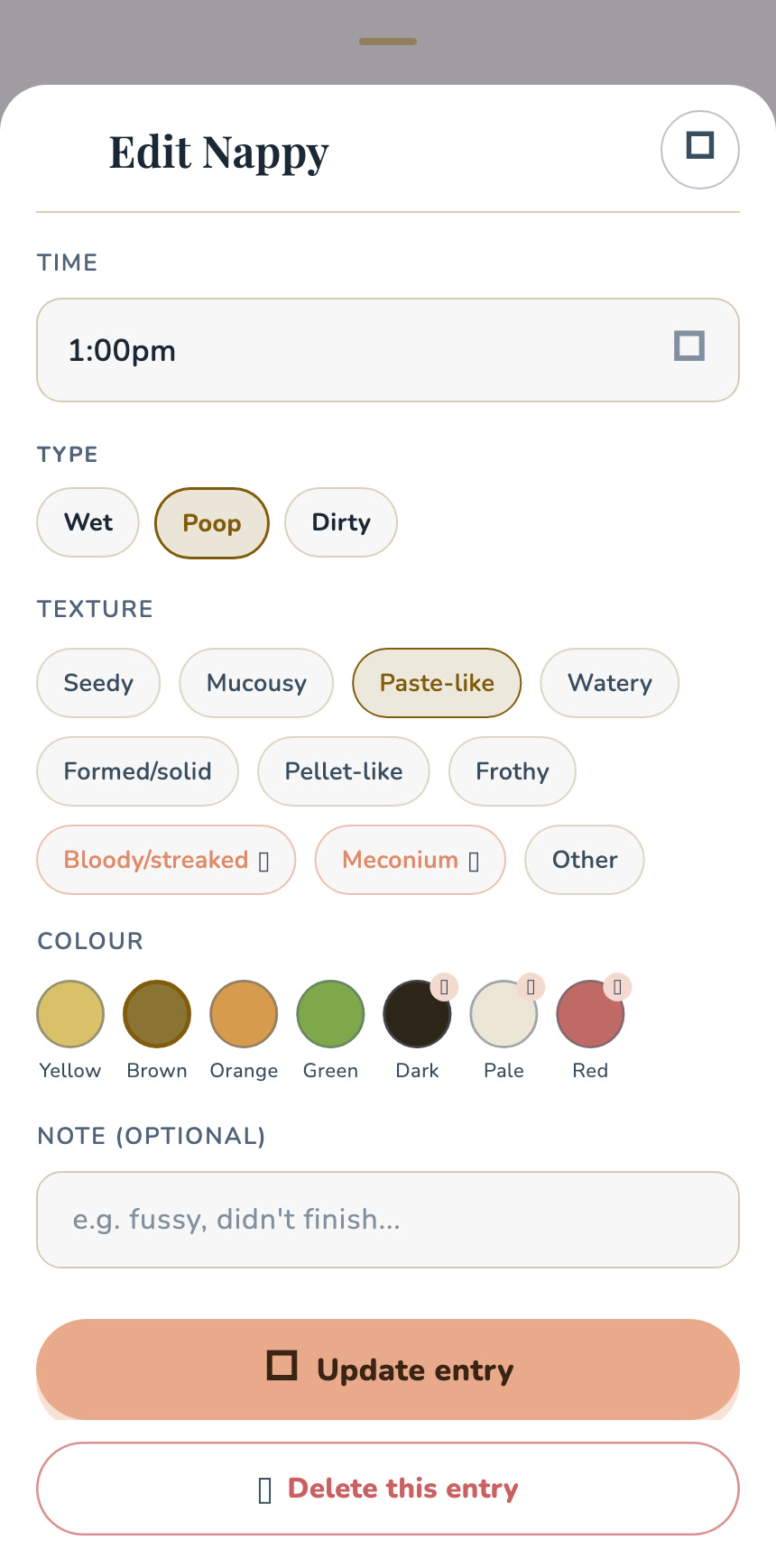
The interface deliberately marks blood-streaked texture and dark, pale or red colours with warning symbols. A press-and-hold guide explains the choices, and selected safety-relevant details are preserved with the entry rather than silently discarded.
Behind the screen, OBubba can surface health-safety nudges for pale, red or blood-streaked records. It also keeps wet and dirty nappies alongside milk, solids and illness notes, helping a parent see whether watery poo coincides with fewer wet nappies or whether pellets began after a feeding change.
That is support for noticing and communicating, not diagnosis. The app cannot tell whether a colour is blood, assess dehydration, interpret a photograph or decide that a baby is safe. When a warning sign appears, contact a clinician rather than waiting for more data.
Keep feeds, nappies and weaning changes together in OBubba.
A calm nappy decision tree
Baby is comfortable, feeding normally, wet nappies are normal
If the poo is brown, tan, yellow, orange or green and soft enough to pass, record it only if useful and continue normal feeds. Watch the pattern rather than repeatedly inspecting one shade.
Poo is hard, dry or pellet-like
Think constipation. Keep milk responsive, offer suitable fluid and fibre for age, and contact your health visitor or GP if it persists, hurts or affects feeding.
Poo is repeatedly watery
Count wet nappies, continue feeds, watch for dehydration and get advice if baby is young, unwell, vomiting, not keeping fluid down or producing fewer wet nappies.
Poo is red, black/tarry, white, grey or chalky
Seek medical advice promptly. Do not wait for the colour to appear three times and do not let a tracking streak replace a clinical assessment.
Baby seems seriously unwell
Get urgent help for a baby who is difficult to wake, floppy, struggling to breathe, very pale or mottled, unable to keep fluids down, or showing severe dehydration. In the UK, call 999 for an emergency; use NHS 111 or your GP for urgent advice when it is not immediately life-threatening.
The useful takeaway
Starting solids changes the nappy because the digestive workload has changed. Stronger smell, thicker texture, visible food and a wider palette of ordinary browns, greens, yellows and oranges can all be part of the transition.
The most useful habit is not memorising every shade. It is noticing pattern plus baby:
- Is the poo easy to pass?
- Is it repeatedly watery?
- Is there blood or a warning colour?
- Is baby feeding, behaving and producing wet nappies normally?
- Did the change begin with a new food, illness or medicine?
Record just enough to make that pattern visible. Then act on the baby in front of you, not the neatness of the chart.
This article provides general information for UK families and does not replace medical advice. Contact your GP or NHS 111 for concerning stool colours, blood, persistent diarrhoea or constipation, or any baby who is feeding poorly or producing fewer wet nappies. Call 999 for severe breathing difficulty, collapse, marked floppiness or another emergency.
Ready to try OBubba?
Use OBubba to track feeds, sleep, naps, nappies, growth, milestones and family handovers in one calm baby tracker app.