Between Christmas and New Year, nobody knows which day it is. Breakfast happens at lunch, relatives appear with 40 minutes' notice and the baby takes a mysterious nap on the drive home.
You do not need to rebuild a perfect routine for this in-between week.
Keep a minimum useful rhythm: feed responsively, offer sleep from the day your baby actually had, protect a safe sleep space, serve familiar age-appropriate food if they have started solids, and make each handover clear. Everything else can flex.
This is sometimes called “Twixmas”. For a baby, it is simply a run of days with unusual people, places and timing. The aim is not to make every day identical. It is to keep the few decisions that affect comfort, safety and shared care visible.
> A calm baby routine is not a minute-by-minute timetable. It is a small set of anchors that still work when the clock gets strange.
The minimum useful baby day
Start with five anchors. Add detail only when it answers a real question.
| Anchor | What to keep steady | What can flex | |---|---|---| | Milk | responsive breast or bottle feeds; any individual feeding or growth plan | exact clock times, who gives an ordinary feed when sharing is appropriate | | Sleep | tired cues, the sleep already taken, familiar wind-down and a safer sleep space | nap location when suitable, nap length, bedtime within a reasonable range | | Nappies | enough context to notice a meaningful change; wet nappies when intake is a concern | logging every routine change when nobody needs the count | | Solids | readiness, safe texture, supervision, known allergies and milk as the main drink in the first year | whether lunch looks festive, how much is eaten, which familiar food is offered | | Handover | last feed, last sleep, last nappy, allergies, medicines and what usually settles the baby | a full narrative of everything the previous adult tried |
This “minimum useful” idea protects attention. If your baby is well, comfortable and following their usual clinical advice, the family does not need a complete data set to have a good day.
Decide what must be known, what is useful and what can wait
Must be known by the next adult
- when and what the baby last fed, especially for a young baby or an individual feeding plan
- whether the baby has slept, and approximately when
- known allergies, health conditions and current professional instructions
- any medicine actually given, including its name, amount and time
- where the baby will sleep and who is responsible for settling them
- how to reach the parent and what to do in an emergency
Useful when there is a question
- approximate wet and dirty nappy pattern
- how a new food was prepared and whether anything unusual followed
- what helped with crying or settling
- whether the day involved travel, grandparents, nursery or illness
- a temperature reading taken for a real reason
Usually safe to leave unrecorded
- the exact minute every cuddle began
- every two-minute doze
- guesses presented as facts, such as “probably teething”
- a duplicate entry from each adult
- a perfect retrospective reconstruction of a busy Christmas Day
If information changes a feed, medicine, allergy, sleep-safety or health decision, make it explicit. If it merely makes the timeline prettier, it can wait.
Sleep: keep the signals, loosen the schedule
Babies have individual patterns, and those patterns change. The NHS baby sleep guide recommends ordinary light and household sound during the day, then lower light, quiet voices and little stimulation at night. It also suggests a simple soothing bedtime routine.
That gives families three portable sleep anchors:
- Day looks like day. Open curtains when the household starts and use ordinary daytime activity.
- Night feels different. Dim lights, quieten voices and keep overnight care uninteresting.
- The sequence stays familiar. Use the same short nappy–sleepwear–feed–story or song–cot rhythm, even when the start time moves.
Count the sleep that actually happened. A 25-minute car nap is not the planned cot nap, but it still changes the next awake stretch. If naps were short, bedtime may need to come modestly earlier. If a long late nap happened, bedtime may drift later.
Do not stretch an exhausted baby to “save” bedtime, and do not repeatedly wake a newborn merely to make the week look regular. Follow individual feeding and medical advice.
For the day immediately after Christmas, use the more focused Boxing Day baby sleep reset. If you are crossing time zones, use the baby jet-lag guide instead.
Safer sleep travels with the baby
The environment may change; the safety principles do not.
The Lullaby Trust's safer sleep on holiday guidance recommends a separate clear sleep space with a firm, flat mattress. A travel-cot mattress may look thin but should not be padded with a folded blanket, quilt or unapproved extra mattress.
Before each sleep away from home:
- remove pillows, toys, cot bumpers, nests, loose bedding and festive decorations from the sleep space
- check that the mattress is firm, flat, well fitting and in good condition
- keep the cot away from radiators, windows, cords and decorations
- use the car seat for transport, then move the baby to a suitable firm flat sleep surface on arrival
- never fall asleep with a baby on a sofa or armchair
- do not bed-share if anyone in the bed has drunk alcohol, taken recreational drugs or used medicine that causes drowsiness
Exhaustion changes judgement. Agree who is “on duty” before the settling adult becomes too sleepy, and make the safe handover while both adults are awake.
Milk feeds: follow the baby, not the family timetable
Visitors, travel and naps can move feeds around. Breastfeed responsively. For bottles, offer the feed when the baby shows hunger cues and let them decide when they have had enough.
The NHS bottle-feeding guidance says babies differ in how often and how much they feed, advises following the baby's lead, and says not to worry when they do not finish a bottle. It also says never to prop a bottle or leave a baby alone to feed.
A handover should report what happened, not set a target the next adult must make the baby finish. “Offered 150ml at 11:20; drank about 100ml and turned away” is more useful than “needs 50ml before nap”.
If feeding changes substantially, wet nappies reduce, the baby is difficult to wake, repeatedly vomits or seems unlike themselves, move out of routine-planning mode and seek appropriate health advice.
Weaning: make the week simpler, not more ambitious
If your baby has not started solids, Twixmas is not a deadline. The NHS recommends beginning at around six months when all three readiness signs appear together: staying sitting with a steady head, coordinating eyes/hands/mouth, and swallowing food rather than pushing it back out.
Night waking and wanting extra milk are not readiness signs. Starting solids does not make a baby more likely to sleep through.
If your baby is already weaning:
- keep breast milk or first infant formula as the main drink during the first year
- choose one or two familiar, safely prepared foods when the day is busy
- sit the baby upright in a highchair with the harness secured and supervise throughout
- match size and texture to the baby's current skill
- accept a smaller appetite without pressure
- avoid adding salt, stock or gravy to the baby's portion
The NHS first-solids guidance says early quantity matters less than learning, advises following hunger and fullness cues, and notes that intake naturally varies from day to day.
A noisy relative's kitchen is rarely the easiest place to introduce several new allergens at once. If ingredients are unclear or the usual caregiver is not present, serve familiar foods and make the new introduction on a calmer day. For the festive plate itself, read what baby can eat at Christmas dinner.
Three realistic versions of this week
A newborn
The anchors are milk, nappies, safe sleep and adult rest. There may be no meaningful nap timetable. Write down feeds and important nappy changes only as accurately as the baby's care plan requires. Keep nights dim and quiet, and use handovers so two exhausted adults do not both assume the other last fed the baby.
A baby beginning solids
Keep usual milk feeds and offer one familiar food at a calm time when the baby is awake and not extremely hungry. It is fine if the family eats three celebratory meals and the baby explores two spoonfuls of broccoli at one of them.
An older baby with a recognisable rhythm
Protect the first likely nap, count travel sleep, use a short bedtime routine and let the clock move modestly. Offer normal milk feeds and familiar meals. If grandparents take over for an afternoon, hand over the last feed, last sleep, allergies and likely next step—not a page of minute-by-minute instructions.
How the real OBubba app reduces Twixmas mental load
OBubba is most useful here because sleep, feeds, nappies, weaning and shared care live on the same baby timeline. The app does not supervise the baby, inspect food or decide whether a symptom is safe. It keeps human observations connected so the next decision needs less memory work.
Catch up with one Quick Log sentence
In Track → Quick log, a parent can type or dictate plain English such as: “Fed 120ml at 2pm, wet and dirty nappy at 3, napped 4 to 5.” The current parser previews those as separate entries before the parent saves them.
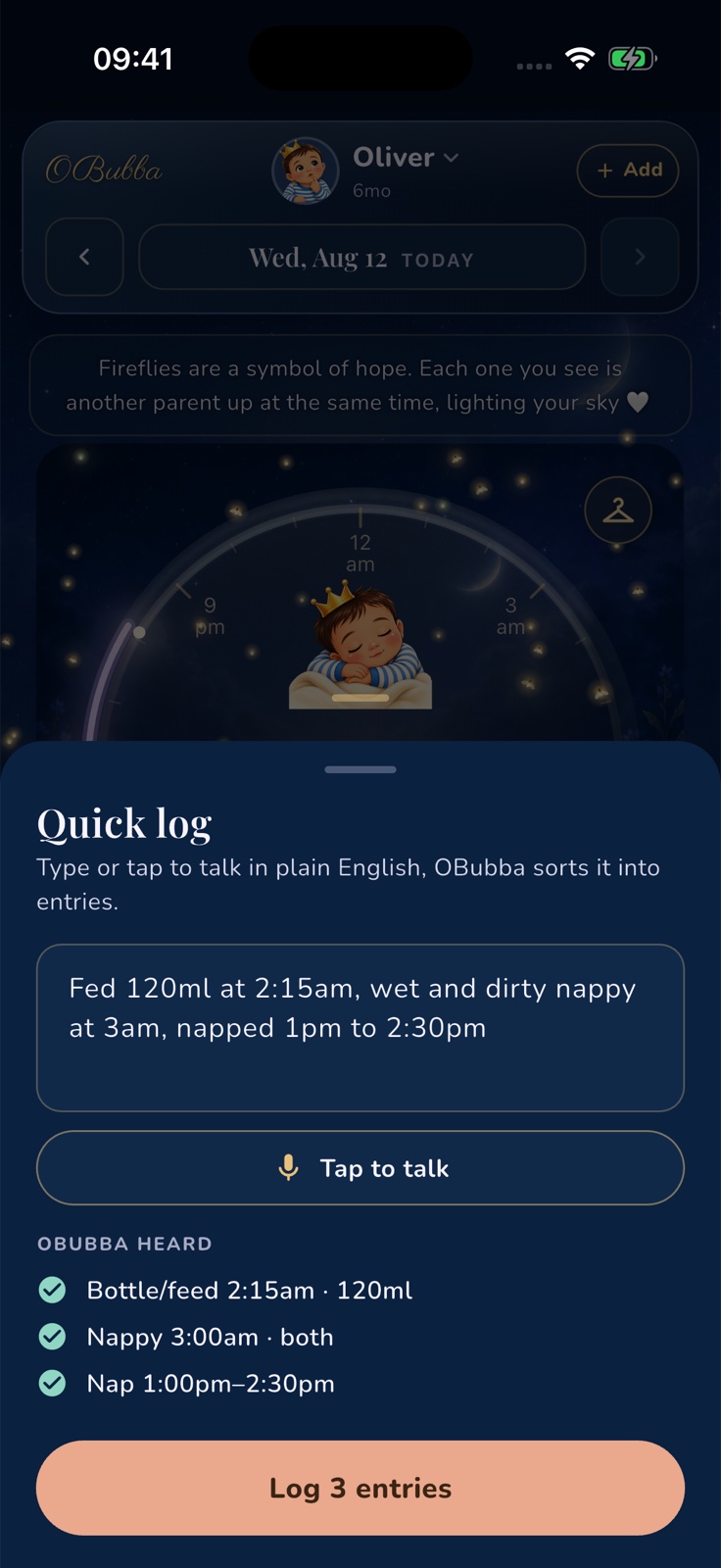
Quick Log is not a clinical transcription service. Check times, amounts and medicine details before saving. If a busy hour was uneventful and nobody needs the record, do not invent it afterwards.
Mark the kind of day it was
The Today type card supports Home, Daycare, Grand, Travel and Sick. Tags are kept per baby. OBubba can exclude exceptional sick, travel, daycare and grandparents days from its learned wake-window baseline, so an irregular family week remains history without silently redefining normal.
Choose the label that describes the setting; do not use Sick simply because sleep was difficult. A label is context, not a diagnosis.
Turn food history into six manageable ideas
In Care → Weaning, the current app can generate a saved six-meal weekly plan. The recipe engine ranks ideas for the baby's stage using recorded food history, including food gaps, iron-rich choices, new allergens and foods not yet tried. The app derives a shopping list, and meal and basket ticks persist for that baby through the week.
Recipes containing an allergen recorded as reacted-to are filtered from suggestions. That is a planning safeguard, not permission to serve a recipe without reading its full ingredients or applying the baby's allergy plan.
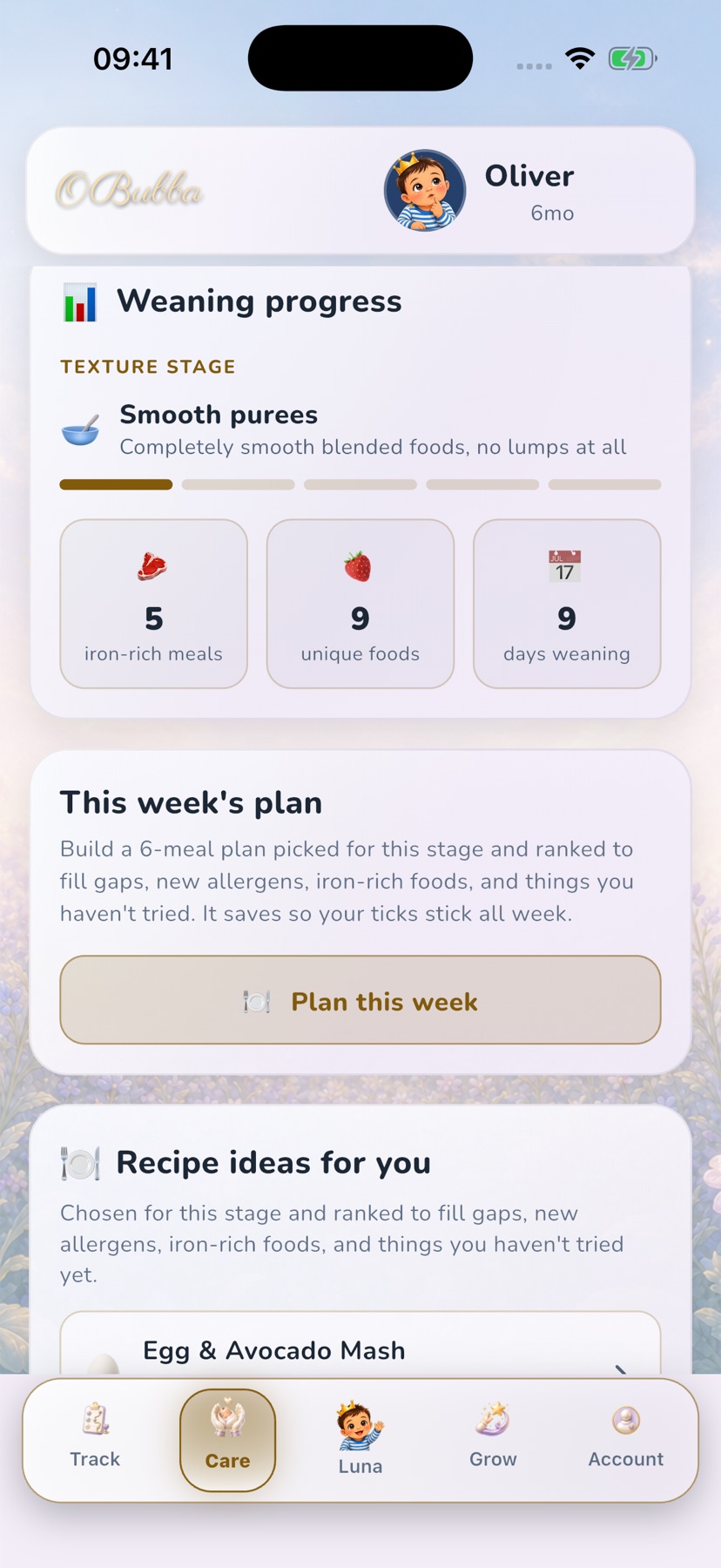
During Twixmas, use the plan as a menu of possibilities. There is no need to complete all six meals before New Year's Eve.
Hand care over without rewriting the baby
In Care → Bubba Care, parents can choose between a written Hand-off briefing and a temporary live care link.
After at least two days with recorded entries, the written briefing can bring together:
- likely next nap and bedtime
- last-night context
- what has recently helped the baby settle
- known conditions and previously reacted-to allergens
- medicine names recorded in roughly the last 48 hours
- one current insight when available
It can be copied or shared with a grandparent or sitter. The live care link gives a trusted carer a simpler browser page and can bring the feeds, naps and nappies they record back into the parent's timeline during the session.
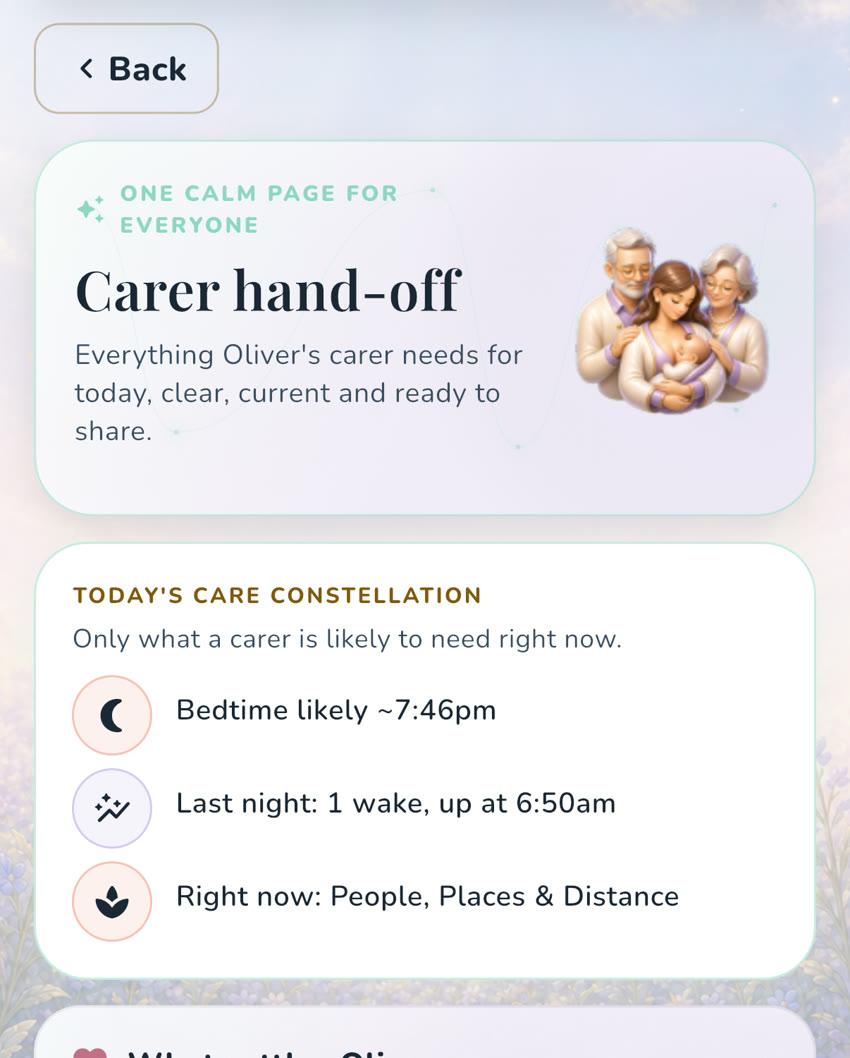
Neither format replaces a direct conversation. Do not use a prediction as an instruction to withhold a feed or keep a tired baby awake. Confirm allergies, medicine consent, dose instructions and emergency contacts person to person, and end temporary access when the handover is finished.
Try OBubba free → — keep sleep, feeds, nappies, weaning and shared care in one connected place, so the family needs fewer messages and less remembering during the in-between week.
A ten-minute family reset each evening
This is enough for most well babies on an ordinary-but-irregular holiday day:
- Check the timeline. Fix only material errors in feeds, medicines or sleep.
- Name the day. Mark Grand or Travel when it accurately describes the setting.
- Choose tomorrow's one anchor. The first nap opportunity, a family lunch or the start of bedtime.
- Choose the responsible adult. Say who is handling the next feed, settling period or early morning.
- Prepare the safe space. Clear the cot or travel cot before everybody becomes tired.
- Stop. Do not spend the evening optimising a baby who is already asleep.
If two adults share the permanent child record, use one timeline rather than sending duplicate messages. The guide to sharing a baby tracker without duplicate logs shows how to agree simple ownership rules.
When routine advice should step aside
Routine is not the priority when a baby has breathing difficulty, is unusually difficult to wake, is feeding much less, has fewer wet nappies, has a concerning fever, has signs of a serious allergic reaction or simply seems significantly unlike themselves.
Use emergency care, NHS 111, your GP, health visitor or the baby's own clinical team according to the symptoms and urgency. An app record can support the conversation, but it cannot decide whether the baby is well.
Quick answers
Does my baby need the same routine every day between Christmas and New Year?
No. Keep the important cues and safety practices recognisable, but let nap and meal times move around travel, visitors and the baby's actual needs. Newborns may not have a stable schedule at all.
What should grandparents know before taking over?
At minimum: last feed, last sleep, last nappy when relevant, allergies and health conditions, any medicine given, the safer sleep plan, what usually settles the baby, emergency contacts and when the parent will return.
Should I track every feed, nap and nappy on holiday?
Track to the level required by age, health and the question you are trying to answer. A young baby on a feeding plan may need a detailed record. A thriving older baby may only need enough detail for a clear handover and a reliable sense of the day.
Can my baby skip solids during a busy day?
At the beginning of weaning, one unusually small or missed solids opportunity is not a failure; milk remains the main drink in the first year. Keep offering age-appropriate food without pressure and seek individual advice if intake or growth concerns you.
Will a week with grandparents ruin my baby's sleep rhythm?
Not usually. Sleep can be temporarily different around new people and places. Restore morning light, ordinary feeds, nap opportunities and the familiar bedtime sequence. In OBubba, mark Grand or Travel when it fits so the day does not become baseline learning.
Is a Bubba Care briefing enough for medicines or allergies?
No. It is a coordination aid. Confirm the baby's allergy plan, medicine name, exact dose, timing, consent, storage and emergency action directly with the carer and follow professional instructions.
OBubba supports parent-entered organisation, pattern awareness and family handovers. It cannot supervise care, verify feeds or medicine doses, inspect food or sleep spaces, diagnose illness or allergy, or replace a midwife, health visitor, pharmacist, GP, NHS 111 or emergency service.
Ready to try OBubba?
Use OBubba to track feeds, sleep, naps, nappies, growth, milestones and family handovers in one calm baby tracker app.