Your baby sleeps for ninety peaceful minutes on your chest, but wakes after twenty minutes in the cot. By bedtime you are wondering whether every lovely held nap is somehow “stealing” night sleep—or creating a habit you will never undo.
The short answer is no: a contact nap does not automatically ruin night sleep or create a permanent bad habit. What may affect bedtime is what happened around the nap: how long it lasted, when it ended, how much daytime sleep your baby had and how long they were awake before bed.
Contact naps are common, especially for newborns and young babies. If they are working for your family and the adult stays awake, there is no developmental deadline to stop. If they are no longer sustainable, you can practise one cot nap at a time without removing every supported nap at once.
First: make contact naps safer
A contact nap means the baby sleeps while an adult holds them. It is not the same as the adult sleeping with the baby.
For a held nap, the adult needs to be awake, sober and able to keep watching the baby's position and breathing. Keep the baby's face visible, nose and mouth uncovered, and avoid a position where their chin is pressed tightly onto their chest.
If you feel drowsy—or think there is a real chance you may fall asleep—put your baby on their back in their own clear sleep space with a firm, flat mattress. Never fall asleep with a baby on a sofa or armchair. The NHS SIDS guidance and The Lullaby Trust's safer-sleep advice both emphasise a separate, clear, flat, firm sleep space and warn specifically about sofas and armchairs.
The same safer-sleep basics apply to every sleep, day or night:
- place baby on their back
- use a firm, flat mattress in a cot or Moses basket
- keep the sleep space clear of pillows, duvets, bumpers, nests, toys and loose items
- keep baby's head and face uncovered
- use the same room as you for at least the first six months
If you are exhausted, choosing the safer sleep space matters more than completing the “perfect” transfer.
Why contact naps can look like the cause of a bad night
A location is easy to blame because it is visible: “That was a contact nap, then bedtime went wrong.” Sleep pressure is less visible.
Consider what else changed:
| What happened in the day | What you may see at night | What the useful question is | |---|---|---| | A contact nap ran much longer than the usual cot nap | Less tiredness at the usual bedtime | Did total daytime sleep or the final wake window change? | | The last nap ended late | Playing, rolling or chatting at bedtime | Is bedtime now too close to the end of the nap? | | A transfer ended the nap after 20 minutes | Fussiness and a difficult late afternoon | Was baby left awake too long after a short nap? | | A held nap rescued an overtired day | A calmer bedtime | Did the extra sleep prevent a very long final wake window? | | Illness, teething or a developmental change arrived too | More waking regardless of nap location | Is the whole sleep pattern temporarily different? |
The held part is not automatically the problem. A long, late nap may reduce sleep pressure before bed whether it happened in arms, a cot or a pram. A short cot nap may leave a baby overtired. A contact nap can sometimes protect the night by rescuing sleep on a difficult day.
This is also why “short nap equals overtired” is too simple. A baby can take a short nap after a wake window that was too long, but they can also nap briefly because they were not tired enough yet. The pattern before and after the nap is more useful than the location alone.
Are contact naps a bad habit?
“Habit” is often used as if it means “damage”. It does not.
Babies learn familiar conditions for falling asleep: being held, feeding, rocking, white noise, a dark room or a particular routine. Familiarity can make a method easier to repeat, but it does not mean your baby has lost the ability to learn a different one later.
For a newborn, wanting warmth, movement and closeness is unsurprising. Their sleep is still developing, feeds are frequent and days are not organised like an older baby's. This is not the moment to chase a rigid independent-nap target.
For an older baby, the right question is practical: does the current arrangement still work safely for the baby and the people caring for them?
You might keep contact naps because you enjoy them, they help your baby catch up after nursery or they make one difficult nap possible. You might change them because you need to work, care for another child, rest your body or share naps with another carer. Both decisions are valid.
If you are happy with contact naps, you do not need to “fix” them
It is fine to keep a nap that works. You can make the routine easier by preparing water, a snack, a book and anything else you need before settling—while keeping them out of the baby's reach and away from their face.
Use the toilet first. Tell another adult where you are if one is available. Most importantly, notice your own alertness. If your eyelids are heavy, change the plan and put the baby into their safer sleep space.
You do not have to turn every nap into a training session to protect night sleep. If bedtime is difficult, first examine the last nap's end time and duration, not just whether you held the baby.
If you want to change contact naps, start with one
Trying to remove every contact nap tomorrow can leave the baby underslept and the parent feeling as if the whole day failed. A gentler experiment is to choose one nap—the first nap of the day is often the easiest place to practise—and leave the other naps however they currently work.
Try this for three or four days:
- Choose the same nap. Start with nap one rather than whichever nap happens to be hardest.
- Keep the wind-down short and familiar. A nappy check, curtains, a repeated phrase and calm sound are enough.
- Settle with the support your baby needs. You can try putting them down drowsy, or wait until they seem more deeply asleep if an awake transfer currently causes distress.
- Lower slowly and stay close. Reduce the feeling of a sudden drop; keep a steady hand on their chest for a moment after putting them down.
- Soothe briefly in the cot. If they stir, pause before immediately lifting. Use your voice, touch or the same quiet cue.
- Rescue the nap if it is not working. Pick up and complete the nap in the way that works. Protecting the day's sleep is not “giving in”.
- Repeat before adding nap two. Success may initially be five calm minutes in the cot, not a full independent nap.
OBubba's own contact-nap insight uses this one-nap foothold. It only appears after enough nap-location data suggests holding or movement is the usual pattern, and it explicitly says contact naps are fine. The suggestion is an optional experiment, not a warning.
Basic nap timing and location logging remain available without Premium. Pattern guidance such as the contact-nap insight is a Premium feature. OBubba unlocks Premium during pregnancy and through the first two corrected-age months; plan options follow after that early-free period.
Why does my baby wake during the cot transfer?
A transfer changes several sensations at once: warmth, pressure, smell, movement, sound and body position. A baby who was settled against you may notice the contrast before you have even moved your hands away.
Some parents find it easier to wait for signs of deeper sleep—slower breathing and heavier, more relaxed limbs—before moving. That may take around twenty minutes for some babies, but it is not a stopwatch rule and it will not work every time.
During the transfer:
- move slowly and keep baby close to your body until the last moment
- lower their feet and bottom before the head to reduce the “falling” sensation
- keep the room and sound consistent
- leave a still hand on their chest briefly once they are safely on their back
- stop after one or two attempts if everybody is becoming more upset
Do not add pillows, positioners, nests or soft bedding to make the cot feel more like your body. A clear, firm, flat sleep space is the safer setup.
If transfers always wake your baby, try the same approach on the first nap for a few days rather than escalating every nap. A transfer is a skill and a biological transition, not a test of parental consistency.
Track the pattern without turning your day into a spreadsheet
You need surprisingly little information to tell whether the contact nap itself is relevant:
- when the nap started and ended
- where it began: cot, contact, pram, carrier, car or somewhere else
- whether it moved to a second location
- how baby woke: happy, sleepy or fussy
- how bedtime settling and the night went
In OBubba, one nap can have a start location and a different end location. If a baby sleeps on you for 35 minutes and then continues in the cot, record Contact → Cot as one nap. Splitting it into two naps would create a fake wake window of only a few minutes and distort the next prediction.
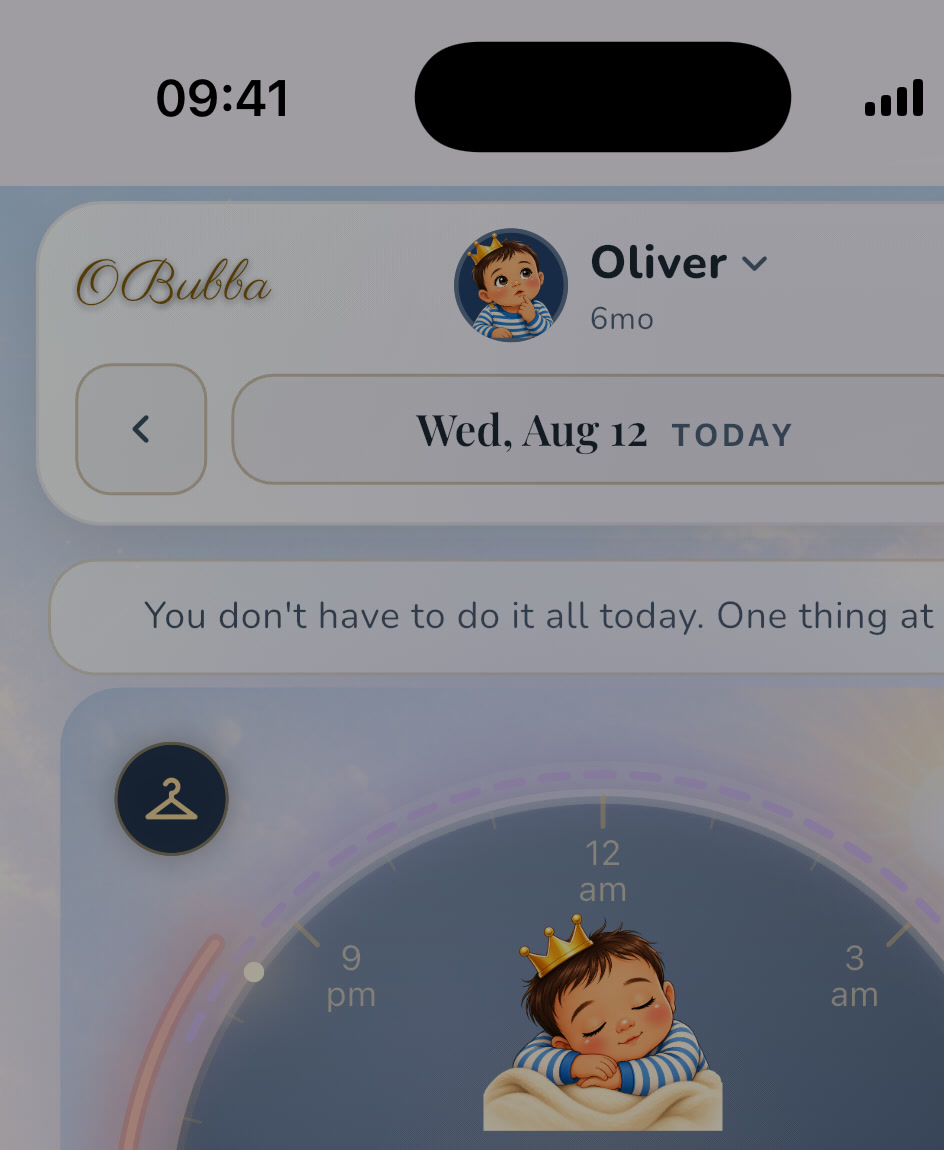
If the baby briefly stirs and resettles, use Pause nap rather than ending and restarting it. OBubba keeps a mid-nap stir separate from an overnight wake, so a restless contact nap does not inflate the night's wake count.
The app also waits before drawing conclusions. Its location comparison needs at least three completed naps in each location and a meaningful duration difference before it says one place tends to run longer. The contact-or-motion pattern needs at least eight located naps, with most in contact, pram, carrier or car, before it offers the gentle first-nap experiment.
That restraint matters. One glorious contact nap and one disastrous cot nap are experiences, not yet a personal sleep pattern.
A five-minute morning check when bedtime went badly
Instead of deciding “contact naps ruined the night”, review these five points:
- When did the last nap end? Compare it with your baby's usual good-bedtime days.
- How much daytime sleep was there? Was it markedly more or less than usual?
- How long was the final wake window? Count from the actual end of the last nap, not the time you intended it to end.
- How did bedtime begin? Quick sleep can mean good timing, but an exhausted baby can also crash quickly; a long playful settle can suggest not enough sleep pressure.
- What else was happening? Feeding changes, discomfort, illness, travel, nursery naps and new developmental skills can all matter.
Change one thing at a time. If the last nap has repeatedly ended too close to bedtime, gently adjust that timing before trying to remove all contact naps. If short cot naps repeatedly create a very long afternoon, keep one reliable rescue nap while you practise.
When to ask for help
Speak with your health visitor, GP or another qualified health professional if sleep changes come with breathing concerns, unusual colour, poor feeding, repeated vomiting, pain, fever, faltering growth or anything that feels wrong for your baby.
Ask for practical support if contact naps are leaving you so exhausted that you might fall asleep while holding the baby. A partner, relative or friend taking an alert contact nap—or giving you time to sleep while baby uses their own safe space—is more useful than pushing through dangerous tiredness.
An app can help organise observations. It cannot diagnose a medical problem or make an unsafe sleep setting safe.
Quick answers
Do contact naps make babies wake more at night?
Not automatically. Look at total daytime sleep, the time the last nap ended, the final wake window and other changes. A contact nap's timing or length may affect bedtime; being held is not by itself proof of the cause.
At what age should I stop contact naps?
There is no single deadline. Newborn contact naps are common. For an older baby, change them when the arrangement is no longer safe or workable for your family—not because a calendar says you have created a bad habit.
Can I sleep while my baby contact naps?
No. A contact nap requires an awake, sober adult. If you may fall asleep, put baby on their back in their own clear, firm, flat sleep space. Never sleep with a baby on a sofa or armchair.
Should I wake a long contact nap?
Do not use one universal cap for every age and situation. Consider feeding needs, age, health advice, total day sleep and how close the nap is getting to bedtime. If a clinician has told you to wake for feeds, follow that individual advice.
Should I put my baby down drowsy but awake?
You can try, but it is not a requirement and it does not suit every baby or stage. If it produces escalating distress, settle more fully and try a deeper-sleep transfer. The aim is gradual familiarity, not passing a test.
What if the cot nap lasts only 20 minutes?
Count it as a real nap. Decide whether to rescue it based on your baby's mood and the rest of the day. Then check the wake window before that nap: a short nap can follow either too little or too much awake time.
How long should I try before picking my baby up?
There is no magic number. Pause long enough to see whether a small stir settles, then respond. If your baby is becoming increasingly upset or the attempt is clearly failing, pick them up and protect the nap.
Try OBubba free → — time the nap, record where it began and ended, and let several real days reveal whether timing or location is actually changing your baby's nights.
Related guides
- Baby wake windows without the stress
- What to track when your baby wakes at night
- Is my baby ready to drop a nap?
- Baby naps at nursery: a realistic bedtime plan
- Build a simple baby bedtime routine
- Baby tracker widgets: log feeds and naps without opening the app
Sources and further reading
- NHS: Sudden infant death syndrome (SIDS)
- NHS Best Start in Life: Your baby's sleep patterns
- The Lullaby Trust: Room sharing and safer sleep
- The Lullaby Trust: Other carers and babysitters
Ready to try OBubba?
Use OBubba to track feeds, sleep, naps, nappies, growth, milestones and family handovers in one calm baby tracker app.